Is a Treadmill Helpful in Losing Weight? Walking Pad Setup & Review
Discover if a treadmill is helpful in losing weight. We compare walking pads vs. traditional treadmills and provide a complete setup walkthrough.

Is a Treadmill Helpful in Losing Weight? The Caloric Reality
When building a home gym, one of the most common questions we encounter from readers is: is treadmill helpful in losing weight? The physiological answer is an unequivocal yes, provided the machine facilitates a sustainable caloric deficit. According to the Centers for Disease Control and Prevention (CDC), engaging in 150 minutes of moderate-intensity aerobic activity weekly is a baseline for weight management, but significant weight loss often requires upwards of 300 minutes. The equipment you choose directly dictates your adherence to this volume.
In 2026, the home cardio market is heavily segmented between ultra-compact walking pads and traditional motorized treadmills. Both can drive weight loss, but their installation requirements, spatial footprints, and biomechanical outputs differ drastically. This guide provides a comprehensive comparison and a meticulous, step-by-step installation walkthrough to ensure your equipment is safe, calibrated, and ready for daily caloric expenditure.
Expert Insight: Weight loss is not solely about structured, high-intensity cardio. Walking pads excel at increasing Non-Exercise Activity Thermogenesis (NEAT). By walking at 2.5 mph while working at a standing desk, users can burn an extra 300-500 calories daily without inducing central nervous system fatigue, making it a highly sustainable weight loss strategy.Walking Pad vs. Traditional Treadmill: 2026 Comparison Matrix
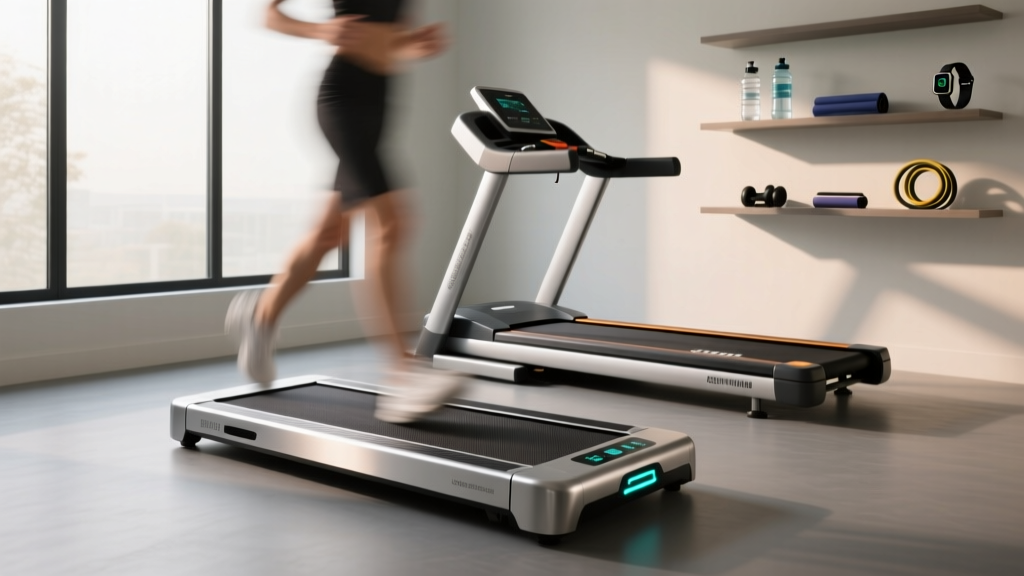
To determine which machine fits your lifestyle, we compared the top-selling compact pad (UREVO Strol 2E) against a staple traditional folding treadmill (Horizon T202).
| Feature | UREVO Strol 2E (Walking Pad) | Horizon T202 (Traditional) |
|---|---|---|
| Price Range | $299 - $359 | $999 - $1,199 |
| Motor Output | 2.5 HP (Peak) | 3.0 CHP (Continuous) |
| Max Speed | 7.6 mph (Jogging) | 12 mph (Sprinting) |
| Incline Capability | None (Flat only) | 0% - 15% Motorized |
| Weight Capacity | 265 lbs | 350 lbs |
| Best For | NEAT, under-desk, small apartments | HIIT, incline walking, heavy users |
Pre-Installation: Spatial and Electrical Prerequisites
Before unboxing, you must prepare your environment. The U.S. Consumer Product Safety Commission (CPSC) strictly outlines clearance requirements to prevent entrapment and friction-burn injuries in the event of a fall.
Spatial Clearances
- Traditional Treadmills: Require a minimum of 24 inches of clearance on both sides and a critical 79 inches of clearance directly behind the machine. Furthermore, ensure your ceiling height is at least your height plus 18 inches to accommodate incline elevation.
- Walking Pads: Require 12 inches of lateral clearance. Because they lack a rear motor housing, the rear clearance requirement is reduced to 48 inches.
Electrical Requirements
⚠️ WARNING: Never plug a traditional treadmill into a standard shared outlet or use an extension cord. The Horizon T202 requires a dedicated 120V, 15-amp circuit. Using an undersized wire or shared circuit will cause voltage drops, overheating the motor control board and voiding your warranty. If a surge protector is necessary, use a 12-gauge, 15-amp rated fitness surge protector (e.g., Tripp Lite TLP1210SATG).Step-by-Step Walking Pad Setup (UREVO Strol 2E)
Walking pads are generally plug-and-play, but skipping initial calibration leads to belt drift and motor strain.
- Unboxing and Unfolding: The Strol 2E weighs roughly 62 lbs. Cut the zip-ties securing the handrail. Slowly lift the handrail until the gas-strut hinges lock into the upright position with an audible click.
- Initial Belt Inspection: Slide your hand under the belt. It should feel slightly dry but not bone-dry. Apply exactly 5ml of 100% silicone treadmill lubricant in a zig-zag pattern down the center of the deck.
- Centering the Belt: Plug the machine in. Start at 2.0 mph. Observe the rear roller. If the belt drifts left, insert the provided 5mm Allen key into the left rear bolt and turn it clockwise by exactly 1/8th of a turn. Wait 30 seconds for the belt to track. Repeat until centered.
- Remote Pairing: Hold the 'Mode' and 'Start' buttons on the physical console simultaneously for 3 seconds until the LED blinks, then press any button on the remote to sync.
Traditional Treadmill Assembly Walkthrough (Horizon T202)
Assembling a 145-lb traditional treadmill requires precision. Incorrect assembly is the leading cause of console failure and belt friction.
Phase 1: Upright and Console Wiring
- Base Positioning: With a partner, tilt the folded treadmill backward onto the rear transport wheels. Roll it to the designated 79-inch clearance zone.
- Upright Installation: Lift the steel uprights. CRITICAL STEP: Before bolting, locate the console ribbon cable and the motor drive wires. Feed them through the upright tube using the included fish tape. Pinching a single wire here will result in erratic speed surges or a dead console.
- Star-Pattern Bolting: Secure the uprights using the four M10x70 hex bolts. Do not tighten them sequentially. Use a star-pattern (top-left, bottom-right, top-right, bottom-left) and torque them to 25 Nm to ensure even load distribution on the frame welds.
Phase 2: Console and Handlebar Attachment
- Connect the ribbon cable to the back of the console. Ensure the red alignment arrow on the cable matches the arrow on the port. Push firmly until the retaining clip snaps.
- Mount the console and secure the handlebars. Route the heart-rate monitor wires through the internal foam channels to prevent them from being crushed by the handlebar clamps.
Pro-Tip from FitGearPulse Technicians: After assembling any folding treadmill, leave it in the 'unfolded' position for 24 hours before folding it again. This allows the hydraulic lift cylinder fluid to settle and prevents premature seal degradation.
Calibrating for Accurate Weight Loss Tracking
If your goal is weight loss, accuracy is paramount. The Mayo Clinic notes that a 500-calorie daily deficit yields roughly one pound of fat loss per week. If your treadmill's speed or incline sensors are uncalibrated, the console's calorie counter will feed you false data, stalling your progress.
Speed Calibration Mode (Horizon T202)
- Remove the safety key.
- Press and hold the Speed Up and Incline Up buttons simultaneously for 5 seconds.
- Insert the safety key. The console will display 'ENG' or 'CAL'.
- The belt will automatically cycle through speeds from 1.0 mph to 10.0 mph. Use a laser tachometer or a marked piece of tape on the belt to verify that one full revolution at 3.0 mph takes exactly the calculated time based on your belt length (usually 110 inches).
- Press the Stop button to save the calibration data to the EEPROM chip.
Maintenance for Longevity and Consistency
Consistency is the engine of weight loss. A broken treadmill halts your progress. To prevent downtime:
- Lubrication: Apply 100% silicone lubricant every 150 miles or 3 months. Never use WD-40 or petroleum-based oils, which will melt the PVC belt backing.
- Deck Inspection: Every 6 months, check the deck for 'burn-through' spots. If the phenolic coating is worn down to the bare wood, friction will increase, drawing excess amps and eventually tripping your home's circuit breaker.
- Vacuuming: Dust is the enemy of treadmill motor brushes. Every 30 days, remove the front motor hood (usually 4 Phillips-head screws) and use a soft-brush vacuum attachment to clear carbon dust and pet hair from the motor compartment.
Frequently Asked Questions
Can I use a walking pad for high-intensity interval training (HIIT)?
No. Walking pads like the UREVO Strol 2E peak at 7.6 mph and lack the flywheel mass to accelerate or decelerate rapidly. Attempting HIIT on a walking pad will overheat the motor controller and void the warranty. Stick to traditional treadmills for interval-based weight loss protocols.
Does incline walking burn more fat than running flat?
Yes. Walking at 3.0 mph on a 15% incline burns roughly the same calories per minute as running at 6.0 mph on a flat deck, but it drastically reduces the impact forces on your patellofemoral joints, allowing for longer, more frequent sessions.
More gear to consider
All reviews
Stair Climber vs AFG 3.1 AT Treadmill: 2026 Home Guide

Treadmill Not Working? Belt Maintenance and Lubrication Fixes

NordicTrack Treadmills for Home Use vs Walking Pads 2026

Does an Under Desk Treadmill Burn Stomach Fat? Budget Review

Stair Climber Machine for Home Use vs. Hockey Skating Treadmill: 2026 Guide