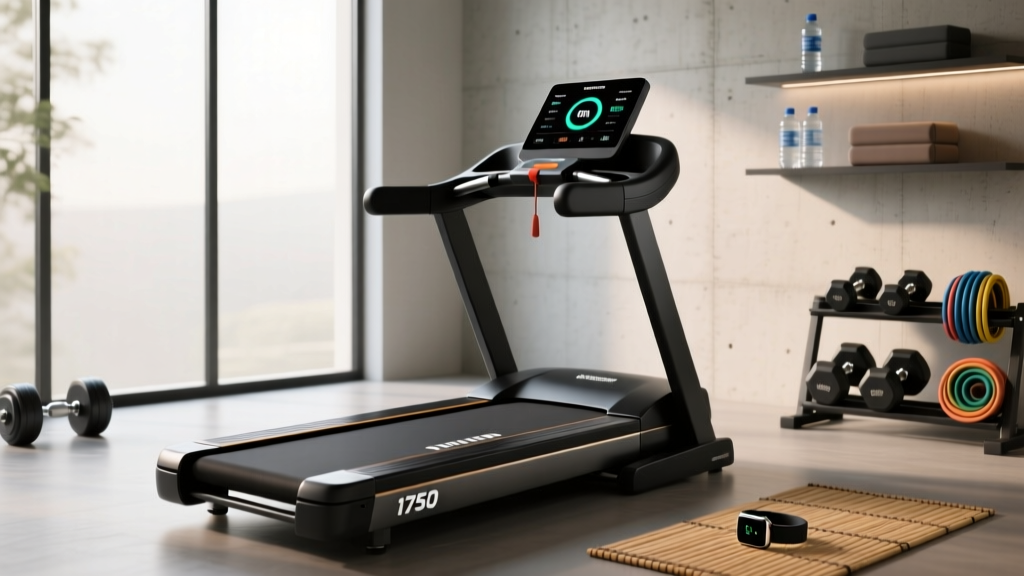
Is Walking on a Treadmill Good for Weight Loss? Feature Buying Guide
Discover if walking on a treadmill is good for weight loss. Compare essential features, avoid common buying mistakes, and troubleshoot workout plateaus.

The Verdict: Is Walking on a Treadmill Good for Weight Loss?
If you have ever asked, is walking on a treadmill good for weight loss? the answer is a resounding yes—provided you manipulate the right variables. Walking is a form of Low-Intensity Steady State (LISS) cardio that primarily utilizes fat as a fuel source, making it highly effective for sustainable caloric deficits. According to the Centers for Disease Control and Prevention (CDC), consistent moderate-intensity aerobic activity is a foundational pillar for long-term weight management and cardiovascular health.
However, many home gym owners fail to see the scale move. The root cause rarely lies in the act of walking itself; rather, it stems from two critical failures: purchasing a treadmill with the wrong feature set for walking, and making biomechanical mistakes during the workout. This guide merges a comprehensive treadmill buying feature comparison with a troubleshooting framework to ensure your equipment and your effort actually yield results.
3 Fatal Treadmill Buying Mistakes for Walkers
The fitness equipment industry heavily markets treadmills toward runners, leading walkers to overspend on unnecessary specs while ignoring the features that actually drive walking-based weight loss. Here is how to troubleshoot your buying decision before you swipe your credit card.
Mistake 1: Overpaying for Runner-Spec Motors
A common buying error is assuming a larger motor equals a better machine. Runners need a 4.0 Continuous Horsepower (CHP) motor to sustain high-impact, high-speed belt friction. Walkers, however, rarely exceed 4.0 MPH. Purchasing a $3,000 treadmill with a 4.0 CHP motor (like the NordicTrack Commercial 2450) is a waste of budget for a strict walker. Instead, look for a high-quality 2.5 to 3.0 CHP motor. This provides more than enough torque to maintain a steady walking pace without overheating, saving you $800 to $1,200 that can be reallocated to a premium walking pad or nutrition plan.
Mistake 2: Misjudging Belt Dimensions
Treadmill belts are optimized differently for walking versus running. Runners require longer belts (60 inches or more) to accommodate extended stride lengths. Walkers, conversely, need width. A narrow 18-inch belt forces you to walk with an unnaturally tight gait, which can lead to hip and IT band friction over time. When comparing features, prioritize a minimum 20-inch width. A 20" x 55" belt is the gold standard for walkers, offering lateral stability without taking up excessive floor space in your home gym.
Mistake 3: Ignoring Incline Granularity and Power
Incline is the primary driver of caloric expenditure in treadmill walking. A 0% to 5% incline range is virtually useless for weight loss. You need a machine capable of a 12% to 15% grade to simulate hill climbing, which increases glute activation and calorie burn by up to 60% compared to flat walking. Furthermore, check the incline increment. Cheaper models jump in 1.0% increments, which can cause jarring shifts in your center of gravity. Premium walking-focused models offer 0.5% increments for seamless transitions.
Feature Comparison Matrix: Runner vs. Walker Needs
| Feature | Runner Requirement | Walker Requirement (Weight Loss) |
|---|---|---|
| Motor Size | 3.5 - 4.0+ CHP | 2.5 - 3.0 CHP (Focus on cooling) |
| Belt Dimensions | 22" x 60" (Length priority) | 20" x 55" (Width priority) |
| Max Incline | 12% - 15% | 15% (Crucial for calorie burn) |
| Top Speed | 12.0 MPH | 8.0 - 10.0 MPH (Sufficient) |
| Cushioning | High-rebound elastomers | Variable durometer (firm push-off) |
Troubleshooting Your Treadmill Walking Routine
Even with the perfectly spec'd treadmill, users frequently hit weight loss plateaus. If the scale has stalled, troubleshoot your routine using these common failure modes.
The Handrail Crutch (Biomechanical Failure)
Holding onto the treadmill handrails while walking at an incline is the most pervasive mistake in home cardio. When you lean back and support your upper body weight on the rails, you alter your natural biomechanics and reduce your actual caloric expenditure by up to 20%. The American Heart Association emphasizes that proper posture and full-body engagement are necessary to achieve the intended cardiovascular benefits of aerobic exercise. The Fix: Drop the speed or incline until you can walk with a natural arm swing. Your core must remain engaged, and your torso should be upright, not leaning backward against the machine's pull.
The Steady-State Trap (Metabolic Adaptation)
Walking 3 miles at 3.0 MPH on a 2% incline every single day will eventually lead to a plateau. The human body is highly adaptable; as your cardiovascular efficiency improves, your body requires fewer calories to perform the exact same task. This is known as metabolic adaptation.
The Fix: Implement variable resistance. The viral "12-3-30" method (12% incline, 3.0 MPH, for 30 minutes) is popular for a reason—it forces high muscular endurance. However, to prevent adaptation, alternate this with interval walking. Try 1 minute at a 10% incline at 3.5 MPH, followed by 2 minutes at a 2% incline at 2.5 MPH. This fluctuating heart rate triggers Excess Post-exercise Oxygen Consumption (EPOC), keeping your metabolism elevated hours after you step off the belt.
The 2026 Walker’s Feature Checklist
As treadmill technology evolves, new features have emerged that specifically benefit the walking-for-weight-loss demographic. When comparing models on the showroom floor or online, verify the presence of these specific technologies:
- FTMS Bluetooth Connectivity: Ensure the console supports the Fitness Machine Service (FTMS) protocol. This allows your treadmill to sync seamlessly with third-party apps like Kinomap or Zwift, enabling automated incline adjustments based on virtual terrain, which removes the guesswork from interval training.
- Automated Pass-Through Cooling Fans: Walkers spend longer durations on the belt than runners (often 45-60+ minutes). A multi-speed cooling fan integrated into the console is vital for thermoregulation, preventing premature fatigue.
- Low Step-On Height: If you are starting your weight loss journey or dealing with joint issues, look for a treadmill deck with a step-on height of 6 inches or less. High-deck machines (8+ inches) require awkward, high-step mounting that can strain the Achilles tendon before the workout even begins.
Warranty Troubleshooting Tip: Always read the fine print on the motor and frame warranty. Many brands offer a "Lifetime Frame Warranty" but void it if the treadmill is used for more than 2 hours a day or if the user exceeds a specific weight limit (often 250-300 lbs on mid-tier models). Ensure the machine's stated weight capacity is at least 50 lbs higher than your current body weight to account for the dynamic impact force of walking.
Final Thoughts on Consistency and Equipment
Ultimately, is walking on a treadmill good for weight loss? Yes, but only if you treat it as a structured discipline rather than a passive activity. The U.S. Department of Health and Human Services recommends at least 150 to 300 minutes of moderate-intensity aerobic activity per week for substantial health benefits and weight management. By avoiding the trap of buying over-engineered runner treadmills, prioritizing belt width and incline granularity, and actively troubleshooting your biomechanics on the belt, you transform a basic household appliance into a highly calibrated fat-loss tool. Invest in the right features, respect the physics of the incline, and let the consistency of your daily steps dictate your results.
More gear to consider
All reviews
Ice Hockey Treadmill Training: Best Folding Models for Small Spaces
What to Know About Treadmills for Small Spaces: 2026 Budget Guide

Aussie Fitness Treadmill Review: Folding Models for Small Spaces

Under Desk Treadmill for Office Use Review: Bowflex vs Sole Treadmill

2026 Market Trends: Belt Maintenance & The IMAGE 10.0 Treadmill