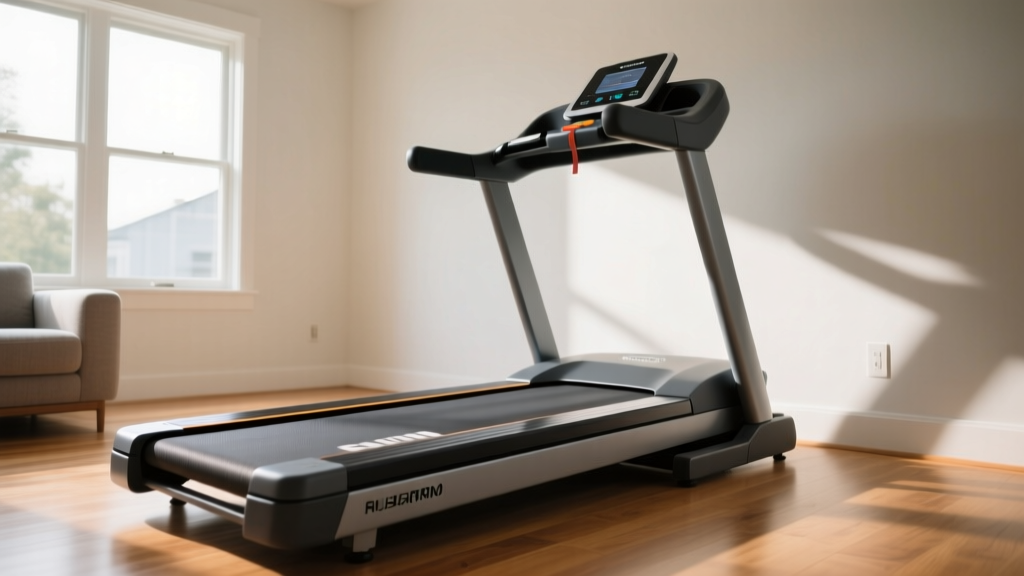
Does Walking on a Treadmill Help You Lose Weight? 2026 Guide
Discover if walking on a treadmill helps you lose weight. Compare 2026 treadmill features, motors, and belts to find the best machine for your fat-loss goals.

When evaluating home gym equipment for fat loss, one of the most common questions we receive at FitGearPulse is: does walking on a treadmill help you lose weight? The short answer is an emphatic yes, provided it is paired with a caloric deficit. However, the effectiveness of your weight loss journey depends heavily on the biomechanical features of the machine you choose. A poorly designed treadmill can lead to joint fatigue, stride restriction, and ultimately, abandoned workouts.
In this 2026 in-depth buying guide and feature comparison, we break down the exact science of treadmill walking for weight loss and analyze the critical hardware specifications—motor continuous duty, belt ply, and incline mechanics—that separate premium fat-burning machines from overpriced clothes racks.
The Science: Does Walking on a Treadmill Help You Lose Weight?
Walking is a low-impact, steady-state cardiovascular exercise that primarily utilizes fat as its main fuel source when performed in the correct heart rate zone (typically 60-70% of your maximum heart rate). According to Harvard Health Publishing, a 185-pound individual walking at a brisk 3.5 mph pace burns approximately 178 calories in just 30 minutes. When you introduce an incline, that caloric expenditure skyrockets.
Furthermore, the Mayo Clinic emphasizes that consistent, moderate-intensity walking improves insulin sensitivity and regulates appetite hormones like ghrelin, making it a superior long-term weight management tool compared to high-intensity interval training (HIIT), which can trigger compensatory overeating in beginners.
💡 The 3,500-Calorie Deficit Math
To lose one pound of body fat, you must achieve a caloric deficit of roughly 3,500 calories. Walking at 3.5 mph on a 5% incline burns approximately 350-400 calories per hour for an average adult. Committing to a 45-minute daily treadmill walk can yield a 1 lb fat loss every 8 to 10 days, assuming your dietary intake remains at maintenance levels.
2026 Treadmill Feature Comparison for Weight Loss
Not all treadmills are engineered for the repetitive, high-mileage demands of daily walking routines. Below is our 2026 comparison matrix of three top-tier treadmills optimized for weight loss, focusing on the hardware that actually matters.
| Model (2026 Lineup) | Motor (CHP) | Belt Dimensions | Incline / Decline | Est. Price |
|---|---|---|---|---|
| Horizon 7.0 AT | 3.0 CHP | 22" x 60" | 15% / 0% | $1,099 |
| Sole F80 | 3.5 CHP | 22" x 60" | 15% / 0% | $1,199 |
| NordicTrack 1750 | 4.0 CHP | 22" x 60" | 15% / -3% | $2,499 |
Decoding the Specs: What Matters for Walkers?
For dedicated walkers, the Horizon 7.0 AT offers the best entry-point for serious mileage. Its 3.0 CHP motor is the absolute baseline we recommend for daily 60-minute walking sessions. The Sole F80 steps up with a 3.5 CHP motor and a heavier flywheel, providing a noticeably smoother belt transition at the heel-strike phase of your walking gait. If you want to incorporate eccentric muscle loading (walking downhill) to increase caloric burn and engage the quadriceps, the NordicTrack 1750 remains the undisputed king with its -3% decline capability.
Motor Dynamics: CHP vs. HP and the Amp Draw Test
A critical failure mode in budget treadmills is the use of "Peak Horsepower" (HP) rather than "Continuous Horsepower" (CHP). A cheap machine might advertise a 2.5 HP motor, but its continuous duty rating may only be 1.5 CHP. When a 200 lb user walks for 45 minutes, a 1.5 CHP motor will overheat, causing the control board to shut down or the motor brushes to melt.
The Amp Draw Edge Case: As a treadmill deck dries out, friction increases. We test treadmills using an ammeter. A healthy treadmill walking at 3.5 mph should draw between 4 to 6 amps. If your machine consistently pulls over 10 amps during a standard walk, the belt-to-deck friction is forcing the motor to overwork. This not only spikes your electricity bill but guarantees a motor burnout within 6 to 8 months. Always look for models with heavy-duty, silicone-pre-lubricated decks like the Sole F80's cushion flex system.
Belt Dimensions and Stride Biomechanics
Many compact or budget treadmills feature a 20" x 55" belt. While this might suffice for a 5'2" user, anyone over 5'7" will experience "stride chopping" on a 55-inch belt. When you walk at a brisk 4.0 mph or utilize a steep 15% incline, your natural stride lengthens. If you constantly have to glance down to ensure you aren't stepping on the plastic motor housing, you alter your pelvic tilt and spinal alignment, leading to lower back pain.
"For sustainable weight loss, comfort dictates consistency. A 22-inch width and 60-inch length (22" x 60") is the non-negotiable gold standard for adult treadmill walking in 2026, allowing for natural arm swing and lateral drift without stepping off the belt."
Incline Training: The Secret Multiplier for Fat Loss
The Centers for Disease Control and Prevention (CDC) recommends at least 150 minutes of moderate-intensity aerobic activity per week. You can cut this time requirement significantly by utilizing incline walking. The viral "12-3-30" workout (12% incline, 3 mph, for 30 minutes) became popular for a biomechanical reason: walking on a 12% grade forces the posterior chain (glutes, hamstrings, and calves) to do the heavy lifting, shifting the cardiovascular demand while remaining low-impact on the patellofemoral joint (knees).
Why Decline Matters (NordicTrack Advantage)
While incline builds the posterior chain, walking on a decline (-3%) forces the quadriceps to absorb eccentric loads. This micro-tearing of muscle fibers requires significant caloric energy to repair post-workout, increasing your Excess Post-exercise Oxygen Consumption (EPOC), commonly known as the "afterburn effect." If your budget allows for the $2,499 NordicTrack 1750, the decline feature offers a distinct metabolic advantage over flat-only machines.
Maintenance Realities: Protecting Your Investment
Buying a treadmill for weight loss is only step one; maintaining it ensures it actually supports your multi-month fat loss journey. Here are the real-world maintenance protocols you must follow:
- 100% Silicone Lubrication: Never use WD-40 or petroleum-based sprays. They will dissolve the belt's backing and ruin the deck. Use only manufacturer-approved 100% liquid silicone, applied every 150 miles or 3 months.
- Belt Tensioning: Over time, the belt stretches. If you feel the belt "slip" when your heel strikes, tighten the rear roller bolts exactly one-quarter turn clockwise on both sides. Over-tightening will destroy the motor bearings.
- Vacuuming the Motor Hood: Treadmills act as giant vacuums, sucking in pet hair and dust. Every 3 months, unplug the machine, remove the plastic motor hood, and use a soft brush vacuum attachment to clean the motor fins and drive board. Dust buildup acts as an insulator, causing the electronics to overheat and fail prematurely.
Final Verdict: Choosing Your Weight-Loss Machine
So, does walking on a treadmill help you lose weight? Absolutely. It is one of the most sustainable, joint-friendly, and effective methods for achieving a long-term caloric deficit. However, your success hinges on buying a machine that removes friction from your routine—both literally and figuratively.
For budget-conscious buyers committed to daily walking, the Horizon 7.0 AT ($1,099) provides the necessary 22" x 60" real estate and a reliable 3.0 CHP motor. For users demanding a smoother ride and superior deck cushioning for heavier body weights, the Sole F80 ($1,199) is our top 2026 recommendation. Finally, for biohackers and advanced walkers looking to maximize EPOC through eccentric decline training, the NordicTrack 1750 ($2,499) remains unmatched in its class.
More gear to consider
All reviews
Rowing Machine Buying Guide & How to Set 12 Incline on Treadmill

Incline Treadmill Walking for Fat Loss: Belt Maintenance & 2026 Trends
Stair Climber Home Guide & Best Lube for NordicTrack Treadmill Care

Budget Folding Treadmills for a HIIT Treadmill Plan: 2026 Review
Office Treadmill Review & Troubleshooting ProForm Treadmill Problems