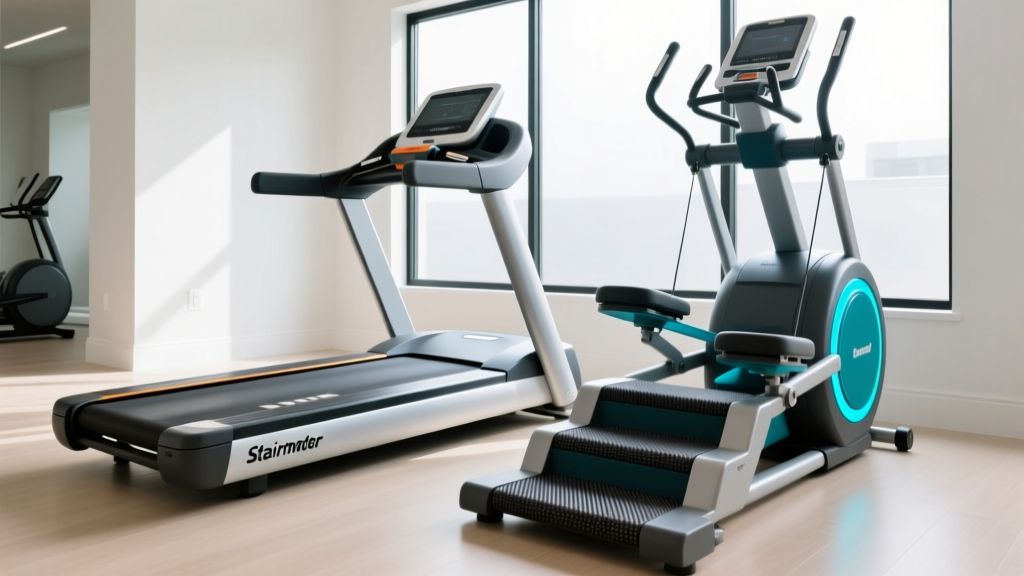
Treadmill vs StairMaster: 2026 Belt Maintenance & Cost Analysis
Compare treadmill vs StairMaster maintenance in 2026. Deep dive into treadmill belt lubrication trends, costs, and long-term ownership analysis.

The True Cost of Cardio: Treadmill vs StairMaster in 2026
When consumers debate the merits of a treadmill vs StairMaster, the conversation almost exclusively revolves around calorie expenditure, joint impact, and glute activation. However, as we navigate the 2026 home fitness market, a critical factor is frequently ignored: Total Cost of Ownership (TCO) and long-term mechanical maintenance. While both machines deliver elite cardiovascular conditioning, their mechanical architectures dictate vastly different maintenance schedules, failure modes, and lifetime costs.
Treadmill belt maintenance and lubrication represent the single most common point of failure in home cardio equipment. Conversely, the StairMaster relies on a heavy-duty chain and sprocket drivetrain that requires an entirely different approach to upkeep. According to Consumer Reports, improper belt lubrication is responsible for over 40% of all premature treadmill motor burnouts. This comprehensive market analysis breaks down the exact maintenance protocols, emerging belt technologies, and hidden costs of owning these two cardio titans.
2026 Market Insight: The average lifespan of a well-maintained premium treadmill (e.g., Sole F80, Life Fitness T5) is 10-12 years. A poorly lubricated treadmill belt can reduce the drive motor's lifespan to under 3 years due to excessive amp draw and thermal overload.Treadmill vs StairMaster: Mechanical Upkeep Matrix
To understand the long-term ownership reality, we must compare the primary wear components of both machines. The treadmill relies on friction reduction between the walking belt and the deck, while the StairMaster manages mechanical load through internal chains, alternators, and step-pedal bearings.
| Maintenance Metric | Premium Treadmill (e.g., NordicTrack 2450) | StairMaster (e.g., 10G / FreeClimber) |
|---|---|---|
| Primary Wear Component | Walking Belt & MDF Deck | Drive Chain, Sprockets, Step Bearings |
| Lubrication Requirement | 100% Pure Silicone (1 oz per application) | Industrial chain grease (internal, rarely needed) |
| Maintenance Interval | Every 130 miles or 3-6 months | Annual chain tension check & pad wipe-down |
| Average Part Replacement Cost | $150 - $350 (Belt & Deck kit) | $80 - $200 (Step pads or chain kit) |
| Catastrophic Failure Risk | High (Drive motor burnout from friction) | Low (Alternator or generator failure) |
As noted by StairMaster Support, their commercial-grade steppers are engineered with sealed bearings and heavy-duty chains that largely eliminate the need for user-applied lubrication, shifting the maintenance burden away from the consumer and onto occasional professional servicing.
Deep Dive: The 2026 Treadmill Belt Lubrication Protocol
If you choose a treadmill, mastering belt maintenance is non-negotiable. The market has seen a surge in 'maintenance-free' marketing, but for 80% of home treadmills utilizing traditional 2-ply belts, manual lubrication remains mandatory. Here is the exact, technician-approved protocol for 2026.
Step-by-Step Silicone Application
- Preparation: Unplug the machine. Loosen the rear roller adjustment bolts using a 3/16-inch Allen wrench. Turn them exactly 3 full turns counter-clockwise to create slack.
- Application: Lift the center of the walking belt. Insert the applicator wand of a 100% pure, non-petroleum silicone lubricant (brands like Impresa or Godora). Squeeze exactly 0.5 ounces of silicone onto the deck, spreading it from the center to the left edge. Repeat on the right side for a total of 1 ounce.
- Distribution: Retighten the rear bolts exactly 3 turns clockwise. Plug the treadmill in and run it at 3.0 MPH for 5 minutes. Walk on the belt to manually distribute the silicone across the entire deck surface.
- Tension Verification: Perform the deflection test. Lift the belt at the center point between the front and rear rollers. It should lift exactly 2 to 3 inches. If it lifts higher, the belt is too loose and will slip; if lower, it will cause excessive motor drag.
Market Trend: Wax-Impregnated vs. Liquid Silicone Belts
The 2026 fitness equipment market is currently divided into two distinct belt technologies. Understanding this divide is crucial when comparing high-end treadmills against the low-maintenance appeal of a StairMaster.
- Traditional Liquid Silicone (The Standard): Used in 90% of sub-$2,000 treadmills (e.g., Sole, Horizon, ProForm). Requires user compliance every 130 miles. Low upfront cost, but high user-maintenance burden.
- Wax-Impregnated / Self-Lubricating Belts (The Premium Shift): Pioneered by commercial brands like Life Fitness and Precor, and now trickling down to premium home models. These belts feature a micro-thin layer of solid wax embedded in the belt backing. As friction generates heat, the wax melts and re-lubricates the deck.
'The shift toward wax-impregnated belts in the premium home market is a direct response to consumer neglect. While liquid silicone offers a lower coefficient of friction when perfectly maintained, wax belts provide a 'fail-safe' baseline that prevents catastrophic motor burnout when users forget their maintenance schedules.' — 2026 Home Fitness Hardware Report
While wax belts eliminate the need for liquid silicone, they are not truly 'lifetime' components. Once the embedded wax is depleted (typically after 3 to 5 years of heavy use), the entire belt and deck must be replaced as a single unit, which can cost upwards of $350 for parts alone.
The Hidden Cost of Friction: Amp Draw Diagnostics
How do you know if your treadmill belt actually needs lubrication before it destroys the motor? Industry technicians rely on the Amp Draw Test. By plugging your treadmill into a standard Kill-A-Watt meter or using a digital multimeter on the motor controller, you can measure the electrical current the motor is pulling.
Diagnostic Thresholds for Treadmill Motors
- No-Load (Belt empty, 3.0 MPH): Normal range is 2 to 4 amps.
- Under-Load (User walking at 3.0 MPH): Normal range is 4 to 6 amps.
- Friction Warning Zone: If the under-load amp draw spikes to 8 to 10 amps, the belt-to-deck friction is excessive. Immediate lubrication is required.
- Imminent Failure Zone: An amp draw of 12+ amps indicates severe deck wear or a completely dry belt. The motor's thermal breaker will soon trip, or the control board will blow a capacitor to protect the system.
This diagnostic reality highlights a key advantage in the treadmill vs StairMaster debate: StairMasters utilize magnetic or alternator-based resistance systems that do not suffer from friction-based amp spikes. The mechanical load on a StairMaster chain drive remains remarkably consistent over time, making electrical diagnostics largely unnecessary for the home user.
Final Verdict: Which Machine Wins the Maintenance War?
When evaluating the treadmill vs StairMaster purely through the lens of maintenance and long-term ownership costs, the StairMaster is the undisputed victor. Its sealed drivetrain, lack of a high-friction walking surface, and commercial-grade chain components require virtually zero routine upkeep from the consumer. According to guidelines from the American Council on Exercise (ACE), equipment adherence drops significantly when maintenance barriers are high, making the StairMaster a 'set it and forget it' investment.
However, the treadmill remains the king of versatility and natural gait training. If you opt for a treadmill in 2026, you must commit to the strict 130-mile silicone lubrication protocol or invest in a premium model featuring a wax-impregnated belt system. Neglecting treadmill belt maintenance is not just a matter of a squeaky ride; it is a guaranteed path to a $400 motor replacement. Choose your machine not just by how it fits your fitness goals, but by how it fits your willingness to maintain it.
More gear to consider
All reviews
Air Bike vs Assault Bike: Track Treadmill Workouts & Cardio ROI
Horizon 7.0 AT Treadmill Specs & Noise Level Setup Guide

WalkingPad X25 Double-Fold Running Treadmill vs Bikes

ProForm 725 TL Treadmill Motor Troubleshooting & HP Guide

Rowing Machine Buying Guide and Technique: Moving Beyond Treadmill Speeds
