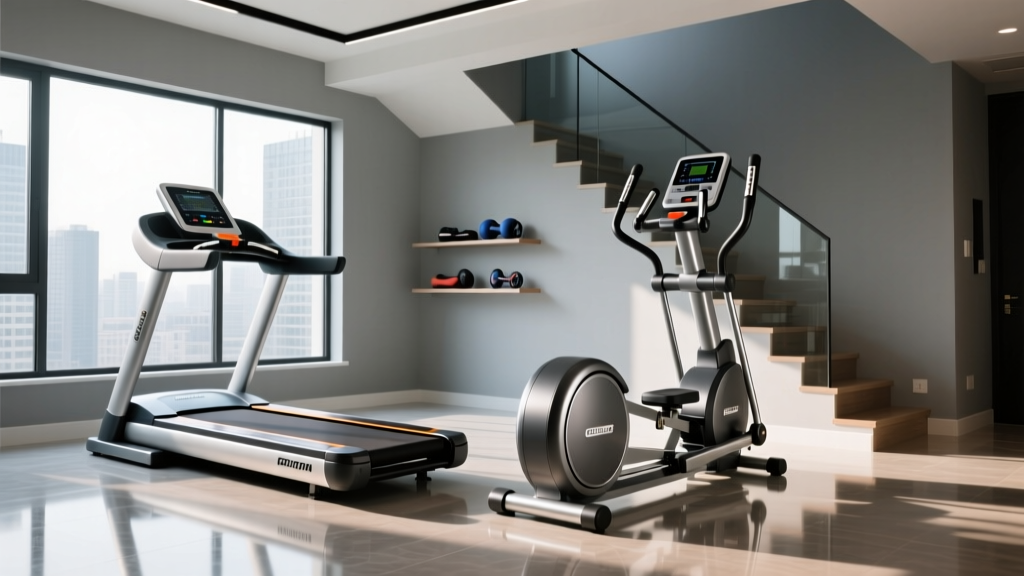
Treadmill vs Stair Climber: 2026 Home Gym Buying Guide
Deciding between a treadmill and a stair climber? Compare top 2026 models, ceiling requirements, joint impact, and failure modes to build your perfect home gym.

The Cardio Conundrum: Treadmill vs. Stair Climber for Home Use
As home gym designs evolve in 2026, the debate between purchasing a traditional treadmill or a dedicated stair climber remains one of the most common dilemmas for fitness enthusiasts. While both machines deliver exceptional cardiovascular conditioning, their biomechanical demands, spatial footprints, and long-term maintenance profiles are drastically different. This in-depth buying guide cuts through the marketing fluff to provide exact specifications, real-world failure modes, and a data-driven comparison to help you choose the right cardio machine for your home.
Biomechanics and Joint Impact: What the Data Shows
When evaluating a stair climber machine for home use, understanding the biomechanical differences is crucial. Treadmills primarily facilitate sagittal plane movement with a focus on the quadriceps, calves, and hamstrings, depending on the incline. Stair climbers, however, force continuous hip extension, heavily recruiting the gluteus maximus and hamstrings while demanding significant core stabilization.
According to Mayo Clinic's guidelines on aerobic exercise, low-impact machines are generally preferred for individuals with osteoarthritis or previous joint injuries. While treadmills with advanced shock-absorption decks (like the Sole F80's cushioned flex deck) reduce ground reaction forces by up to 40% compared to outdoor running, stair climbers eliminate the 'strike' phase entirely. Your feet never leave the pedals, resulting in near-zero impact on the patellofemoral joint, making the stair climber the superior choice for heavy users or those recovering from lower-back and knee issues.
Muscle Activation Matrix
| Muscle Group | Treadmill (0% Incline) | Treadmill (15% Incline) | Stair Climber (Moderate Pace) |
|---|---|---|---|
| Gluteus Maximus | Low (15-20%) | High (60-75%) | Very High (80-95%) |
| Quadriceps | Moderate (40-50%) | High (70-85%) | Moderate (50-65%) |
| Calves (Gastrocnemius) | High (60-70%) | High (75-85%) | Low (20-30%) |
| Core Stabilizers | Low | Moderate | High (Continuous balancing) |
2026 Market Matrix: Top Models Compared
The 2026 fitness equipment market has seen a bifurcation in pricing. Budget models have become more accessible, while premium machines now integrate AI-driven resistance adjustments. Below is a comparison of the most reliable treadmills and stair climbers currently available for residential use.
| Model (2026) | Type | Price Range | Footprint (L x W) | Drive System | Best For |
|---|---|---|---|---|---|
| Bowflex StairClimber | Stair Climber | $2,299 - $2,499 | 35' x 55' | Chain/Belt Drive | Heavy-duty glute focus & durability |
| NordicTrack FS14i | Freestride (Hybrid) | $2,799 - $2,999 | 58' x 30' | Magnetic Resistance | Multi-movement & interactive coaching |
| Sole F80 | Treadmill | $1,099 - $1,299 | 82' x 35' | 3.5 CHP Motor | Runners needing joint cushioning |
| Sunny Health SF-S902 | Mini Stair Stepper | $120 - $150 | 16' x 13' | Hydraulic Cylinders | Small apartments & budget buyers |
The Ceiling Clearance Trap (Crucial Installation Edge Case)
⚠️ CRITICAL INSTALLATION WARNING: Measure Your CeilingThe most frequent mistake buyers make with stair climbers is ignoring ceiling height. A standard stair climber adds 8 to 12 inches of step-up height from the floor. If you are 6'0' (72 inches), your maximum head height is 72 inches. Add 10 inches for the machine's pedal height at its lowest point, and you are at 82 inches. To avoid head strikes during high-intensity intervals or posture shifts, you need a minimum ceiling height of 90 to 94 inches (7.5 to nearly 8 feet). Always measure your ceiling before ordering a full-size stair climber.
Treadmills do not have this vertical clearance issue, making them the default choice for basements with low-hanging ductwork or drop ceilings. However, treadmills require significantly more floor length (often exceeding 80 inches) to accommodate a full running stride without hitting the front motor housing.
Long-Term Reliability and Failure Modes
Understanding how these machines break down will save you hundreds of dollars in out-of-warranty repairs. Based on residential repair data and teardown analyses, here are the most common failure modes for each category:
- Treadmill Motor Control Boards (MCB): The MCB regulates power to the drive motor. In budget treadmills (under $800), excessive deck friction caused by a lack of silicone lubrication forces the motor to draw higher amperage, eventually frying the MCB. Prevention: Lubricate the belt every 150 miles or 3 months.
- Treadmill Deck Delamination: High-friction zones under the belt can cause the MDF deck to warp or crack after 3-4 years of heavy use. Premium models use phenolic resin-coated decks to prevent this.
- Stair Climber Hydraulic Cylinders: Found on budget mini-steppers (like the Sunny Health models), hydraulic fluid can degrade or leak past the O-rings after 500,000 steps, resulting in a 'sinking' pedal feel. These cylinders are generally non-serviceable and require full replacement.
- Stair Climber Drive Belt Tensioners: On full-size chain/belt drive models, the main drive belt can stretch over 3-5 years, causing a slipping sensation during heavy push-offs. Mid-tier models require manual tensioner adjustments, while premium models use self-tensioning alternator drives.
Energy Expenditure: Calorie Burn Realities
Many buyers default to treadmills assuming they burn the most calories. However, the metabolic demand of stair climbing is exceptionally high due to the continuous vertical displacement of your body weight. According to Harvard Health Publishing, a 185-pound individual can burn approximately 252 calories in 30 minutes of general stair climbing, which is highly competitive with a moderate 5.0 mph treadmill run (which burns roughly 252-294 calories depending on exact pace and incline).
Furthermore, the American Heart Association recommends at least 150 minutes of moderate-to-vigorous aerobic activity per week. Because stair climbers naturally elevate the heart rate faster than level walking, users often achieve their target heart rate zones (Zone 2 and Zone 3) in significantly shorter sessions, making them highly efficient for time-crunched professionals.
Final Verdict: Which Machine Belongs in Your Home?
There is no universal 'best' machine; the right choice depends entirely on your spatial constraints, biomechanical needs, and fitness goals.
Buy a Stair Climber If:
- You want maximum glute and hamstring hypertrophy alongside cardio conditioning.
- You suffer from knee pain or shin splints and need a zero-impact modality.
- You have limited floor length but adequate ceiling height (8+ feet).
- You prefer shorter, high-intensity 20-minute sweat sessions over long-duration endurance work.
Buy a Treadmill If:
- You are training for outdoor road races (5K to Marathon) and need to practice specific pacing and stride mechanics.
- Your home gym is in a basement with low ceiling clearance (under 7.5 feet).
- Multiple users of varying fitness levels will share the machine (walking pads and treadmills are more intuitive for beginners than balancing on a stair climber).
- You enjoy long-form entertainment (watching TV/reading) while exercising, which is easier on a stable treadmill deck than a moving stair pedal.
Frequently Asked Questions
Can I put a stair climber on a second-floor apartment?
Yes, but you must consider both weight and noise. Full-size stair climbers weigh between 150 and 250 lbs. When combined with a 200 lb user, the point-load on the floor joists is significant but generally within standard residential building codes (40 lbs/sq ft live load). However, the rhythmic 'thud' of heavy stepping can transmit low-frequency noise to neighbors below. Always use a high-density 3/4-inch rubber equipment mat to dampen acoustic transfer.
Are hydraulic mini-steppers worth it compared to full-size stair climbers?
Hydraulic mini-steppers (priced $100-$200) are excellent for light NEAT (Non-Exercise Activity Thermogenesis) movement and small apartments. However, they lack the range of motion required for true cardiovascular conditioning and glute development. The pedals only travel 6-8 inches, compared to the 12-16 inch continuous rotational stride of a $2,000+ Bowflex or Life Fitness stair climber. Treat mini-steppers as a supplement to your routine, not a replacement for heavy cardio.
More gear to consider
All reviews
585 Pro Form Treadmill Review: Small Space Folding Trends 2026

Decibel Test: Elliptical vs Jog Speed on Treadmill Noise

What Treadmills Do Gyms Use? Buying Guide & Feature Comparison

Medic Therapeutics Treadmill Review: Small Space Layouts

Rowing Machine vs ProForm 1000 Treadmill: 2026 Guide
