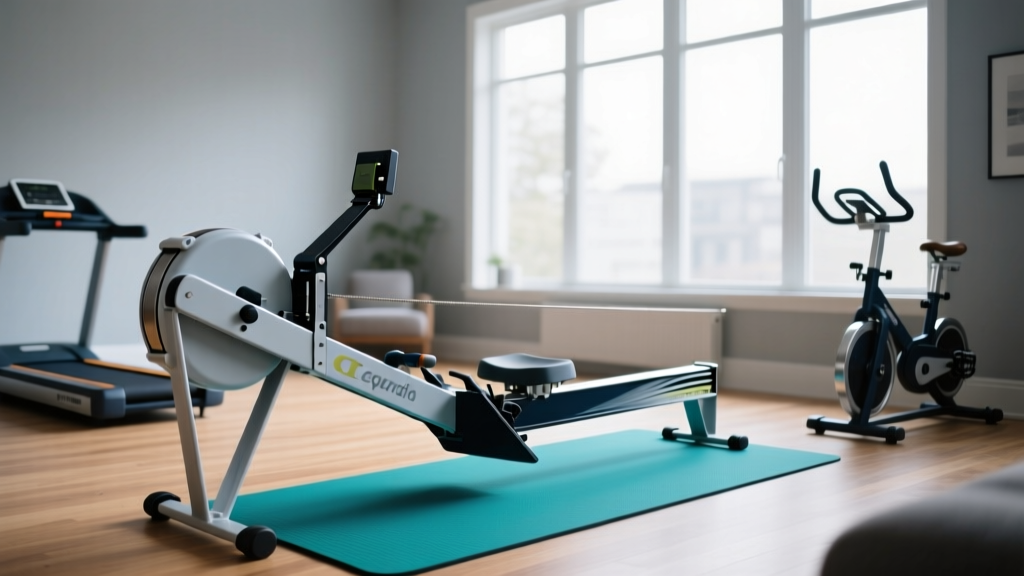
Treadmill vs Bike Machine or Rower? Beginner Rowing Guide
Stuck in the treadmill vs bike machine debate? Discover why a rowing machine is the ultimate full-body cardio choice, plus buying tips and technique steps.

The Great Cardio Dilemma: Treadmill vs Bike Machine vs Rower
When outfitting a home gym, most beginners immediately get stuck in the treadmill vs bike machine debate. Treadmills offer familiar weight-bearing impact, while stationary bikes provide low-impact joint relief. However, both machines primarily isolate the lower body and ignore the posterior chain. If you are looking for maximum cardiovascular efficiency, full-body muscular endurance, and space-saving design in 2026, the indoor rowing machine (ergometer) is the ultimate third option that quietly outperforms them both.
According to the British Heart Foundation, indoor rowing engages over 85% of your musculature, making it one of the most efficient calorie-burning exercises available. This guide will walk you through exactly why you should consider a rower, how to buy the right one, and the step-by-step technique required to row safely and effectively.
Why the Rower Wins the Full-Body Cardio Battle
Before diving into purchasing advice, it is crucial to understand how the ergometer stacks up against the traditional giants of home cardio. Below is a direct comparison to help you contextualize your investment.
| Feature | Indoor Rower | Treadmill | Stationary Bike |
|---|---|---|---|
| Muscle Engagement | 85%+ (Full Body) | Lower Body & Core | Lower Body |
| Joint Impact | Zero Impact (Seated) | High Impact (Running) | Zero Impact (Seated) |
| Avg. Calorie Burn (30 min) | 250 - 400 kcal | 250 - 450 kcal | 200 - 350 kcal |
| Storage Footprint | High (but folds/stands) | Massive (Permanent) | Moderate |
| Learning Curve | Moderate (Technique needed) | Low (Natural movement) | Low (Natural movement) |
Step-by-Step Rowing Machine Buying Guide
Unlike the simple treadmill vs bike machine comparison, shopping for a rower requires understanding resistance mechanics and monitor telemetry. Here is your 2026 buying framework.
1. Choose Your Resistance Type
- Air Resistance: Uses a flywheel and fan. The harder you pull, the more resistance is generated. It is infinitely variable and the gold standard for competitive rowers. Drawback: It is noticeably loud.
- Magnetic Resistance: Uses magnets to create drag on a metal flywheel. It is virtually silent and offers precise, programmable resistance levels. Drawback: It lacks the dynamic 'catch' feel of air or water.
- Water Resistance: Uses paddles inside a tank of water. It provides the most realistic on-water feel and a soothing swooshing sound. Drawback: Requires occasional water purification tablets and is heavy to move.
2. Top Beginner-Friendly Models to Consider
Expert Tip: Never buy a rower based solely on screen size. A rower's monitor must accurately track 'split time' (time to row 500 meters) and stroke rate to be useful for progressive overload.
- The Gold Standard: Concept2 RowErg (Approx. $1,100)
The undisputed king of the ergometer world. It features air resistance, a highly accurate PM5 monitor, and an aluminum I-beam monorail. It holds its resale value better than almost any other fitness equipment on the market. - The Premium Smart Rower: Hydrow Apollo (Approx. $1,995)
If you want immersive, instructor-led classes on a crisp touchscreen, the Apollo uses a hybrid air/magnetic resistance system to mimic the feeling of water while keeping the footprint manageable for apartments. - The Budget Magnetic Option: Echelon Row Connect (Approx. $699)
A solid entry-level magnetic rower. It is exceptionally quiet, folds completely upright for closet storage, and offers basic app connectivity, though the monitor telemetry is less granular than the Concept2.
3. Understand the Damper Setting
Many beginners mistakenly set the air resistance damper to 10, thinking it will yield the best workout. This is the equivalent of riding a bicycle in the heaviest gear up a steep hill; it will fatigue your lower back long before your cardiovascular system is challenged. For 90% of beginners, a damper setting between 3 and 5 (which correlates to a drag factor of 110-130) perfectly simulates the drag of a sleek racing shell on water.
Mastering the Erg: A 4-Phase Technique Breakdown
Proper rowing technique is non-negotiable to prevent lumbar strain. As outlined in the Concept2 technique guide, the stroke is broken down into four distinct phases. Remember the power distribution: 60% legs, 30% core, 10% arms.
- The Catch (Starting Position): Shins should be vertical (not compressed past the ankle). Hinge forward from the hips with a flat back, arms fully extended, and shoulders relaxed. You should feel a stretch in your hamstrings.
- The Drive (Power Phase): Initiate the movement by pushing explosively with your legs. Do not pull with your arms yet. Once your legs are nearly straight, swing your torso back to an 11 o'clock position, and finally, draw the handle to your lower ribcage.
- The Finish (End Position): Legs are fully extended, torso leaned back slightly, and the handle is resting just below your chest. Your elbows should be drawn back and wrists flat.
- The Recovery (Return Phase): This is the resting phase and should take twice as long as the drive. Extend your arms first, hinge forward from the hips, and only bend your knees once the handle has cleared your knees.
Common Beginner Mistakes (And How to Fix Them)
Mistake 1: 'Shooting the Slide'
The Error: Your hips shoot forward and your legs straighten, but the handle barely moves. This puts massive shear force on your lumbar spine.
The Fix: Ensure your lats are engaged and your core is braced at the Catch. The handle and the seat must move together for the first third of the Drive.
Mistake 2: Over-Compressing at the Catch
The Error: Sliding so far forward that your shins angle past vertical, causing your heels to lift excessively and your lower back to round.
The Fix: Stop the slide the moment your shins are perfectly vertical to the floor. Flexibility in the ankles and hamstrings will improve over time.
Your First 20-Minute Beginner Rowing Workout
To build your aerobic base safely, the Mayo Clinic recommends steady-state aerobic work. This introductory workout focuses on form over speed. Target a stroke rate (spm) of 18-22, and do not worry about your split time just yet.
- Warm-up (5 Minutes): Row at a very light pressure. Focus purely on the sequence: Legs, Core, Arms. Pause for 2 seconds at the Catch position on every stroke to ensure your posture is set.
- Steady State Block 1 (5 Minutes): Increase pressure to 60%. Aim for a consistent stroke rate of 18 spm. Focus on driving hard with the legs and floating back on the recovery.
- Active Rest (2 Minutes): Stop rowing. Stand up, stretch your hip flexors, and shake out your arms.
- Steady State Block 2 (5 Minutes): Return to the machine. Increase stroke rate to 20 spm. Try to hold a consistent split time (e.g., 2:30/500m) for the entire 5 minutes.
- Cool Down (3 Minutes): Drop the stroke rate to 16 spm and row with minimal effort, allowing your heart rate to return to baseline.
Final Verdict: Skipping the Treadmill vs Bike Machine Debate
While treadmills and bikes will always have their place in specialized training programs, the indoor rowing machine offers an unparalleled combination of zero-impact joint safety, massive caloric expenditure, and full-body muscular conditioning. By investing in a quality ergometer like the Concept2 RowErg and dedicating your first few weeks strictly to mastering the four-phase stroke, you will unlock a lifelong cardiovascular tool that makes the traditional treadmill vs bike machine debate entirely irrelevant. Grab your water bottle, set your damper to 4, and start rowing.
More gear to consider
All reviews
Air Bike vs Assault Bike: Does the Treadmill Help You Lose Weight?
ProForm Pro Shox Treadmill vs Walking Pads: 2026 Buyer's Guide

Curved vs Motorized Setup: Optimizing Your Garmin Treadmill Run

Treadmill Belt Keeps Moving to the Left? Curved vs Motorized Fixes
Treadmill Calc: How to Size Motors and Horsepower
