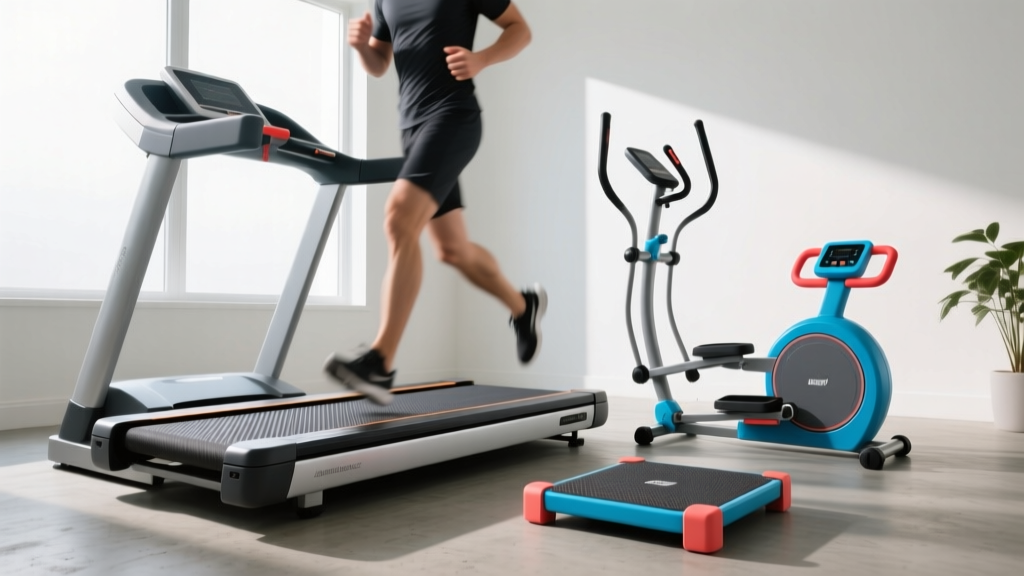
Beyond Treadmill Trivia: Rowing Machine Buying & Technique Mistakes
Move past treadmill trivia and master the rowing machine. Our 2026 guide covers buying traps, biomechanical technique flaws, and hardware troubleshooting.

Forget the Treadmill Trivia: Why the Rower Reigns Supreme
If you spend enough time in fitness circles, you will inevitably hear a piece of treadmill trivia—perhaps the fact that the treadmill was originally invented in 1818 by Sir William Cubitt as a penal device to crush grain and punish inmates, or that it wasn't adapted for cardiovascular health until the late 1960s. While that treadmill trivia makes for an interesting dinner party anecdote, it does absolutely nothing to help you build a resilient, full-body cardiovascular engine in 2026.
When it comes to sheer biomechanical efficiency, the indoor rowing machine (ergometer) outclasses the treadmill. According to the World Health Organization's physical activity guidelines, adults need at least 150 minutes of moderate-intensity aerobic activity weekly. Rowing fulfills this by engaging 86% of the body's musculature per stroke while eliminating the repetitive ground-reaction joint impact associated with running. Yet, the rowing machine remains widely misunderstood. Consumers buy the wrong resistance types for their goals, and users routinely destroy their lumbar spines through improper technique. This guide cuts through the noise, offering a deep-dive troubleshooting matrix for both your purchasing decisions and your stroke mechanics.
The Buying Trap: 3 Costly Mistakes When Shopping for a Rower
Walking into a showroom or browsing online in 2026, the sheer volume of smart rowers is staggering. However, flashy touchscreens often mask inferior engineering. Here is how to avoid the most common purchasing errors.
Mistake 1: Prioritizing Screen Size Over Rail Length and Inseam Clearance
The most frequently overlooked specification in a rowing machine buying guide is the monorail length. If you are taller than 6'2" (188 cm), standard budget rowers with 35-inch rails will cause you to 'bottom out' the slide before your shins reach the vertical catch position.
- The Fix: Look for a minimum 38-inch inseam clearance. The Concept2 RowErg (priced around $990–$1,100) accommodates up to a 38-inch inseam natively, with an option for extended legs. The Hydrow Wave ($1,695) maxes out around 37 inches, which can be restrictive for taller athletes.
Mistake 2: Confusing 'Resistance Type' with 'Feel'
Buyers often assume magnetic resistance is universally superior because it is quiet. However, magnetic rowers lack the dynamic, infinite resistance curve of air rowers. On a magnetic rower, the resistance is fixed regardless of how hard you pull; on an air rower (like the Concept2), resistance scales exponentially with your effort.
💡 2026 Market Reality Check:Air (Concept2 RowErg): ~$990. The gold standard for dynamic resistance and competitive benchmarking. Loud, but indestructible.
Magnetic (Hydrow Wave / NordicTrack RW700): $1,200–$1,800. Whisper-quiet, heavily reliant on subscription content. Resistance feels 'flatter' at the catch.
Water (WaterRower Natural): ~$1,600. Aesthetic appeal and a unique 'whoosh' sound profile, but the drag curve feels heaviest at the very beginning of the stroke, which can encourage poor early-arm-pull habits.
Mistake 3: Ignoring the Footboard Angle and Strap Placement
Footboards that sit at a steep 45-degree angle force excessive ankle dorsiflexion, making it impossible to achieve a proper vertical shin position at the catch without lifting your heels. Look for machines with adjustable footboards or a flatter resting angle (closer to 30 degrees) to preserve your ankle mobility and maintain power transfer through the midfoot.
Damper vs. Drag Factor: The Great Misconception
The most pervasive myth in rowing is that setting the side damper to '10' yields the best workout. This is entirely false. The damper is simply an air intake valve. What actually matters is the Drag Factor, which measures the rate of deceleration of the flywheel. Over time, dust accumulates in the flywheel cage, meaning a damper setting of '5' in 2024 might yield a completely different drag factor in 2026 if the machine hasn't been vacuumed.
| Damper Setting | Target Drag Factor | Best Use Case | Real-World Equivalent |
|---|---|---|---|
| 1 - 3 | 90 - 110 | Aerobic base building, endurance, recovery | A sleek, lightweight racing shell on glassy water |
| 4 - 6 | 115 - 130 | Standard testing (2k), HIIT, general fitness | A standard single scull in normal conditions |
| 7 - 10 | 140 - 200+ | Strength-endurance, power strokes, heavy hauling | A heavy, flat-bottomed wooden rowboat |
Pro Tip: To find your true drag factor on a Concept2 PM5 monitor, navigate to Main Menu > More Options > Display Drag Factor. Row 10 steady strokes, and the monitor will calculate the exact coefficient.
Troubleshooting the Stroke: Biomechanical Flaws and Fixes
Rowing is a highly technical, sequenced movement. The official Concept2 technique guidelines emphasize a strict 'Legs-Body-Arms' sequence on the drive, and an 'Arms-Body-Legs' sequence on the recovery. When this sequence breaks down, power leaks and injuries follow. Below is a troubleshooting matrix for the three most catastrophic technique errors.
| The Flaw | Biomechanical Cause | The Fix / Drill |
|---|---|---|
| Shooting the Slide | The legs push the seat backward before the handle moves. The lower back absorbs the entire load, leading to lumbar herniation risks. | Drill: 'Pause at the Catch.' Hold the compressed position for 2 seconds, ensure lats are engaged and arms are straight, then initiate the drive. Think of the handle and seat being connected by a rigid steel rod. |
| Early Arm Pull (Chicken Winging) | Bending the elbows before the handle passes the knees. This shifts the load to the small bicep muscles instead of the massive latissimus dorsi and quads. | Drill: 'Legs-Only Rowing.' Keep the torso completely frozen at an 11 o'clock angle and arms locked straight. Push only with the legs until the handle clears the knees. |
| The Death Grip | Squeezing the handle tightly causes severe forearm pump, blistering, and limits stroke rate due to tension. | Fix: Hook the fingers around the handle like a primate hanging from a branch. The thumb should rest loosely underneath, not wrap around. The pulling force should come from the skeletal structure of the wrist, not muscular grip. |
Hardware Troubleshooting: Squeaks, Slips, and Chain Care
Even the best technique cannot compensate for a poorly maintained machine. If your rower sounds like a haunted house or the handle retracts sluggishly, follow this 2026 maintenance protocol:
- The Sluggish Bungee Return: If the handle does not snap back quickly to the cage during the recovery phase, the internal elastic bungee cord has lost tension. On most air rowers, you can remove the front cage cover, unhook the bungee, and re-tie it with a tighter knot to restore the 2-3 lbs of return tension required.
- Chain Maintenance (Do NOT use WD-40): WD-40 is a solvent, not a lubricant. It will strip the chain and attract abrasive dust. Every 50 hours of use, wipe the nickel-plated steel chain with a paper towel, then apply 3-4 drops of purified mineral oil or a dedicated chain lubricant (like 3-in-One oil). Wipe off the excess.
- Monorail Squeaks: The plastic rollers on the seat pick up microscopic dust and sweat salts, creating a grinding noise. Wipe the stainless steel monorail with a non-abrasive cleaner (like Simple Green or Windex) and a soft cloth after every third session. Never use abrasive Scotch-Brite pads, which will score the steel and ruin the glide.
Structuring Your Cardio Week
To align with the American Heart Association's recommendations for optimal cardiovascular health, aim for a mix of steady-state and high-intensity rowing. A highly effective weekly split includes two 30-minute steady-state sessions (UT2 heart rate zone, roughly 18-20 strokes per minute) to build capillary density, and one 20-minute interval session (e.g., 8 rounds of 1-minute hard / 1-minute easy) to push your VO2 max.
"The rowing machine does not care about your treadmill trivia or how many miles you can jog. It only responds to wattage, leverage, and rhythm. Master the hinge, respect the drag factor, and you will build an engine that translates to almost every other physical endeavor in life."
Final Verdict: Stop Pedaling, Start Pulling
While treadmills will always have their place for specific gait training and marathon prep, the indoor rower remains the undisputed king of low-impact, high-yield cardiovascular conditioning. By avoiding the trap of buying based on digital aesthetics, understanding the physics of your drag factor, and ruthlessly correcting your biomechanical flaws, you transform the ergometer from a dusty garage relic into the most powerful tool in your fitness arsenal. Check your rail length, oil your chain, and let the flywheel do the talking.
More gear to consider
All reviews
15 mph Treadmill Belt Maintenance: Top Lubricants & Expert Review
Elliptical vs Treadmill: Apple Watch Accuracy & Budget Guide
Rowing Buying Guide: Vs HIIT Running Workout Treadmill (2026)
Planet Fitness Life Fitness Treadmill vs Under Desk Office Treadmills

ProForm Sport 5.0 Treadmill vs Curved Manuals: Troubleshooting Guide