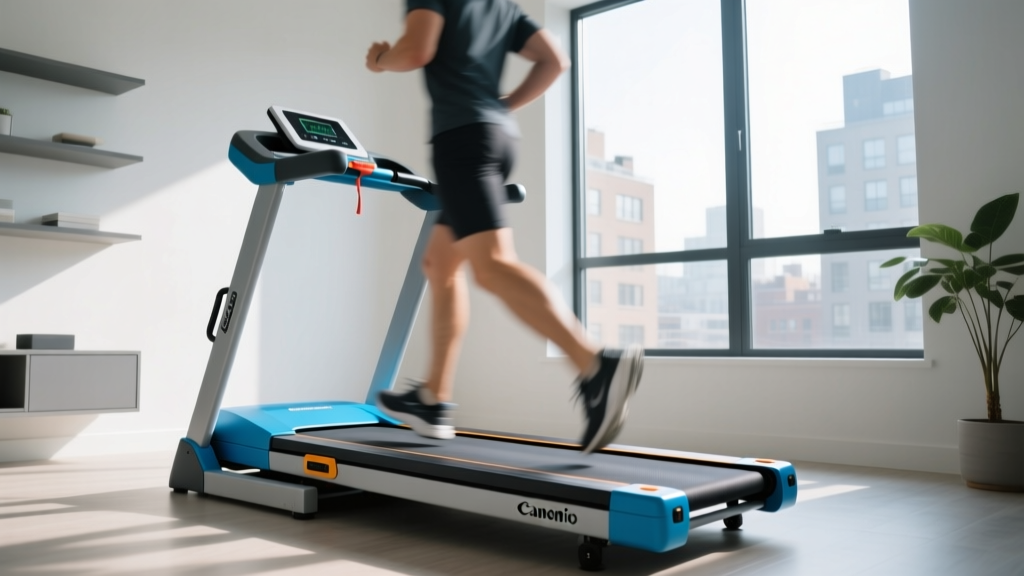
Treadmill Stress Test for Seniors: Safe Home Prep Buying Guide
Preparing for a treadmill stress test for seniors? Compare the safest home treadmills with low starting speeds, long handrails, and cardiac rehab features.

Why Home Prep Matters for the Senior Treadmill Stress Test
When a cardiologist recommends a treadmill stress test for seniors, the clinical objective is to evaluate cardiovascular function under controlled physical strain. However, the clinical environment can be intimidating, and the mechanical feel of a medical-grade treadmill often differs vastly from standard fitness equipment. For older adults undergoing cardiac rehabilitation or preparing for a diagnostic stress evaluation, acclimating to the biomechanics of a moving belt at home is a critical safety measure.
According to the Mayo Clinic, exercise stress tests monitor how your heart works during physical activity, making it essential that the patient's gait is natural and unforced. If a senior is unaccustomed to treadmill walking, the anxiety of the moving belt can artificially elevate heart rate and blood pressure, leading to inaccurate clinical readings. By investing in a home treadmill specifically engineered for senior ergonomics and low-speed stability, patients can build baseline confidence, improve walking cadence, and safely simulate test protocols before stepping into the clinic.
Clinical vs. Home Treadmill Protocols
Medical treadmills (like the Woodway ELG) can start at a micro-speed of 0.1 mph and cost upwards of $15,000. Most premium home treadmills bottom out at 0.5 mph. For a senior recovering from a cardiac event, bridging this gap requires a machine with a high-torque motor that prevents belt 'stiction' (jerky starts) and extended handrails for partial weight-bearing support.
Critical Treadmill Features for Senior Cardiac Rehab & Prep
Not all treadmills are safe for older adults managing cardiovascular conditions. When evaluating equipment for stress test preparation, you must look beyond standard consumer metrics like top speed or interactive touchscreens. The following features are non-negotiable for senior safety and cardiac rehab efficacy.
1. Low-Speed Torque and Motor Continuity
Walking at 1.0 to 1.7 mph requires a motor with immense low-end torque. Many budget treadmills (under $800) utilize 2.0 Continuous Horsepower (CHP) motors that stutter or lag when a user's foot strikes the belt at slow speeds. This micro-stuttering disrupts a senior's vestibular system and increases fall risk. For stress test prep, demand a minimum of 3.0 CHP paired with a heavy-duty flywheel to ensure the belt moves like glass, even at the lowest 0.5 mph setting.
2. Step-Up Height and Deck Ergonomics
Commercial gym treadmills often have a step-up height of 9 to 11 inches, requiring significant hip flexion and knee extension just to mount the machine. For seniors with concurrent osteoarthritis or limited mobility, this is a primary failure point. Look for a low-profile deck with a step-up height of 6 inches or less. Additionally, the deck cushioning should utilize elastomer shock absorbers rather than metal springs. Elastomers absorb vertical impact without introducing lateral sway, which is crucial for maintaining a narrow, stable base of support.
3. Handrail Geometry and Grip Accessibility
Standard treadmills feature short front-facing grab bars. Seniors preparing for a stress test need full wrap-around or extended side rails that run at least halfway down the belt. This allows the user to hold on securely while walking, simulating the security of clinical parallel bars. The handrail diameter should be between 1.25 and 1.5 inches to accommodate reduced grip strength or arthritic hands.
Feature Comparison Matrix: Top Treadmills for Senior Stress Test Prep
Below is a 2026 comparison of the most highly recommended home treadmills that meet the rigorous demands of senior cardiac rehabilitation and stress test simulation. Pricing reflects current market averages for direct-to-consumer and specialty fitness retailers.
| Model | Min Speed | Motor (CHP) | Handrail Type | Step-Up Height | Est. Price |
|---|---|---|---|---|---|
| True PS300 | 0.5 mph | 3.0 HP | Extended Side | 5.5 inches | $2,899 |
| Sole F85 | 0.5 mph | 4.0 HP | Standard Front | 8.0 inches | $1,999 |
| Horizon 7.4 | 0.5 mph | 3.5 HP | Standard Front | 7.5 inches | $1,299 |
| Life Fitness T3 | 0.5 mph | 3.0 HP | Ergonomic Curve | 6.5 inches | $3,599 |
Step-by-Step: Simulating the Modified Bruce Protocol at Home
The standard Bruce Protocol is the most common diagnostic American Heart Association recognized stress test framework. However, for seniors, cardiologists almost universally prescribe the Modified Bruce Protocol, which introduces incline gradually while maintaining a slow, manageable walking speed. If your physician has cleared you for home simulation, use the following progression on your home treadmill to build endurance safely.
The Modified Bruce Protocol (Home Prep Version)
- Stage 1 (Warm-up & Baseline): Set speed to 1.7 mph at 0% incline. Walk for 3 minutes. Focus on heel-to-toe striking and maintaining an upright posture without leaning heavily on the handrails.
- Stage 2 (Initial Load): Maintain 1.7 mph, but increase the incline to 5%. Walk for 3 minutes. Monitor your perceived exertion; breathing should be elevated but you must remain able to speak in full sentences.
- Stage 3 (Moderate Strain): Keep speed at 1.7 mph, increase incline to 10%. Walk for 3 minutes. This simulates the cardiovascular demand of walking up a steep hill, forcing the heart to pump harder against gravity without requiring a fast, unstable walking pace.
- Stage 4 (Clinical Threshold - Only if cleared): Increase speed to 2.5 mph and incline to 12%. This stage is usually reserved for the actual clinical test. Practice mounting and dismounting safely at this speed during your home prep.
Biometric Integration & Heart Rate Safety Zones
In 2026, relying on the metal contact grip sensors on a treadmill console is considered outdated and highly inaccurate, especially for seniors whose peripheral circulation may be compromised. Accurate heart rate monitoring is the cornerstone of safe cardiac rehab.
When purchasing a treadmill for stress test prep, ensure the console supports Bluetooth FTMS (Fitness Machine Service) and ANT+ protocols. This allows you to pair a medical-grade chest strap (such as the Polar H10 or Garmin HRM-Pro Plus) directly to the machine. More importantly, advanced consoles allow you to set a Target Heart Rate Ceiling. If your cardiologist has prescribed a maximum safe heart rate of 125 BPM, the treadmill can be programmed to automatically reduce the speed to 0.5 mph and flatten the incline to 0% the moment your chest strap registers a breach of that threshold. This automated fail-safe is a massive advantage for solo home workouts.
Safety Protocols and Edge Cases to Watch
Even with the best equipment, preparing for a treadmill stress test for seniors requires strict adherence to environmental and mechanical safety protocols. Be aware of the following edge cases:
- Belt Stiction After Inactivity: If the treadmill sits unused for more than 48 hours, the lubricant between the belt and deck can pool, causing the belt to 'stick' momentarily when started. This sudden jerk is a major fall hazard. Solution: Always stand with one foot on the belt and one foot on the stationary side rail when pressing start, allowing the belt to reach its target speed before transferring your full weight.
- Magnetic Lanyard Failures: The red emergency stop lanyard is mandatory. However, the magnetic contact point can weaken over time or fail to detach if the user falls backward rather than downward. Solution: Clip the lanyard to the waistband of your shorts, not the loose hem of a t-shirt, ensuring immediate tension and detachment upon any loss of balance.
- Visual Flow and Vertigo: Staring down at a moving belt can trigger benign paroxysmal positional vertigo (BPPV) or general motion sickness in older adults. Solution: Position the treadmill facing a wall with a fixed, non-distracting focal point at eye level, or place it near a window looking at a static horizon line to stabilize the vestibular system.
Medical Disclaimer: The information provided in this guide is for educational and equipment-comparison purposes only. Never attempt to simulate a clinical stress test or engage in cardiac rehabilitation exercises without direct clearance, prescribed parameters, and ongoing supervision from a licensed cardiologist or certified cardiac rehab specialist. Always refer to the Cleveland Clinic's guidelines on cardiac rehabilitation for clinical best practices.
Frequently Asked Questions
Can a home treadmill accurately replicate a clinical stress test?
A home treadmill can replicate the physical mechanics (speed and incline) of a clinical test, but it cannot replicate the diagnostic monitoring. Clinical stress tests utilize 12-lead ECG machines to monitor the electrical activity of the heart from multiple angles, alongside continuous blood pressure cuff monitoring and expired gas analysis. Home prep is strictly for building physical tolerance and reducing test-day anxiety, not for self-diagnosis.
Is a manual (non-motorized) treadmill safer for seniors?
No. Manual curved treadmills require the user to push the belt with their feet, which demands significant posterior chain strength and alters natural walking biomechanics. For seniors preparing for a standard motorized clinical stress test, a manual treadmill will train the wrong muscle groups and fail to simulate the passive belt-pull of the medical equipment used in the hospital.
How much space is required for a senior-safe treadmill setup?
Beyond the machine's footprint (typically 34 inches wide by 78 inches long), you must allocate a minimum of 24 inches of clearance on both sides and 6 feet behind the treadmill. This lateral clearance is vital for a caregiver or physical therapist to walk alongside the user, while the rear clearance ensures that in the event of a fall or emergency stop, the user is not ejected into a wall or piece of furniture.
More gear to consider
All reviews
Is It Bad to Hold Onto the Treadmill While Walking in Small Spaces?

Air Bike vs Assault Bike Care: Beyond the No Gravity Treadmill
When Were Treadmills Invented? Budget Folding Treadmill Review

2026 Market Trends: Translating Treadmill Speed km h Metrics to Stationary Bike Types

ProForm 385C Treadmill vs Curved Manual: 2026 Guide