
Treadmill Motor Guide: Avoid The Long Walk Movie Treadmill Breakdowns
Master treadmill motor sizes and CHP ratings. Learn why low-speed walking causes overheating and find the best 2026 models for endless endurance.

The Endurance Paradox: Why Your Treadmill Motor Matters More Than Ever
In the dystopian thriller The Long Walk, characters are forced into an endless, grueling walking contest where stopping means elimination. While the fictional 'The Long Walk' movie treadmill scenarios depict extreme dystopian endurance, a very real version of this is happening in home gyms right now. The massive 2026 surge in standing desk workflows and 'cozy cardio' routines means users are treating their home treadmills like an endless endurance machine, walking at 1.0 to 2.0 mph for three to four hours a day.
Most buyers assume that sprinting or heavy running puts the most strain on a treadmill motor. In reality, long-duration, low-speed walking is the ultimate stress test for underpowered machines. If you buy a treadmill based purely on a misleading 'Peak HP' sticker, you are setting yourself up for a breakdown. This in-depth buying guide will decode treadmill motor sizes, explain Continuous Horsepower (CHP), and help you select a machine capable of handling your own personal long walk without tripping a thermal overload switch.
Decoding the Specs: CHP vs. Peak Horsepower
The fitness equipment industry is notorious for inflated metrics. When shopping for a cardio machine, you will encounter two distinct horsepower measurements. Understanding the difference is the first step in avoiding a premature motor failure.
Peak Horsepower (The Marketing Gimmick)
Peak HP measures the absolute maximum power the motor can generate for a fraction of a second before it physically fails or trips a breaker. A budget treadmill might advertise a '4.0 Peak HP' motor, but it may only sustain 1.5 HP during continuous use. According to the Consumer Reports Treadmill Buying Guide, relying on Peak HP is the most common mistake first-time buyers make, leading to severe belt hesitation and motor burnout within the first year of heavy use.
Continuous Duty Horsepower (CHP) (The Real Metric)
CHP measures the power the motor can deliver consistently, over an extended period, without overheating. This is the only number that matters. A high-quality 3.0 CHP motor will effortlessly outperform a cheap 4.0 Peak HP motor during a 90-minute walking session. For context, the Runner's World Treadmill Gear Guide recommends a minimum of 2.5 CHP for walkers, 3.0 CHP for joggers, and 3.5+ CHP for serious runners or heavy users.
⚠️ The Low-Speed Overheat ParadoxWhy do motors burn out during slow walks? Most residential treadmills use Direct Current (DC) motors with an internal cooling fan attached directly to the rotor shaft. When you run at 7.0 mph, the fan spins rapidly, pulling air across the copper windings. When you walk at 1.5 mph for three hours, the fan spins too slowly to generate adequate airflow. The copper windings heat up to over 150°C, eventually melting the insulation or tripping the thermal cutoff switch. To survive 'The Long Walk' movie treadmill endurance test, you need a high-mass flywheel and advanced PWM (Pulse Width Modulation) controllers that manage heat at low RPMs.
Motor Size Matrix: Matching HP to Your Biomechanics
To ensure your machine can handle your specific usage patterns, use the comparison matrix below. This table factors in user weight, which drastically alters the torque required from the motor to keep the belt moving underfoot.
| Primary Activity | User Weight (Under 180 lbs) | User Weight (180 - 250 lbs) | User Weight (250+ lbs) |
|---|---|---|---|
| Long-Duration Walking (1-3 mph, 2+ hours) | 2.75 CHP (High Flywheel Mass) | 3.25 CHP | 3.5 CHP or AC Motor |
| Jogging / LISS Cardio (3-5 mph, 45-60 mins) | 3.0 CHP | 3.5 CHP | 4.0 CHP |
| Sprinting / HIIT (6-12 mph, intervals) | 3.5 CHP | 4.0 CHP | 4.0+ CHP (Commercial Grade) |
2026 Market Leaders: Motor Specs & Endurance Breakdown
Not all CHP ratings are created equal. A 3.5 CHP motor from a premium brand features superior copper winding density, better bearings, and advanced heat dissipation compared to a generic 3.5 CHP motor from a big-box store brand. Here is how the top 2026 contenders stack up for endurance walking and heavy use.
1. Sole F80 (The Heavy-Duty Workhorse)
- Motor Spec: 3.5 CHP DC Motor with heavy-duty flywheel.
- Price Range: $999 - $1,099
- Endurance Factor: Sole utilizes a massive flywheel that stores kinetic energy, reducing the continuous torque draw on the motor during the foot-strike phase of walking. This makes it exceptionally resilient for multi-hour standing desk sessions.
2. Horizon 7.4 (The Thermal Management Master)
- Motor Spec: 3.5 CHP Johnson Drive System.
- Price Range: $1,299 - $1,399
- Endurance Factor: Horizon's Johnson Drive system is engineered specifically for low-decibel, low-heat operation. The motor housing features extended cooling fins and a high-frequency PWM controller that prevents the 'cogging' and heat buildup common in budget models during slow walks.
3. True Fitness PS Series (The Commercial AC Option)
- Motor Spec: 4.0 HP AC (Alternating Current) Motor.
- Price Range: $3,499+
- Endurance Factor: Unlike DC motors, AC motors do not rely on a shaft-mounted fan for cooling; they use dedicated, independently powered cooling blowers. If you are literally recreating 'The Long Walk' movie treadmill scenario by walking 6 hours a day, an AC motor is the only fail-proof solution, as it generates virtually zero heat at low speeds.
Warning Signs of an Underpowered or Failing Motor
Before a motor completely dies, it will communicate its distress. According to biomechanics and equipment maintenance experts at the American Council on Exercise (ACE), altering your gait to compensate for equipment hesitation can lead to hip and knee strain. Watch for these critical failure modes:
- Belt Hesitation (The 'Stutter'): When your foot strikes the deck, the belt momentarily slows down before the motor catches up. This indicates the motor lacks the torque to handle your body weight, or the deck lacks proper silicone lubrication, causing excessive friction.
- The Ozone Smell: A sharp, metallic, or 'burning plastic' odor near the motor hood is the scent of melting copper wire insulation or a slipping drive belt. Stop immediately.
- High-Pitched PWM Whining: Cheap motor controllers use low-frequency Pulse Width Modulation, which creates an audible, high-pitched whine that changes pitch with speed. This electrical inefficiency translates directly into wasted energy and excess heat.
- Thermal Shutdowns: If the treadmill abruptly stops after 90 minutes of walking and refuses to restart for 30 minutes, the internal thermal overload switch has tripped to prevent a fire.
Expert Insight: 'Friction is the enemy of the treadmill motor. A dry walking belt can increase the amperage draw on a DC motor by up to 40%. If you are a heavy walker, you must lubricate your deck with 100% pure silicone every 130 miles, or you will effectively halve the lifespan of your 3.0 CHP motor.'
The Final Verdict: Sizing Your Motor for the Long Haul
If your goal is to rack up 15,000 steps a day on a standing desk treadmill, ignore the flashy touchscreen displays and incline metrics. Your primary investment must be in the motor housing and the flywheel. For users under 200 lbs engaging in multi-hour walking sessions, a high-quality 3.0 to 3.25 CHP motor from a reputable brand like Sole or Horizon is the sweet spot, offering the kinetic mass required to keep the belt moving smoothly without overheating the copper windings. For users over 250 lbs, or those who plan to run the machine for 4+ hours daily, investing in a 4.0 CHP or commercial AC motor is non-negotiable.
Don't let your fitness journey end in a dystopian breakdown. By prioritizing Continuous Duty Horsepower, understanding the low-speed overheat paradox, and maintaining your deck lubrication, your treadmill will easily outlast even the most grueling endurance challenges.
More gear to consider
All reviews
Ava Addams Treadmill Trend: Folding Treadmill Maintenance & Reviews

2026 Stationary Bike Types vs HIIT Cardio Treadmill Beginner

Folding Treadmill Review: Which Treadmill Part Fails in Small Spaces?
Cardio Noise Comparison: ProForm Pro 2000 Treadmill Manual Data
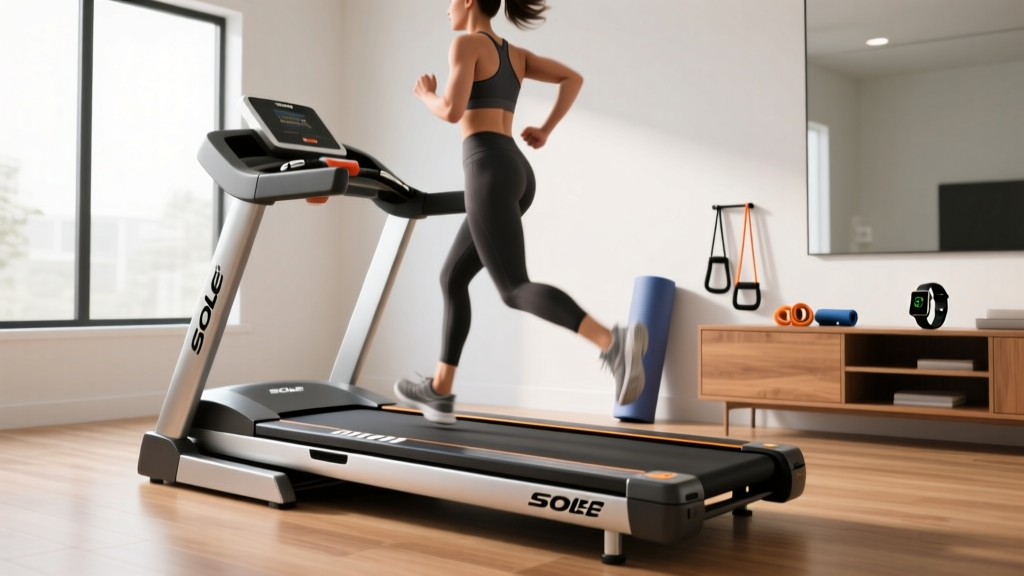
Sole Fitness F85 Treadmill: Feature Comparison & Buyer Mistakes
