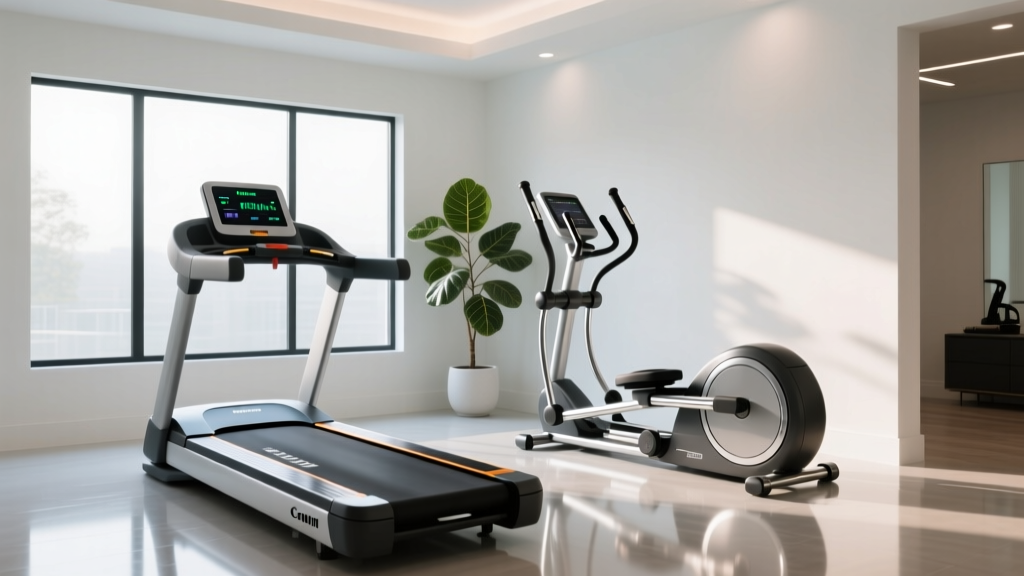
Treadmill in Garage: Cardio Machine Noise Comparison
Learn how to set up a treadmill in garage spaces with our step-by-step noise comparison guide. Find the quietest cardio machines for shared walls.

Why Noise Matters When Putting a Treadmill in Garage Spaces
Converting a garage into a home gym is one of the most popular fitness upgrades in 2026. However, placing a treadmill in garage environments presents a unique acoustic challenge. Unlike spare bedrooms or living areas, garages typically feature hard, reflective surfaces—bare concrete floors, drywall, and uninsulated metal doors—that amplify sound. Furthermore, if your garage shares a wall with your living space or sits close to a neighbor's property line, the noise generated by your cardio equipment can quickly become a point of contention.
According to the World Health Organization's guidelines on community noise, continuous exposure to noise levels above 55 decibels (dB) can cause significant annoyance and stress, while levels exceeding 75 dB can lead to long-term hearing fatigue. Understanding the acoustic footprint of your equipment is the first step toward building a harmonious home gym.
Acoustic Insight: Airborne vs. Structure-Borne NoiseWhen evaluating cardio machines, you must account for two types of noise. Airborne noise travels through the air (e.g., the whir of a motor or a spinning fan). Structure-borne noise occurs when physical impact (like your foot striking a treadmill belt) vibrates through the floor joists and concrete foundation, traveling into adjacent rooms. Treadmills are notorious for generating high levels of structure-borne noise, which is why specialized decoupling is required.
Step 1: Compare Cardio Machine Noise Levels
Before committing to a specific machine, it is crucial to understand how treadmills stack up against other cardio equipment in terms of acoustic output. The Centers for Disease Control and Prevention (CDC) provides extensive data on decibel levels and their impact on indoor environments. Using standardized acoustic testing parameters, we have categorized the noise profiles of the most common home gym machines.
| Machine Type | Airborne Noise (dB) | Impact/Structure Noise | Garage Suitability |
|---|---|---|---|
| Motorized Treadmill (Running) | 70 - 85 dB | Very High | Requires heavy floor decoupling |
| Motorized Treadmill (Walking) | 55 - 65 dB | Moderate | Good for detached/shared-wall garages |
| Eliptical (Magnetic) | 45 - 55 dB | Negligible | Excellent (Zero impact) |
| Stationary Bike (Magnetic) | 40 - 50 dB | None | Excellent (Whisper quiet) |
| Air Bike (e.g., Echo, Assault) | 75 - 88 dB | Low | Poor (High airborne fan noise) |
| Rowing Machine (Water) | 60 - 70 dB | Low | Moderate (Whooshing sound carries) |
As the data illustrates, if your primary goal is high-intensity cardiovascular training without triggering noise complaints, a magnetic elliptical or stationary bike is acoustically superior. However, if running is non-negotiable, you must proceed to Step 2 to select the right treadmill and Step 3 to properly isolate it.
Step 2: Selecting a Low-Decibel Treadmill for Your Garage
Not all treadmills are created equal when it comes to noise. The acoustic output is determined by the motor type, the deck cushioning system, and the roller diameter. As of 2026, brushless Direct Current (DC) motors have become the gold standard for home use, offering significantly quieter operation than older Alternating Current (AC) commercial motors.
Top Quiet Treadmill Models for Garage Gyms
- Sole Fitness F63 (Approx. $1,199): Featuring a 3.0 CHP brushless motor and Sole's proprietary Cushion Flex Whisper Deck, this model reduces joint impact by up to 40% compared to asphalt. The heavy-duty flywheel minimizes belt hesitation, which is a primary cause of motor strain and subsequent noise spikes.
- Horizon Fitness T101 (Approx. $799): A budget-friendly option with a 2.5 CHP motor. It utilizes a three-zone variable response cushioning system. While slightly louder than the Sole at top speeds (8+ mph), it remains exceptionally quiet for walking and light jogging.
- KingSmith R2 Walking Pad (Approx. $499): If you exclusively walk or do zone-2 cardio, this foldable walking pad maxes out at 7.5 mph. Because it lacks a heavy incline motor and uses a smaller 2.5 HP motor, its airborne noise rarely exceeds 60 dB, making it ideal for garages with thin shared walls.
"When shopping for a quiet treadmill, look for roller diameters of at least 2.5 inches. Smaller rollers force the belt to bend more sharply, creating friction, heat, and a distinct 'slapping' noise that echoes off garage walls." — FitGearPulse Engineering Team
Step 3: The 4-Layer Garage Floor Decoupling Method
Placing a treadmill directly on a concrete garage floor is an acoustic disaster. Concrete has high acoustic impedance, meaning it efficiently transmits low-frequency impact vibrations directly into your home's foundation. To solve this, you must "decouple" the machine from the floor using a multi-layered approach.
- Layer 1: The Vapor Barrier (Optional but Recommended)
Garages are prone to moisture. Lay down a 6-mil polyethylene plastic sheet to protect your acoustic mats from concrete moisture and mold. - Layer 2: Heavy-Duty Rubber Base (The Absorber)
Purchase 3/8-inch thick vulcanized rubber stall mats (commonly found at agricultural supply stores like Tractor Supply Co. for about $55 per 4x6 foot mat). These dense mats absorb the kinetic energy of your footfalls before it reaches the concrete. - Layer 3: The Anti-Vibration Pads (The Isolators)
Place four 4x4 inch Sorbothane or high-durometer rubber isolation pads directly under the treadmill's feet. Sorbothane is a proprietary viscoelastic polymer that absorbs up to 94.7% of vibration. - Layer 4: PVC Treadmill Mat (The Stabilizer)
Top the setup with a 1/4-inch thick, textured PVC treadmill mat (approx. $40-$60). This prevents the treadmill from creeping during high-speed runs and catches sweat and lubricant drips.
Total Cost for Acoustic Isolation: Approximately $120 - $150. This investment is critical for preserving your sanity and your relationships with neighbors or family members inside the main house.
Step 4: Climate Control and Maintenance for Noise Reduction
Garages are not climate-controlled environments, and temperature fluctuations drastically affect treadmill acoustics. According to the Acoustical Society of America, material viscosity changes with temperature, which directly impacts mechanical friction and noise generation.
Temperature Management
When garage temperatures drop below 45°F (7°C), the silicone lubricant inside the treadmill belt thickens, and the rubber belt itself becomes stiff. This forces the motor to work harder to turn the rollers, resulting in a loud, grinding hum. Conversely, extreme summer heat can cause the belt to expand and slip, creating a high-pitched squeak. If you live in a region with harsh winters, consider installing a smart plug connected to a small ceramic space heater to keep the garage ambient temperature above 50°F during your workout hours.
Routine Acoustic Maintenance
To keep your garage treadmill whisper-quiet, adhere to this strict maintenance schedule:
- Bi-Monthly Lubrication: Apply exactly 1 ounce of 100% pure silicone treadmill lubricant under the belt. Never use WD-40 or petroleum-based oils, which will destroy the belt backing and cause severe friction noise.
- Quarterly Belt Tensioning: If the belt slips when you plant your foot, it will create a loud 'thud-squeak' sound. Adjust the rear roller bolts by a quarter-turn clockwise until the belt tracks smoothly without dragging.
- Annual Motor Hood Vacuuming: Dust and garage debris get sucked into the motor compartment, clogging the cooling fan and causing the motor to overheat and whine. Remove the plastic motor hood and use a shop-vac to clear the debris every 12 months.
Frequently Asked Questions (FAQ)
Do I need to reinforce my garage floor for a treadmill?
No. Standard residential concrete garage slabs are poured at a minimum thickness of 4 inches and can support upwards of 3,000 pounds per square foot. A standard treadmill (approx. 150-200 lbs) plus a user (up to 350 lbs) will not compromise the structural integrity of the concrete. The primary concern is acoustic vibration, not weight capacity.
Will insulating my garage door help with treadmill noise?
Yes, but primarily for airborne noise. If you use an air bike or a treadmill with a loud cooling fan, adding a DIY garage door insulation kit (like the Matador Universal Garage Door Insulation Kit, approx. $70) will absorb high-frequency echoes. However, it will do virtually nothing to stop the low-frequency, structure-borne thumping of your footsteps. Floor decoupling is always the priority.
Can I put a treadmill on the second floor above a garage?
While structurally possible, placing a treadmill on a floor suspended above an open space (like a garage) acts as an acoustic drum. The wooden floor joists will amplify the impact noise of running, making it sound like a bass drum in the garage below. If this layout is unavoidable, you must use a specialized acoustic underlayment (like Impact Barrier QB) beneath your treadmill mat to dampen the structural resonance.
More gear to consider
All reviews
Modified Bruce Treadmill Test Protocol vs Bikes: Space Guide

Home Gym Layout: NordicTrack T Series Treadmill & Bikes
Maintaining Your Treadmill for Fat Loss: Belt Lubrication Guide
Rowing Machine Guide & Technique: Surge Protector for Treadmill Tips

Reebok Z-Tech Treadmill Noise Test vs. Top 2026 Cardio Machines