
Treadmill Fartlek Training: Belt Maintenance for Compact Home Gyms
Master treadmill fartlek workouts in tight spaces. Learn expert belt maintenance and lubrication tips to prevent slip and motor strain in compact home gyms.

The Hidden Physics of Treadmill Fartlek in Compact Spaces
Fartlek, the Swedish term for 'speed play,' has become a cornerstone of modern cardiovascular conditioning. Unlike rigid track intervals, a treadmill fartlek workout involves unstructured, unpredictable surges in speed—jumping from a 3.5 mph jog to a 9.0 mph sprint based on audio cues or perceived exertion. According to the American Council on Exercise (ACE), this unstructured variance heavily recruits fast-twitch muscle fibers and spikes VO2 max. However, executing these rapid accelerations on a home treadmill introduces severe mechanical stress that most manufacturers fail to highlight in their standard manuals.
When you transition from a jog to a sprint, your foot strike generates up to 2.5 times your body weight in kinetic force. On a poorly lubricated belt, this sudden shear force causes the belt to momentarily grip the walking board, creating a micro-stall. The motor surges to compensate, and the belt slips. In a sprawling commercial gym, a belt slip results in a stumble onto open rubber flooring. In a space-optimized home gym—where your treadmill might be positioned just 14 inches from a wall, a mirror, or an adjacent kettlebell rack—a mid-sprint belt slip becomes a critical ejection hazard.
As home fitness layouts continue to shrink in 2026, with many enthusiasts building 'micro-gyms' in 40-square-foot alcoves or multi-use living areas, understanding the intersection of spatial design and treadmill belt maintenance is no longer optional. It is a fundamental safety requirement.
Spatial Layout: Designing for Maintenance Accessibility
Space optimization is often misunderstood as simply 'fitting the machine into the room.' True spatial design for cardio equipment must account for the operational and maintenance footprint. Compact, non-folding treadmills (like the Sole F63) and folding models (like the NordicTrack EXP 7i) require specific clearances not just for airflow, but for the physical act of belt lubrication and tensioning.
The 24-Inch Maintenance Corridor
To properly lubricate a treadmill belt and inspect the deck-to-belt interface for friction burns, you must be able to reach the lateral edges of the deck. If your treadmill is pushed flush against a wall or wedged between a desk and a Peloton bike, you cannot perform this maintenance safely.
- Lateral Clearance: Maintain a minimum 24-inch clearance on at least one side of the treadmill. This allows you to kneel, lift the belt edge, and insert the lubricant wand without contorting your body or risking a strain.
- Rear Clearance: The Mayo Clinic recommends clear space behind cardio equipment for safety, but mechanically, you need at least 12 inches behind the rear roller to access the tensioning bolts with a standard Allen wrench.
- Vertical Clearance for Folding Models: If you use a folding treadmill to save space, ensure your ceiling height or overhead shelving allows the deck to fold up completely, or invest a $15 heavy-duty pneumatic prop to hold the deck securely while you clean underneath it.
Lubrication Frequency Matrix: Steady-State vs. Fartlek
Standard manufacturer guidelines suggest lubricating your treadmill belt every 130 miles or every six months. This metric is based on steady-state, moderate-pace walking or jogging. A treadmill fartlek protocol destroys this timeline. The rapid heating and cooling of the silicone layer during high-torque sprints degrades the lubricant's viscosity much faster.
| Layout Profile & Machine Type | Workout Profile | Weekly Mileage | Lubrication Interval | Deck Wear Expectancy |
|---|---|---|---|---|
| Micro-Apartment (Folding / Walking Pad) | Steady-State Walking | 10 - 15 miles | Every 6 months | 3 - 5 Years |
| Dedicated Alcove (Compact Non-Folding) | Mixed (Jogging + Occasional Sprints) | 15 - 25 miles | Every 3 months (90 miles) | 2 - 3 Years |
| Open Garage / Basement (Commercial Light) | High-Intensity Treadmill Fartlek | 25 - 40+ miles | Every 4 to 6 weeks (60 miles) | 1.5 - 2 Years |
Step-by-Step Belt Lubrication for High-Torque Speed Play
When maintaining a machine subjected to the violent speed transitions of fartlek training, precision is key. Using the wrong lubricant or applying it incorrectly will result in silicone sling-off, which in a tight home gym can ruin adjacent drywall, smart TVs, or mirrors.
- Power Down and Secure: Unplug the machine. If working on a folding model, engage the safety lock or use a mechanical prop. Never rely solely on the hydraulic piston, which can fail and crush hands.
- Clean the Interface: Loosen the rear roller bolts by exactly two full turns using a 3/4-inch or 6mm Allen wrench (depending on the brand). Slide a microfiber cloth dampened with isopropyl alcohol under the belt to dissolve old, oxidized silicone and dust buildup. Do not use household degreasers, as they will warp the phenolic resin coating on the walking board.
- Apply 100% Pure Silicone: Use a squeeze bottle with an elongated wand (such as Spot On or Horizon Fitness brand silicone, typically $12-$15). Apply exactly 1 ounce (approx. 30ml) in a zig-zag pattern directly onto the center of the walking board. Avoid aerosol sprays entirely; the overspray in a compact room will coat your walls and create a slipping hazard on hard floors.
- Distribute and Re-Tension: Re-tighten the rear roller bolts exactly two turns. Plug the machine in, set it to 2.0 mph, and let it run for 3 minutes. Step on the sides (the plastic rails, not the belt) and gently guide the belt with your hands to spread the silicone to the extreme edges.
In space-optimized layouts where walls are less than 3 feet from the treadmill edges, over-lubrication is a major liability. Excess silicone will migrate to the belt edges and 'sling' off at high RPMs during your fartlek sprints, leaving permanent oily streaks on nearby paint or wallpaper. Always wipe the outer 1-inch rim of the belt with a dry rag after your 3-minute distribution run.
Troubleshooting Mid-Sprint Belt Slip (Edge Cases)
Even with fresh lubricant, a treadmill fartlek session can expose underlying mechanical flaws, particularly in asymmetric wear patterns.
The Asymmetric Sprint Problem
During unstructured speed play, runners often favor their dominant leg when surging. Over hundreds of miles, this uneven force distribution stretches one side of the belt's cotton/polyester weave slightly more than the other. If your belt drifts to the left during a 9 mph sprint, do not immediately crank the left tension bolt.
The Fix: Wait until the machine is off. Adjust the rear roller by turning the bolt on the side the belt is closest to exactly one-quarter (1/4) turn clockwise. Run the treadmill at 4 mph and observe. Quarter-turn increments are the industry standard; over-tightening will fry the motor controller board, a repair that costs upwards of $350 on modern compact models.
Walking Board Friction Coefficient Failure
If you have lubricated the belt correctly, tensioned it properly, and the belt still hesitates when you plant your foot for a sprint, your walking board is likely glazed or worn through the resin coating. In compact treadmills with narrower 18-inch or 20-inch belts, the wear zone is highly concentrated. Run your hand under the belt; if the board feels rough, splintered, or deeply grooved in the center, no amount of silicone will save it. A replacement walking board costs between $120 and $180 and is a mandatory fix to prevent a catastrophic motor burnout during high-intensity intervals.
Frequently Asked Questions
Can I use WD-40 or household silicone spray on my treadmill?
Absolutely not. Household sprays contain petroleum distillates and propellants that will chemically dissolve the rubber backing of your treadmill belt and destroy the walking board's resin. Always use 100% pure, non-petroleum liquid silicone specifically formulated for fitness equipment.
How do I know if my compact treadmill motor is struggling during fartlek workouts?
Listen for a low-frequency humming or a sudden drop in RPM when your foot strikes the belt during a sprint. This indicates the motor is drawing excessive amperage to overcome belt friction. If you smell ozone or hot plastic, stop immediately; the drive belt or motor controller is overheating due to a dry walking board.
Does the thickness of the treadmill belt matter for speed play?
Yes. Standard compact treadmills use 1-ply or thin 2-ply belts (around 1.6mm thick). For aggressive fartlek and HIIT training, a thicker 4-ply belt (2.5mm to 3.0mm) provides better shock absorption and resists the stretching and warping caused by high-torque acceleration. Check your manufacturer's warranty before upgrading to an aftermarket heavy-duty belt.
More gear to consider
All reviews
Compact Incline Treadmill Walking: Maintenance & Longevity Guide

How to Put Treadmill Down & Budget for Upright, Recumbent, or Spin Bikes

Treadmill Running vs Outdoor Running: Noise Troubleshooting
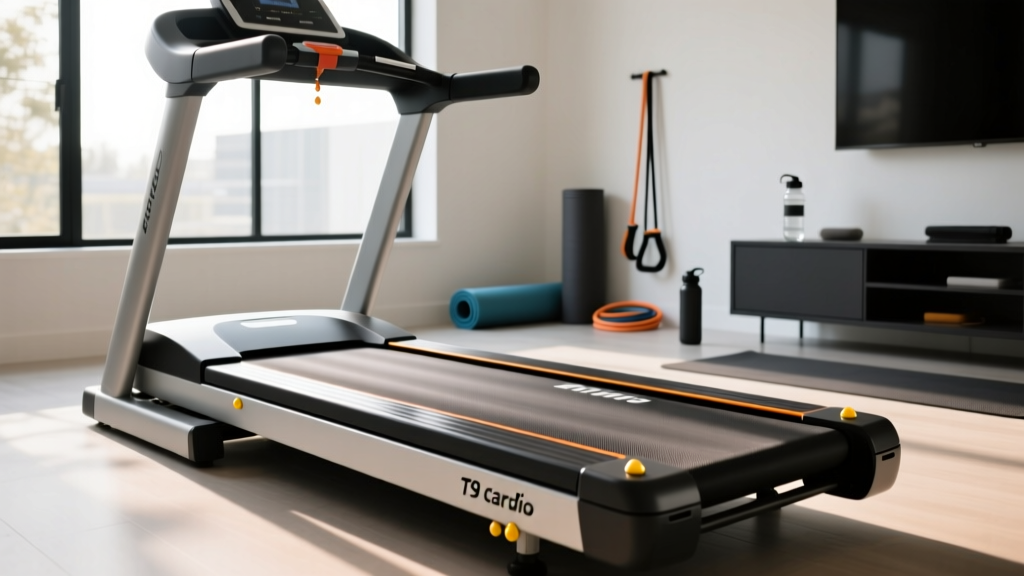
How to Lubricate and Maintain Your T9 Treadmill Belt

NordicTrack T 6.1 Treadmill Noise Troubleshooting & Comparisons
