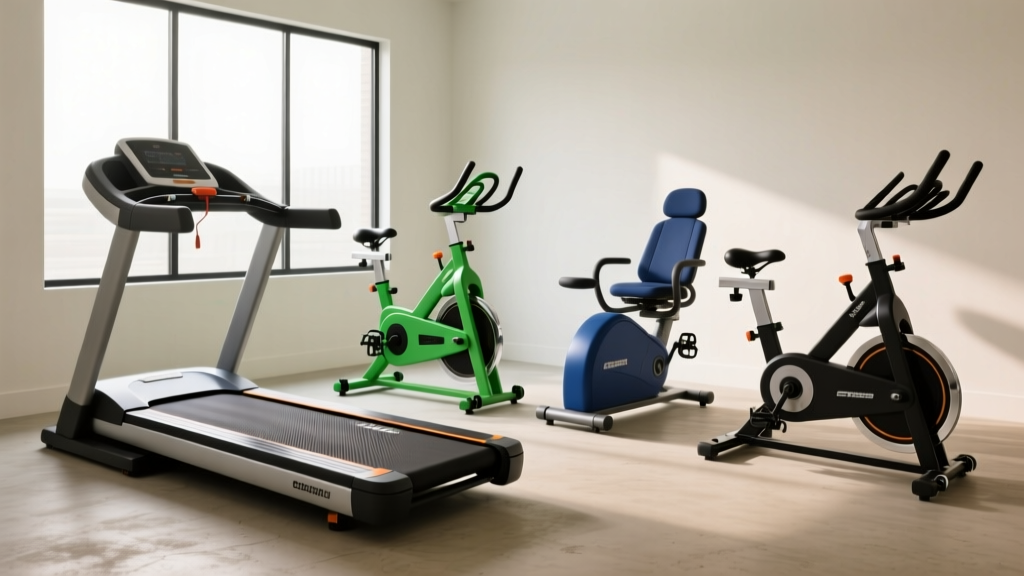
Treadmill Electricity Consumption & Noise: Troubleshooting Mistakes
Discover how abnormal treadmill electricity consumption links to noise. Compare cardio machine decibels and troubleshoot motor, belt, and deck issues.

The Hidden Link: Treadmill Electricity Consumption and Acoustics
In 2026, with residential energy rates continuing their upward trajectory, monitoring your home gym's power draw is no longer just an environmental concern—it is a critical diagnostic tool. While many users focus solely on the mechanical feel of their workouts, treadmill electricity consumption is inextricably linked to the machine's acoustic output. When a treadmill motor works harder to overcome physical resistance, it draws more amperage and simultaneously generates excess heat and noise.
Understanding this relationship is the cornerstone of advanced cardio machine troubleshooting. A sudden spike in your monthly energy bill or an unfamiliar whining sound from your home gym are not isolated incidents; they are dual symptoms of mechanical degradation. By analyzing power draw alongside decibel levels, you can pinpoint failing components before they result in catastrophic motor burnout or deck delamination.
⚠️ Diagnostic Warning: If your treadmill's circuit breaker trips during a high-incline run, or if the motor emits a high-pitched 'coil whine' that correlates with belt speed, your machine is operating in a dangerous friction-overload state. Stop use immediately and consult the troubleshooting matrix below.Cardio Machine Noise Level Comparison Matrix
Before isolating treadmill-specific faults, it is essential to understand the baseline acoustic footprint of modern cardio equipment. Noise levels are measured in A-weighted decibels (dBA), which approximates human hearing sensitivity. According to guidelines on occupational and environmental noise from the CDC NIOSH, prolonged exposure to sounds above 85 dBA requires hearing protection—a threshold easily breached by certain cardio machines in poorly insulated home gyms.
| Machine Type | Top 2026 Models | Average dB Range | Peak Amp Draw (120V) | Primary Noise Source |
|---|---|---|---|---|
| Motorized Treadmills | Sole F80, NordicTrack 2450 | 70 - 82 dBA | 12 - 18 Amps | Motor PWM whine, belt-deck friction, footstrike impact |
| Magnetic Ellipticals | Bowflex Max Trainer M9 | 50 - 62 dBA | 2 - 5 Amps | Drive belt slippage, pivot joint bearing wear |
| Concept2 Rowers | Concept2 RowErg | 65 - 78 dBA | < 1 Amp (PM5 monitor) | Air flywheel displacement, chain rattle |
| Air / Fan Bikes | Rogue Echo, Assault Bike Pro | 80 - 92 dBA | < 1 Amp | Wind resistance displacement, belt-drive hum |
| Walking Pads | WalkingPad R2, UREVO | 55 - 68 dBA | 3 - 7 Amps | Low-torque DC motor strain, thin deck flexing |
Note: Amp draw varies significantly based on user weight, incline percentage, and deck lubrication. The U.S. Department of Energy provides excellent frameworks for estimating appliance energy use, but fitness equipment requires dynamic load testing rather than static wattage calculations.
5 Common Mistakes Driving Up Power Draw and Decibels
When users complain about a 'loud' treadmill, they often replace the wrong parts. Here are the most frequent troubleshooting errors that inflate your treadmill electricity consumption and ruin the acoustic environment of your home.
Mistake 1: The Lubrication Lottery (Using the Wrong Compound)
The most pervasive maintenance error is using generic silicone sprays or petroleum-based oils on a treadmill belt. Modern treadmill decks are coated with a specialized urethane or wax composite. Applying the wrong lubricant breaks down this coating, creating a gummy residue that increases the coefficient of friction. This forces the DC motor's Pulse Width Modulation (PWM) controller to increase the duty cycle, drawing excess current and generating a low-frequency grinding noise.
- The Fix: Use only 100% PTFE (Polytetrafluoroethylene) liquid. Apply exactly 15ml (half an ounce) under the belt, distributed evenly across the deck width, every 150 miles or 3 months.
Mistake 2: Over-Tightening the Drive and Walking Belts
Users often mistake belt slippage for a loose belt, tightening the rear roller bolts excessively. An over-tensioned walking belt places immense lateral load on the front and rear roller bearings, as well as the motor drive belt. This mechanical binding causes a high-pitched squealing noise and can increase running amp draw by 30% to 50%.
- The Fix: The walking belt should lift exactly 2 to 3 inches off the deck at the midpoint when the machine is off. If the motor drive belt (connecting the motor flywheel to the front roller) deflects less than half an inch under moderate thumb pressure, loosen the motor mount bracket.
Mistake 3: Ignoring Acoustic Coupling with the Floor
Not all noise is generated by the machine; much of it is transmitted. Placing a heavy treadmill (250+ lbs) directly on hardwood floors or over hollow floor joists creates an acoustic soundboard. The low-frequency thud of footstrikes is amplified, making the machine seem mechanically faulty.
- The Fix: Invest in a high-density, 3/8-inch thick vulcanized rubber mat (minimum 40 lbs). This decouples the machine from the floor structure, absorbing impact harmonics and reducing perceived room noise by up to 12 dBA.
Mistake 4: Misdiagnosing Motor Whine vs. Roller Bearing Failure
A common troubleshooting mistake is assuming a loud, rhythmic 'chirping' or 'whirring' sound is the main DC motor failing. In reality, the sealed ball bearings inside the front and rear aluminum rollers frequently fail first due to dust ingress and lateral belt tension. A failing roller bearing will emit a metallic grinding noise that scales linearly with belt speed, mimicking motor strain and causing slight amp spikes due to rotational resistance.
- The Fix: Remove the walking belt and manually spin each roller by hand. A healthy roller spins freely and silently for several rotations. A failing roller will stop abruptly, feel 'gritty,' or emit a metallic scrape. Roller replacement costs roughly $60-$120, compared to $350+ for a new DC motor.
Mistake 5: Running on a Degraded or Delaminated Deck
Treadmill decks are typically made of MDF (Medium-Density Fiberboard) or phenolic-coated plywood. Over time, the high-pressure impact of running causes the top coating to wear through to the porous wood beneath. Once the wood is exposed, it rapidly absorbs moisture and swells, creating massive friction. Your treadmill electricity consumption will skyrocket, the motor will run dangerously hot, and you will hear a harsh 'sandpaper' scraping sound.
- The Fix: Run your hand under the belt. If you feel deep grooves, splinters, or a rough, sandy texture, the deck is dead. Lubrication will not save it. You must flip the deck (if reversible) or replace it immediately to prevent the motor controller from shorting out.
Step-by-Step Troubleshooting: Measuring Amp Draw
To objectively diagnose treadmill electricity consumption issues, you must move beyond guesswork and use a digital clamp multimeter (such as the Klein Tools CL801 or Fluke 323). This allows you to measure the exact AC current flowing from your wall outlet to the machine's power supply.
- Establish a Baseline: Turn the treadmill on with no user on the belt. Set the speed to 3.0 MPH at a 0% incline. Clamp the multimeter around the hot wire (usually the black wire inside a safely modified extension cord, or use a dedicated line splitter). A healthy 3.0 CHP motor should draw between 2.0 and 3.5 Amps unloaded.
- Apply Dynamic Load: Have a user weighing approximately 170 lbs walk at 3.5 MPH. The amp draw should rise smoothly to 4.0 - 6.0 Amps. Listen for changes in motor pitch.
- Test Running Load: Increase speed to 6.0 MPH. The draw should peak momentarily and settle between 6.0 and 10.0 Amps.
- Evaluate the Delta: If your loaded running amp draw exceeds 14 Amps on a standard 15-amp household circuit, or if the machine struggles to maintain RPM (causing the belt to stutter underfoot), you have a severe friction fault. The PWM controller is maxing out its duty cycle, which generates the loud electronic whining noise and risks tripping your breaker.
When to Repair vs. Replace: 2026 Cost-Benefit Matrix
Troubleshooting is only valuable if it leads to economically sound decisions. With the rising cost of premium cardio equipment in 2026, knowing when to abandon a failing machine is crucial. Use this matrix to guide your repair strategy based on the symptoms of high power draw and noise.
| Diagnosed Fault | Estimated 2026 Repair Cost | DIY Difficulty | Recommendation |
|---|---|---|---|
| Dry Belt / Deck (Friction) | $20 (PTFE Lube) | Easy (15 mins) | Repair. Routine maintenance; resolves 80% of noise/amp issues. |
| Worn Roller Bearings | $80 - $150 (Parts) | Moderate (45 mins) | Repair. Cost-effective; restores silent operation and drops amp draw. |
| Delaminated Deck | $150 - $250 (OEM Deck) | Moderate (1 hour) | Repair if motor is healthy. Replace machine if motor shows heat damage. |
| Failed PWM Motor Controller | $120 - $200 | Easy (Plug & Play) | Repair. Common failure point; easily swapped via wiring harness. |
| Shorted DC Motor Windings | $350 - $600 | Hard (Heavy lifting) | Replace Machine. If the machine is out of warranty and over 5 years old, a new motor is rarely cost-effective. |
Summary: Listening to Your Machine's Electrical Footprint
Your cardio equipment communicates its mechanical health through two primary channels: sound and power consumption. By treating abnormal treadmill electricity consumption as a critical troubleshooting metric rather than just a utility bill nuisance, you can intercept mechanical failures before they destroy expensive components. Keep your deck lubricated with PTFE, monitor your belt tension, and respect the acoustic limits of your home gym. When in doubt, pull out the clamp meter—the numbers never lie.
More gear to consider
All reviews
ProForm Crosswalk 365e Treadmill Setup & Walking Pad Comparison
Treadmill or Elliptical for Belly Fat? Motor Size & HP Guide

Cardio Noise Levels: Treadmill Workouts 30 Minutes & Quiet Picks
Cybex 770T Treadmill: 2026 Setup Guide & Feature Comparison
Stairmaster vs Treadmill vs Elliptical: A Beginner's Walking Pad Guide