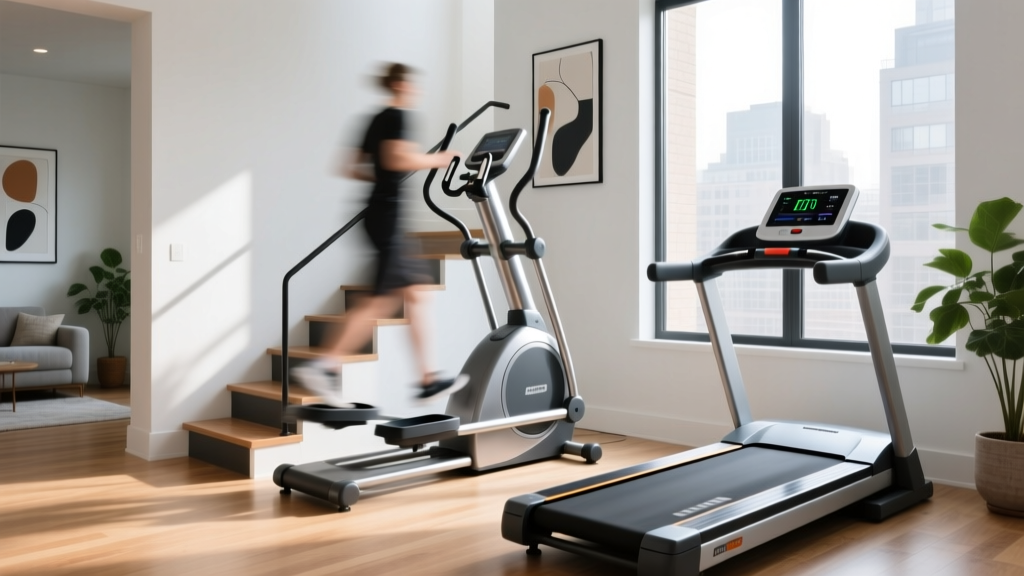
Top Treadmill Challenge for Weight Loss: Sole F85 vs NordicTrack
We pit the Sole F85 against the NordicTrack 1750 to find the best treadmill challenge for weight loss. Compare motors, incline, and tech for 2026.

The Anatomy of a Successful Treadmill Challenge for Weight Loss
When committing to a rigorous treadmill challenge for weight loss—whether it is the viral 12-3-30 incline protocol, a 30-day HIIT sprint series, or a marathon-prep calorie burner—the machine you choose dictates your success. In 2026, the fitness industry has moved past the era of flimsy, low-torque walking pads. High-intensity, sustained-load challenges require commercial-grade continuous duty horsepower (CHP), advanced thermal dissipation, and biomechanically sound deck cushioning. If your equipment fails to keep pace with your heart rate, your weight loss journey stalls.
To determine which premium machine truly supports a grueling weight loss challenge, we are putting two of the most popular heavy-duty home treadmills head-to-head: the Sole F85 (priced around $2,299) and the NordicTrack Commercial 1750 (priced around $2,599). Both are staples in the home cardio market, but their engineering philosophies differ drastically. One prioritizes raw, unadulterated mechanical endurance, while the other leans heavily into interactive, software-driven ecosystem engagement. Let us break down the exact specifications, failure modes, and real-world performance metrics to see which machine earns a spot in your home gym.
The Contenders: 2026 Premium Heavy-Duty Matchup
Before diving into the nuanced engineering differences, it is crucial to understand the baseline specifications. Both treadmills feature a spacious 22-inch by 60-inch running surface, accommodating tall runners and wide strides without the claustrophobia common in budget models. However, their physical footprints and weight capacities reveal their distinct target demographics.
| Specification | Sole F85 (2025/2026 Edition) | NordicTrack Commercial 1750 |
|---|---|---|
| Price (Base) | $2,299 | $2,599 |
| Motor | 4.0 Continuous Duty HP | 3.5 Continuous Duty HP |
| Incline / Decline | 0% to 15% Incline | -3% Decline to 15% Incline |
| Top Speed | 12 MPH | 12 MPH |
| Weight Capacity | 400 lbs | 300 lbs |
| Display | 15.6" Android-based LCD | 14" HD Smart Touchscreen |
| Machine Weight | 280 lbs | 310 lbs |
| Warranty (Motor/Frame) | Lifetime | 10 Years |
Motor Endurance: Thermal Throttling and Continuous Duty
The most critical point of failure during any treadmill challenge for weight loss is the motor. When you elevate the deck to a 15% incline and sustain a 3.0 MPH pace for 45 minutes, the motor must work against gravity to lift your body weight continuously. This generates immense internal heat.
The Sole F85 utilizes a 4.0 CHP motor paired with a heavy, balanced flywheel. Sole's engineering focuses on high-torque output at low speeds, which is exactly what incline walking demands. The larger motor casing allows for superior ambient air circulation, meaning the F85 rarely experiences thermal throttling during prolonged, high-resistance challenges. Furthermore, Sole's 400 lb user weight capacity is a testament to the structural integrity of the motor's drive system.
Conversely, the NordicTrack Commercial 1750 uses a 3.5 CHP motor. While 3.5 CHP is generally sufficient for most runners, the NordicTrack relies heavily on an internal cooling fan and smart-adjust algorithms to manage heat. During extreme, sustained incline challenges, users pushing the 300 lb weight limit may notice the motor working audibly harder, and in rare edge cases, the system will temporarily reduce torque to protect the copper windings from melting.
⚠️ Expert Warning: Never attempt a 30-day high-incline weight loss challenge on a treadmill with a motor rated below 3.0 Continuous Duty Horsepower (CHP). The sustained load will cause thermal throttling, eventually tripping the internal breaker and permanently degrading the motor's copper windings.Incline Mechanics and Caloric Expenditure
The core of any modern treadmill challenge for weight loss revolves around incline manipulation. According to Cleveland Clinic's analysis of incline walking, increasing the grade to 10-15% can double or even triple your caloric burn compared to walking on a flat surface, while significantly reducing the high-impact joint stress associated with running.
Here, the NordicTrack Commercial 1750 introduces a distinct biomechanical advantage: a -3% decline. While the Sole F85 maxes out at a robust 15% incline, the NordicTrack allows you to simulate downhill terrain. Decline walking and running are highly effective for targeting the quadriceps and improving eccentric muscle control, which is vital for overall leg strength and joint stabilization. Furthermore, Mayo Clinic's research on interval training highlights that varying the grade—shifting from steep inclines to flat or declined surfaces—forces the cardiovascular system to adapt rapidly, maximizing the afterburn effect (EPOC) long after the workout concludes.
If your challenge is strictly the 12-3-30 method (12% incline, 3 MPH, 30 minutes), both machines perform flawlessly. However, if your weight loss protocol incorporates varied topography or downhill running intervals to break through plateaus, the NordicTrack's decline feature is a decisive victory.
Software Ecosystems: Adherence vs. Autonomy
Hardware only gets you to day one; software determines if you reach day thirty. The psychological friction of starting a daily treadmill challenge for weight loss is heavily mitigated by engaging content.
The NordicTrack 1750 is essentially a hardware vessel for iFIT, its proprietary subscription service (approx. $39/month). iFIT's standout feature is auto-adjustment. As a global trainer hikes up a digital rendering of the Swiss Alps, the treadmill automatically adjusts the incline and speed to match the terrain. This removes the cognitive load of manually punching in buttons while fatigued, keeping you in a flow state. The 14-inch HD touchscreen is vibrant, responsive, and immersive.
The Sole F85, on the other hand, offers a 15.6-inch Android-based screen that integrates with the Sole+ app. It provides solid telemetry, YouTube integration, and screen mirroring, but it lacks the seamless, automated resistance adjustments of iFIT. You are in full manual control. For users who prefer to listen to their own audiobooks, watch Netflix via screen mirroring, and manually dictate their intervals without a trainer shouting in their ear, the Sole's open-system approach is vastly superior. As noted by Harvard Health Publishing, long-term weight loss adherence relies heavily on personal enjoyment and routine integration; if you despise guided trainers, the iFIT ecosystem will quickly become an expensive annoyance.
'Adherence is the primary bottleneck in any weight loss protocol. If the interface creates friction or forces a subscription model you resent, the user will abandon the challenge by day 12.'
Deck Cushioning and Joint Preservation
High-volume weight loss challenges mean high-volume foot strikes. A 180 lb individual running 3 miles a day generates over 2,000 foot strikes, each delivering a force equivalent to 2.5 times their body weight. Deck cushioning is non-negotiable.
The Sole F85 utilizes the Cushion Flex Whisper Deck, which features specialized elastomer grommets under the front half of the deck. This design provides maximum shock absorption where the foot lands, while keeping the rear of the deck firm for a solid push-off. Users frequently report a noticeable reduction in shin splints and plantar fascia pain after switching to the Sole deck.
NordicTrack employs FlexSelect Deck Cushioning, which allows you to turn the cushioning on or off via a simple dial. Turning it on provides a softer, joint-friendly run similar to a rubberized outdoor track. Turning it off stiffens the deck, mimicking the firm surface of asphalt, which is preferred by marathon runners training for road races. This versatility is excellent, but the Sole's passive, always-on elastomer system requires zero maintenance and offers a slightly more forgiving ride for heavier users engaging in daily walking challenges.
The Final Verdict: Which Machine Wins Your Challenge?
Choosing between the Sole F85 and the NordicTrack Commercial 1750 comes down to your specific weight loss strategy and your tolerance for ongoing software costs.
- Choose the Sole F85 ($2,299) if: Your primary goal is raw durability, high-incline walking (like the 12-3-30 challenge), and you want a machine with a 400 lb weight capacity and a lifetime motor warranty. It is the ultimate 'buy it for life' workhorse for users who prefer to control their own workouts, watch their own media, and avoid mandatory monthly subscriptions.
- Choose the NordicTrack Commercial 1750 ($2,599) if: Your weight loss challenge relies on high engagement, gamified global routes, and varied topography (including -3% decline training). If you need an interactive coach to auto-adjust your speed and incline to keep you accountable, the iFIT ecosystem is worth the premium hardware cost and monthly fee.
Ultimately, the best treadmill challenge for weight loss is the one you actually complete. If mechanical reliability and zero-friction usage keep you moving, the Sole F85 takes the crown. If immersive distraction and automated coaching prevent you from hitting the snooze button, the NordicTrack 1750 is your ultimate weight loss partner.
More gear to consider
All reviews
Stair Climber Setup: Outperforming the Treadmill for Belly Fat Loss

Beyond Well Fit Treadmill Reviews: Motor Size & Setup Walkthrough

Stair Climber vs Nautilus 618 Treadmill: Home Buying Guide
Maintaining Stationary Bike Types & Sunny Health and Fitness Treadmill SF-T4400

Pro Form Treadmill Not Turning On? Best Rowers Compared