
Is Walking on the Treadmill Cardio? Home Stair Climber Guide
Wondering if walking on the treadmill is cardio enough? Discover our beginner-friendly step-by-step guide to upgrading to a home stair climber.

When starting a home fitness journey, one of the most common questions beginners ask is: is walking on the treadmill cardio? The short answer is yes, but with significant caveats. While a leisurely stroll on a flat treadmill belt elevates your heart rate slightly above resting levels, it often falls short of the moderate-to-vigorous intensity required for substantial cardiovascular adaptation and efficient caloric expenditure. If you are looking to maximize your home gym footprint and accelerate your cardiovascular health, transitioning to a stair climber machine is one of the most effective upgrades you can make in 2026.
This beginner-friendly, step-by-step guide will break down the science of treadmill walking versus stair climbing, help you choose the right home stair climber for your budget, and provide a concrete 14-day onboarding protocol to build your stamina safely.
The Baseline: Is Walking on the Treadmill Cardio Enough?
To understand if your current routine qualifies as true cardiovascular training, we must look at Metabolic Equivalent of Task (MET) values and heart rate zones. According to the American Heart Association, adults need at least 150 minutes of moderate-intensity or 75 minutes of vigorous-intensity aerobic activity per week.
Walking on a flat treadmill at 2.5 to 3.0 mph yields a MET value of roughly 2.5 to 3.0. This is classified as 'light' activity. To push flat treadmill walking into the 'moderate' cardio zone (METs 3.0 to 5.9), you must increase the speed to a brisk 3.5+ mph or introduce a steep incline. However, high-incline treadmill walking can place undue shear stress on the Achilles tendon and plantar fascia for beginners. This is where the stair climber offers a superior biomechanical advantage.
The Upgrade: Treadmill Walking vs. Home Stair Climbers
Why swap your treadmill walks for a stair stepper? The primary difference lies in the vertical displacement of your center of mass. Lifting your body weight against gravity recruits the largest muscle groups in your body—the glutes, quadriceps, and hamstrings—driving a much higher oxygen demand without requiring high-impact joint pounding.
| Metric | Flat Treadmill Walking (3.0 mph) | Incline Treadmill (10% Grade) | Home Stair Climber (Moderate Pace) |
|---|---|---|---|
| Intensity (METs) | 2.5 - 3.0 (Light) | 5.0 - 6.0 (Moderate/Vigorous) | 6.0 - 8.0 (Vigorous) |
| Caloric Burn (150lb person / 30 mins) | ~110 calories | ~210 calories | ~260 calories |
| Joint Impact | Low | Low-Moderate (Ankle/Calf strain) | Low (Closed kinetic chain) |
| Primary Muscle Focus | Calves, Hip Flexors | Glutes, Hamstrings | Glutes, Quads, Core Stabilizers |
Data adapted from the Harvard Health Publishing caloric expenditure charts and standard MET compendiums.
Step 1: Choosing Your Home Stair Climber (2026 Buyer Matrix)
The home fitness market has evolved, and you no longer need a commercial gym membership to access high-quality stepping machines. Here is a breakdown of the top three tiers of home stair climbers available this year.
1. The Budget Entry: Sunny Health & Fitness SF-E3912
- Price: ~$89
- Footprint: 16" x 12" (Ideal for small apartments)
- Max User Weight: 220 lbs
- The Verdict: This hydraulic mini-stepper is the perfect entry point if you are just testing the waters. It features 8 levels of magnetic resistance and a basic digital monitor. However, the stride height is limited, meaning you will need to step at a faster cadence to reach higher heart rate zones.
2. The Mid-Tier Workhorse: Xiser Commercial Mini Stairmaster
- Price: ~$349
- Footprint: 20" x 14"
- Max User Weight: 350 lbs
- The Verdict: Built with a cast alloy frame and commercial-grade hydraulic cylinders, the Xiser offers a much deeper, smoother stride than budget models. It lacks a digital console, but its durability and biomechanical fluidity make it a favorite for physical therapists and serious home users.
3. The Premium Hybrid: Bowflex Max Trainer M9
- Price: ~$2,299
- Footprint: 49" x 30"
- Max User Weight: 300 lbs
- The Verdict: Combining a stair climber with an elliptical cross-trainer, the M9 features 20 resistance levels and upper-body ergometer arms. It integrates with the JRNY app for real-time coaching. This is for the beginner who has the budget and space for a machine that will scale with them into advanced high-intensity interval training (HIIT).
Step 2: Your 14-Day Beginner Onboarding Protocol
Jumping onto a stair climber for 30 minutes on day one is a recipe for severe delayed onset muscle soreness (DOMS) and burnout. Follow this step-by-step progressive overload routine to build your aerobic base and tendon resilience.
Understanding RPE (Rate of Perceived Exertion):We use a 1-10 scale. An RPE of 4 means you can hold a conversation easily. An RPE of 7 means you can only speak in short, breathy sentences.
Week 1: Neurological Adaptation
- Day 1: 10 Minutes | Steady State | RPE 4-5. Focus entirely on balancing without gripping the handrails tightly.
- Day 2: Rest or light stretching.
- Day 3: 12 Minutes | Intervals. 1 minute at RPE 6 (faster stepping), 1 minute at RPE 3 (slow recovery). Repeat 6 times.
- Day 4: Rest.
- Day 5: 15 Minutes | Steady State | RPE 5. Try to maintain a consistent step-per-minute (SPM) rate of around 60-70.
- Day 6 & 7: Active recovery (walking outdoors, yoga).
Week 2: Building Aerobic Capacity
- Day 8: 18 Minutes | Pyramid Intervals. 2 mins easy, 2 mins hard, 3 mins max effort, 2 mins hard, 2 mins easy. Repeat.
- Day 9: Rest.
- Day 10: 20 Minutes | Steady State | RPE 6. You should be sweating profusely by minute 12.
- Day 11: Rest.
- Day 12: 25 Minutes | Mixed Cadence. Alternate between slow, deep steps (focusing on glute push) and rapid, shallow steps (focusing on calf/quad endurance).
- Day 13 & 14: Rest and assess your progress. You should notice a significantly lower heart rate at the same stepping speed compared to Day 1.
Step 3: Biomechanics & Failure Modes (Avoiding the 'Lean and Cheat')
The most critical mistake beginners make on stair climbers is the 'Handrail Cheat.' When the workout gets difficult, the natural instinct is to drape your upper body over the console or lock your elbows, transferring up to 30% of your body weight onto the machine's frame.
WARNING: The Caloric Penalty of LeaningBiomechanical studies show that heavily leaning on the handrails reduces your caloric expenditure by up to 20% and entirely disengages your core stabilizers. You are essentially doing a supported, moving plank rather than a lower-body cardio workout.
The Proper Form Checklist
- The Hover Grip: Rest your fingertips lightly on the rails purely for balance. If your knuckles are white, you are gripping too hard.
- Upright Posture: Keep your chest proud and your gaze forward. Looking down at your feet alters your cervical spine alignment and restricts diaphragmatic breathing.
- Full Foot Contact: Avoid stepping only on your toes. Press through the mid-foot and heel to properly engage the gluteus maximus and protect the knee joint from excessive shear force.
- The Silent Step: Do not stomp the pedals down. The transition between steps should be controlled and fluid. If the machine is clanking loudly, you are relying on gravity rather than muscular control.
Frequently Asked Questions
Can I use a stair climber if I have knee pain?
Stair climbers are generally considered low-impact because your feet never leave the pedals, eliminating the ground-reaction forces associated with running. However, if you have patellofemoral pain syndrome (runner's knee), the deep flexion required for stepping can aggravate it. Start with shallow steps and consult a physical therapist. If pain persists, an elliptical or recumbent bike may be a safer alternative.
How does a mini-stepper compare to a commercial StepMill?
Commercial StepMills (the ones with the actual revolving staircase) force a fixed, deep stride length and cost upwards of $6,000 for home models. Mini-steppers use hydraulic or magnetic resistance to simulate the climb in a compact footprint. While a mini-stepper won't perfectly replicate the biomechanics of climbing a real flight of stairs, it provides 85% of the cardiovascular benefit for a fraction of the cost and space.
Should I do stair climbing before or after weightlifting?
If your primary goal is cardiovascular endurance and fat oxidation, perform your stair climbing after your resistance training. Weightlifting depletes your intramuscular glycogen stores; stepping onto the climber afterward forces your body to tap into stored adipose tissue (fat) for energy at a higher rate. If your primary goal is climbing performance or HIIT conditioning, do it first while your central nervous system is fresh.
More gear to consider
All reviews
Best Compact Gear for a 30-Minute Fat Burning Treadmill Workout

NordicTrack C900i Treadmill Pivot: Air Bike vs Assault Bike Comparison
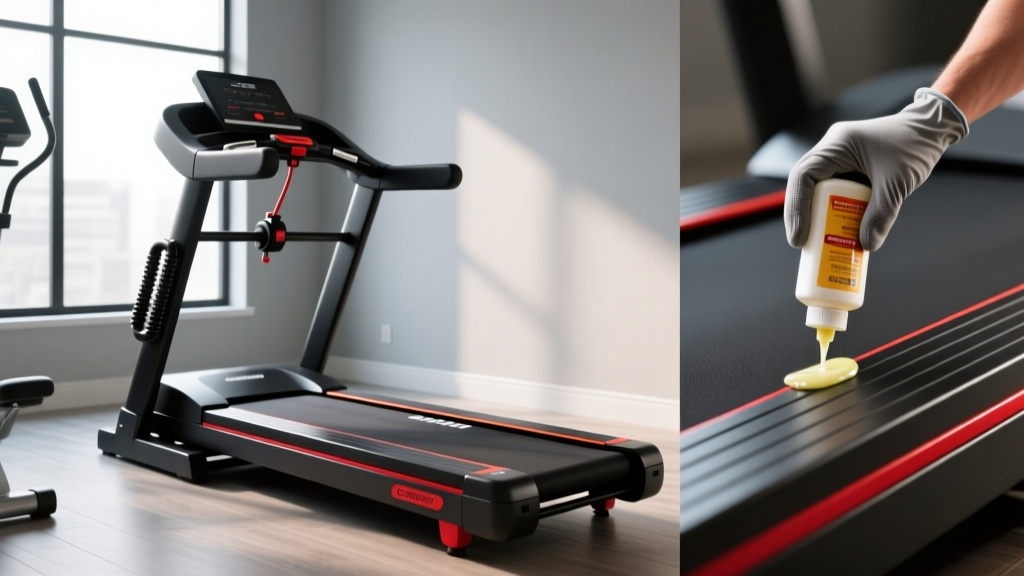
Treadmill Handle Attachment Safety & Belt Lubrication Maintenance
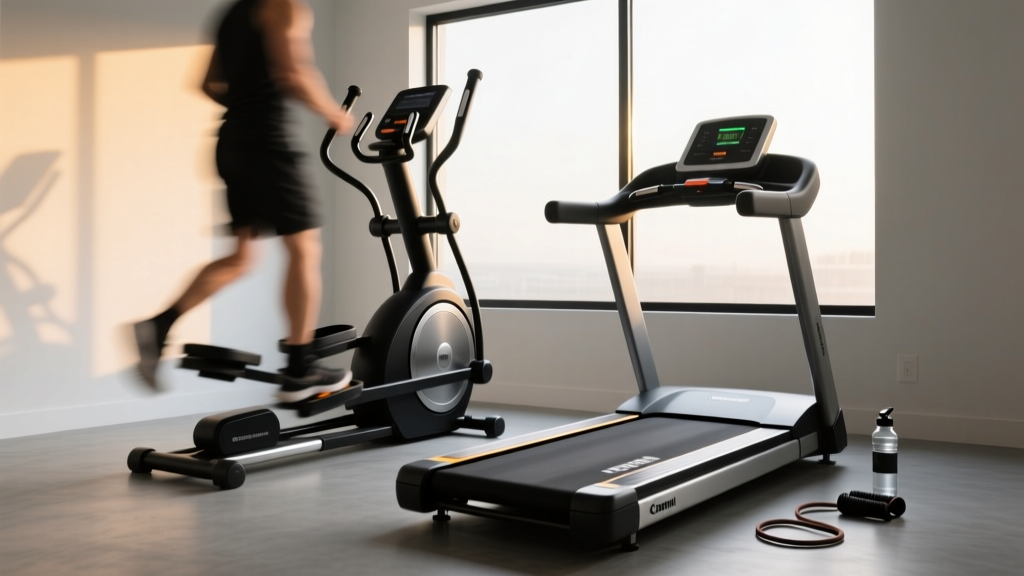
Elliptical vs Treadmill: Budget Breakdown & Pregnant Treadmill Safety

ProForm 385C Treadmill vs Curved Manual: 2026 Guide
