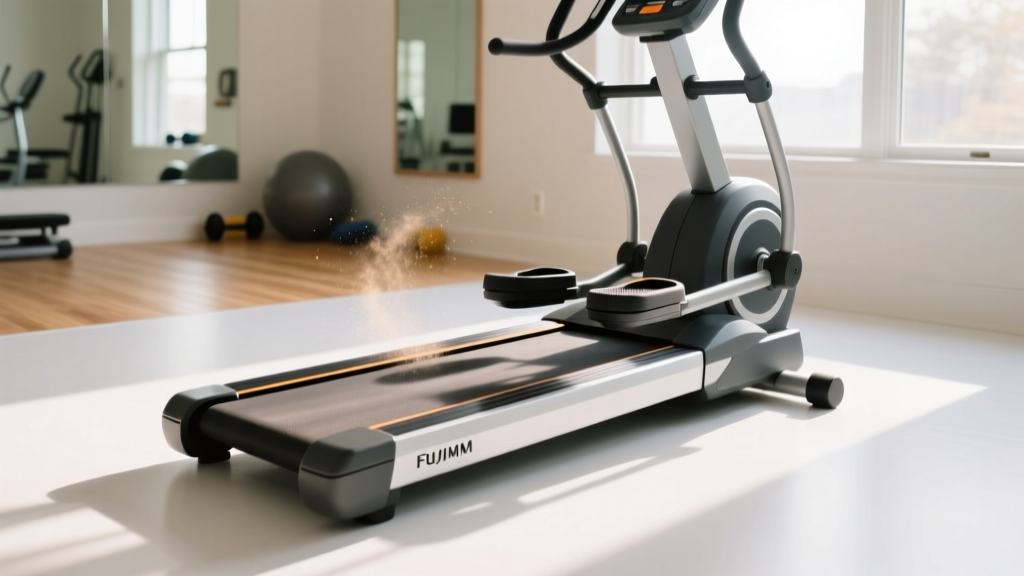
Prevent Treadmill Burns on Skin: Compact Portable Cardio Maintenance
Learn how proper maintenance of compact portable cardio equipment prevents belt slips, overheating, and severe treadmill burns on skin. Expert longevity tips.

The Hidden Danger of Neglected Compact Cardio
The explosion in popularity of compact portable cardio equipment options—such as under-desk walking pads, foldable mini-treadmills, and portable rowers—has revolutionized home fitness in 2026. Models like the KingSmith WalkingPad X21 and the UREVO Strol 2E offer incredible convenience for small apartments and home offices. However, this shift toward ultra-compact, low-profile machines has introduced a unique safety hazard that many users overlook: severe friction injuries caused by poor maintenance. When a compact treadmill belt dries out, misaligns, or overheats, the resulting mechanical failure can easily cause treadmill burns on skin, alongside sudden falls and motor burnout.
Unlike full-sized commercial treadmills that feature robust handrails and elevated decks, portable walking pads sit mere inches from the floor and lack stabilizing grips. If a neglected belt seizes or jerks due to excessive deck friction, the user is thrown directly onto the abrasive belt surface or the surrounding floor. According to the U.S. Consumer Product Safety Commission, exercise equipment is a leading cause of home friction burns and lacerations, with low-clearance treadmills posing a distinct risk for lower-extremity friction injuries.
The Physics of Friction Burns on Compact Decks
Understanding how treadmill burns on skin occur requires a look at the biomechanics of compact cardio machines. Portable treadmills typically utilize smaller direct-current (DC) motors ranging from 1.5 to 2.25 peak horsepower. Because these motors lack the massive torque of a 4.0 HP commercial gym treadmill, they are highly sensitive to the coefficient of friction between the PVC belt and the wooden or composite deck.
Failure Mode 1: The "Dry Deck" Micro-Seizure
When a walking pad is not lubricated with 100% silicone fluid every 30 to 50 miles, the friction between the belt and deck generates immense heat and resistance. The motor struggles to pull the belt, causing a "micro-seizure." The belt halts for a fraction of a second, then violently jerks forward as the motor overcomes the static friction. This sudden deceleration and acceleration throws the user off balance. Because walking pads lack handrails, the user's foot or shin slides against the moving, heated PVC belt, resulting in deep second-degree friction burns.
Failure Mode 2: Edge Overheating and Thermal Burns
If the belt tracking is misaligned, the edge of the belt continuously rubs against the plastic side rails or the internal metal frame. This localized friction can heat the belt edge to over 140°F (60°C). If a user steps too close to the edge or accidentally brushes their ankle against the side of the machine while getting on or off, the combination of thermal heat and mechanical abrasion causes severe localized burns.
⚠️ CRITICAL SAFETY WARNING: Never use WD-40, petroleum jelly, or household oils on a compact treadmill belt. These substances will chemically degrade the PVC and urethane layers of the belt, causing it to stretch, warp, and ultimately snap at high speeds, dramatically increasing the risk of catastrophic falls and severe treadmill burns on skin.The Ultimate Maintenance Matrix for Portable Cardio
To maximize the longevity of your compact portable cardio equipment and eliminate the risk of friction burns, you must adhere to a strict maintenance schedule. The American Council on Exercise emphasizes that preventative maintenance is the single most important factor in home gym equipment longevity.
| Equipment Type | Maintenance Task | Frequency | Tools Required | Longevity & Safety Impact |
|---|---|---|---|---|
| Walking Pads / Under-Desk Treadmills | 100% Silicone Deck Lubrication | Every 30-50 miles or 2 months | Liquid silicone applicator wand | Prevents belt micro-seizures and friction burns; extends motor life by 40%. |
| Foldable Mini-Treadmills | Rear Roller Belt Tensioning | Every 6 months or when slipping occurs | 5mm or 6mm Allen wrench | Eliminates sudden belt jerks that cause falls and skin abrasions. |
| Compact Magnetic Rowers | Rail and Roller Wheel Cleaning | Weekly (after heavy use) | Microfiber cloth, isopropyl alcohol | Prevents seat derailment and ensures smooth drag curve. |
| Portable Mini-Steppers | Hydraulic Cylinder Pivot Lubrication | Every 3 months | White lithium grease | Prevents squeaking, cylinder seal failure, and uneven step resistance. |
Step-by-Step Belt Lubrication and Alignment Protocol
Proper belt care is your primary defense against treadmill burns on skin. Here is the exact procedure for maintaining the belt on popular compact models like the UREVO URTM045 or the KingSmith series.
Step 1: The Lift and Feel Test
Unplug the machine. Reach under the center of the walking pad belt and lift it. You should feel a slight, oily residue. If the deck feels completely dry, or if you notice a fine white dust (which is the deck's phenolic coating wearing away), immediate lubrication is required.
Step 2: Precision Silicone Application
Loosen the belt slightly using a 5mm Allen wrench on the rear roller bolts (turn counter-clockwise exactly one full turn). Lift the edge of the belt and apply exactly 10 to 15 milliliters of 100% liquid silicone lubricant in a zig-zag pattern down the center of the deck. Do not over-apply; excess silicone will seep out the edges, creating a slipping hazard on your floor and attracting dust that ruins the motor hood.
Step 3: Distribution and Re-Tensioning
Re-tighten the rear roller bolts by turning them clockwise exactly one full turn to return to the baseline tension. Plug the machine in and run it at 2.0 MPH for three minutes. Walk on the belt gently to help distribute the silicone evenly across the entire deck surface.
Step 4: Tracking Alignment Check
Run the machine at 3.0 MPH without standing on it. Observe the belt. If it drifts to the left, insert the Allen wrench into the left rear bolt and turn it clockwise exactly one-quarter (1/4) turn. Wait 30 seconds for the belt to adjust. Never make half-turn or full-turn adjustments for tracking, as this will over-tension the belt, strain the compact DC motor, and cause the belt edges to curl and overheat.
Motor Hood Cleaning & Heat Dissipation
Compact portable cardio equipment options are notoriously prone to overheating because their motor hoods are small and sit close to the ground, acting as vacuums for pet hair, dust, and carpet fibers. When the internal cooling fan is clogged, the motor controller board overheats. This not only destroys the electronics but can cause the belt to stop instantaneously, throwing the user forward.
- Vacuum Protocol: Every 30 days, remove the 4 to 6 Phillips-head screws securing the front motor hood. Use a soft brush attachment on a shop-vac to gently remove dust from the motor fins and the drive belt.
- Drive Belt Inspection: Check the ribbed drive belt that connects the motor to the front roller. If you see black dust accumulating around the roller, the drive belt is slipping and needs to be replaced (usually a $15-$25 part depending on the model).
- Thermal Cutoff Reset: Many 2026 walking pads feature an automatic thermal shutoff. If your machine suddenly dies mid-walk, do not force it. Unplug it, allow the internal thermistor to cool for 45 minutes, and clean the motor hood before restarting.
First Aid: Treating Treadmill Burns on Skin
If a mechanical failure does result in a fall and subsequent friction burn, immediate and correct first aid is vital to prevent infection and minimize scarring. The World Health Organization notes that proper initial cooling of burns significantly reduces tissue damage depth.
Immediate Action Plan for Friction Burns:
- Cool the Area: Run cool (not cold) tap water over the burn for 10 to 15 minutes. This halts the thermal damage deep in the dermis.
- Never Apply Ice: Ice restricts blood flow and can cause secondary frostbite on already compromised tissue.
- Cleanse Gently: Wash with mild, fragrance-free soap and water. Do not use hydrogen peroxide or rubbing alcohol, as these destroy healing cells.
- Dress the Wound: Apply a thin layer of petroleum jelly or an antibiotic ointment, and cover with a non-stick hydrocolloid dressing to maintain a moist healing environment.
Longevity Upgrades for Compact Equipment
Beyond basic maintenance, investing in the right environment for your portable cardio gear will extend its lifespan by years and drastically reduce safety hazards.
High-Density Equipment Mats
Never place a walking pad directly on thick carpet or uneven hardwood. Carpet fibers will be sucked into the motor hood, and uneven floors will twist the treadmill's internal frame, causing chronic belt misalignment. Invest in a 3/8-inch thick, high-density PVC equipment mat (costing roughly $40 to $60). This provides a perfectly level surface, absorbs the harmonic vibrations that loosen internal bolts, and protects your floor from sweat and silicone drips.
Surge Protection for Micro-Processors
Modern compact treadmills utilize sensitive digital motor controllers and Bluetooth micro-processors. A minor power surge can fry the control board, rendering the machine useless and voiding the warranty. Bypass standard power strips and plug your walking pad into a dedicated surge protector rated for at least 2,000 Joules with an automatic shutoff feature. This $30 investment protects the $400-$800 brain of your compact cardio machine.
Final Thoughts on Portable Cardio Safety
Compact portable cardio equipment options offer unmatched flexibility for modern fitness routines, but their small footprint requires meticulous care. By treating deck lubrication, belt alignment, and motor hygiene as non-negotiable chores, you completely eliminate the mechanical failures that lead to sudden falls and severe treadmill burns on skin. Respect the engineering of your walking pad, maintain it with precision, and it will deliver safe, reliable cardiovascular health for years to come.
More gear to consider
All reviews
Life Fitness T5-5 Treadmill vs Portable Cardio: 2026 Budget Guide

Office Treadmill Review: Care vs NordicTrack X24 Treadmill Assembly

Elliptical vs Treadmill: The 2026 Treadmill Fitness Class Trend
Rowing Technique & Buying Guide: The Treadmill Was Invented in 1818
Navigating the Horizon T101 Treadmill Recall Rumors: Setup Walkthrough & Feature Comparison
