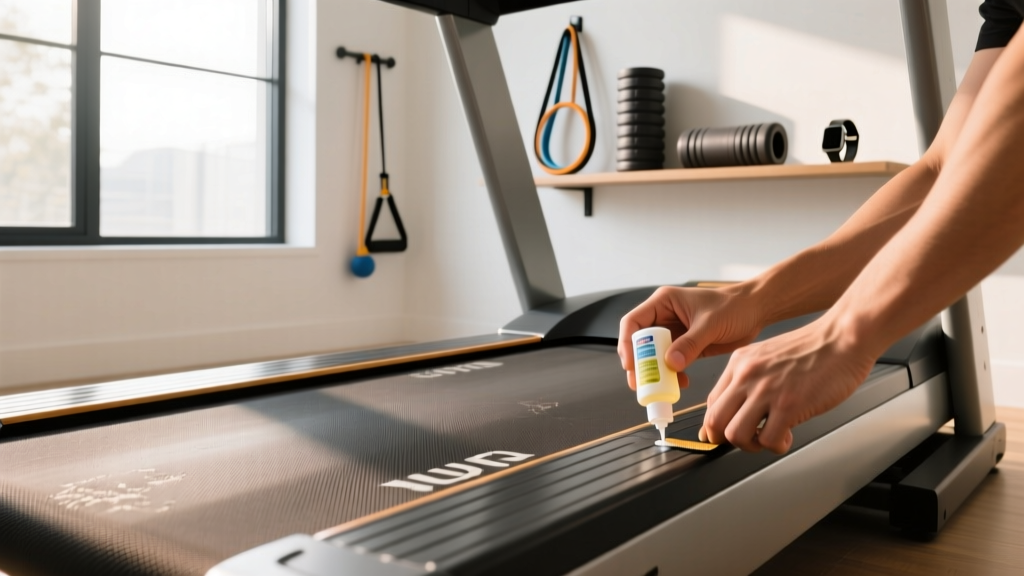
Maintaining Your Belt for Daily Treadmill Aerobic Workouts
Maximize machine lifespan with our deep-dive into treadmill belt maintenance and lubrication, ensuring smooth, friction-free aerobic workouts every day.

Committing to consistent treadmill aerobic workouts is one of the most effective ways to improve cardiovascular health, but your machine's longevity relies entirely on how well you manage the friction between the walking belt and the deck. Whether you are logging high-mileage marathon training or completing daily 45-minute Zone 2 cardio sessions, the belt is the critical wear component that dictates the health of your entire machine. Neglecting this single maintenance task is the leading cause of catastrophic motor and control board failures in home fitness equipment.
In this comprehensive guide, we break down the exact engineering principles, lubrication protocols, and tensioning techniques required to keep your treadmill running flawlessly. By mastering these maintenance routines, you protect your investment and ensure your treadmill aerobic workouts remain uninterrupted for years to come.
The Hidden Friction Cost of Daily Aerobic Volume
When you perform treadmill aerobic workouts, a 180-pound runner generates immense downward force and shear friction with every footstrike. The walking belt slides over the deck, and without a microscopic layer of lubricant, this friction converts kinetic energy into destructive heat.
⚠️ The Amp-Draw Danger Zone:A properly lubricated treadmill belt operating at 6.0 mph typically draws between 2 to 4 amps on the motor. When the belt dries out, that amp-draw can spike to 8, 10, or even 12 amps. This massive electrical surge overheats the Insulated-Gate Bipolar Transistor (IGBT) on the lower motor control board, leading to a catastrophic short circuit. Replacing a fried control board costs between $150 and $350, while a tube of silicone lubricant costs less than $15.
According to the American Heart Association, adults should aim for at least 150 minutes of moderate-intensity aerobic activity per week. Hitting this volume on a poorly maintained treadmill accelerates deck wear exponentially, turning a $1,500 machine into e-waste in under three years.
Silicone vs. Wax vs. Teflon: The Lubricant Matrix
Not all lubricants are created equal. Using the wrong chemical compound will literally melt the PVC backing of your walking belt. As of 2026, the industry standard for 95% of consumer treadmills (including NordicTrack, Sole, and Horizon) is 100% pure silicone.
| Lubricant Type | Chemical Base | Verdict & Risk Factor |
|---|---|---|
| 100% Silicone Liquid | Polydimethylsiloxane | APPROVED. The gold standard. Safe for PVC and rubber. (e.g., Spot On, Horizon Silicone). |
| WD-40 / 3-in-One Oil | Petroleum Distillates | DANGEROUS. Dissolves belt backing and ruins the deck finish. Voids warranty instantly. |
| Teflon (PTFE) Spray | Fluoropolymer | CONDITIONAL. Only use if specifically mandated by the manufacturer (rare in modern home units). |
| Paraffin Wax Board | Synthetic Wax | PRE-LUBRICATED ONLY. Found in high-end commercial gyms (Life Fitness). Do not apply liquid to these. |
How to Check for Pre-Lubricated Decks
Some premium treadmills feature a phenolic resin-coated deck infused with wax. To check if your machine requires liquid silicone, loosen the belt slightly and run your hand along the underside of the belt and the top of the deck. If it feels waxy or leaves a white residue on your fingers, you have a pre-lubricated system. Applying liquid silicone to a wax deck will create a gummy paste that destroys the belt. For standard decks, consult the Treadmill Doctor or your specific user manual to confirm 100% silicone compatibility.
The 15-Minute Belt Alignment and Tensioning Protocol
Lubrication is only half the battle. A misaligned belt will track to one side, fraying the edges and exposing the internal polyester mesh. Proper tension ensures the front drive roller grips the belt without slipping during high-impact aerobic intervals.
Tools Required:
- 3/16-inch or 5mm Allen wrench (usually included with the treadmill)
- 100% Silicone treadmill lubricant with an extension tube
- Microfiber cloth
Step-by-Step Application & Tensioning:
- Loosen the Belt: Use the Allen wrench on the rear roller adjustment bolts (left and right). Turn both bolts counter-clockwise exactly two full turns. This lifts the belt off the deck.
- Apply the Silicone: Slide the extension tube under the center of the belt. Squeeze exactly 0.5 to 1 ounce of silicone in a zig-zag pattern across the width of the deck. Repeat on the opposite side.
- Re-Tension the Belt: Turn both rear adjustment bolts clockwise two full turns to return them to their baseline position.
- Distribute the Lube: Turn the treadmill on to 3.0 mph. Let it run for 5 minutes. The rotation will spread the silicone evenly across the phenolic deck.
- The 'Stomp Test' for Tension: While the treadmill moves at 1.5 mph, hold the handrails and plant your foot firmly on the belt to stop it. If the front roller spins but the belt stops, the belt is too loose. If the motor stalls entirely, it is too tight. Adjust the rear bolts in quarter-turn increments until the belt grips your foot without stalling the motor.
Never adjust treadmill belt tension by more than a quarter-turn at a time. Over-tightening places immense lateral stress on the roller bearings and the motor drive shaft, leading to premature bearing failure and a high-pitched whining noise during your workouts.
Mileage Thresholds: When to Lubricate vs. Replace
Time is a poor metric for maintenance; mileage and usage hours are far more accurate. The frequency of your treadmill aerobic workouts dictates your maintenance schedule.
| User Profile | Weekly Volume | Lubrication Interval | Belt/Deck Replacement |
|---|---|---|---|
| Light (Walking) | < 3 hours | Every 6 months / 150 miles | 7-10 years |
| Moderate (Jogging) | 3-5 hours | Every 3 months / 130 miles | 4-6 years |
| Heavy (Running/HIIT) | 5+ hours | Every 30-45 days | 2-4 years |
Real-World Failure Modes and Edge Cases
Even with meticulous care, specific edge cases can derail your maintenance efforts. Understanding these failure modes separates casual owners from true equipment enthusiasts.
Edge Case 1: The Walking Pad Dilemma
Under-desk walking pads operate at low speeds (1.0 to 3.0 mph). Many users assume low speed equals low friction. However, walking pads lack the heavy-duty cooling fans found in full-sized treadmill motors. The continuous, low-speed friction generates localized heat pockets that can warp thin MDF decks. Walking pads require the same 100% silicone lubrication schedule as full-sized machines, despite the lower speed.
Edge Case 2: Deck Delamination
If you hear a loud 'thumping' noise that correlates with the belt's rotation, your deck may be delaminating. This occurs when the phenolic resin top layer separates from the MDF core due to prolonged moisture exposure or extreme friction heat. No amount of lubrication will fix a delaminated deck; it must be replaced immediately to prevent the exposed wood fibers from shredding the underside of your walking belt.
Edge Case 3: Static Shock Build-Up
If you experience static shocks on the handrails during dry winter months, your belt is likely bone dry. The friction between the rubber belt and the deck generates a massive static charge that grounds through the user. A proper application of silicone eliminates the friction and the static charge simultaneously.
Frequently Asked Questions
Can I use household items like olive oil or bar soap to lubricate my belt?
Absolutely not. Household oils oxidize, turn rancid, and become sticky over time, acting like glue between the belt and deck. Bar soap contains water and glycerin, which will warp wooden decks and promote mold growth. Only use 100% pure silicone formulated for fitness equipment.
How do I know if my walking belt is stretched beyond repair?
If you have tightened the rear adjustment bolts to their maximum thread limit and the belt still slips during the 'stomp test', the polyester mesh inside the belt has permanently stretched. At this point, lubrication will not help; you must purchase a replacement belt (typically $150 to $300 depending on the brand).
Does the incline motor require lubrication?
No. The incline motor uses a sealed internal gear system and a threaded lift screw. Applying liquid silicone near the incline lift screw will attract dust and create an abrasive paste that strips the plastic gears. Keep all lubricants strictly confined to the walking deck area.
By integrating these precise maintenance protocols into your routine, you ensure that your treadmill remains a reliable partner for your aerobic workouts, safeguarding both your fitness goals and your hardware investment.
More gear to consider
All reviews
XTERRA TRX3500 Treadmill Review: Setup & Walking Pad Comparison

Air Bike vs Assault Bike: Value Guide & Matrix Treadmills Reviews

The Best Way to Lose Fat on a Treadmill: 2026 Buying Guide

LifeSmart TM3000 PowerTouch Treadmill vs Air Bike: Assault Guide
Is a Treadmill Helpful in Losing Weight? Walking Pad Setup & Review
