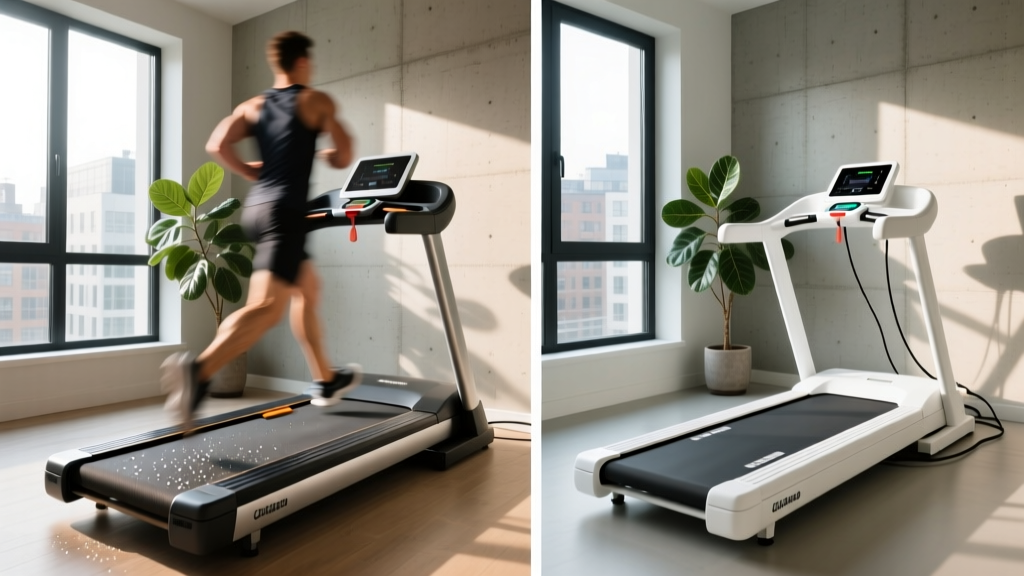
Treadmill Before and After: 2026 Buying Guide & Feature Comparison
Discover how to achieve real treadmill before and after results. Our 2026 buying guide compares motors, incline, and cushioning for your fitness goals.

When users search for treadmill before and after results, they are typically looking for visual proof of body transformations, cardiovascular improvements, or marathon PRs. However, as fitness equipment experts, we know that the "after" is entirely dependent on the "before"—specifically, the equipment buying decision you make before the machine even arrives in your home. A mismatched treadmill leads to joint pain, motor burnout, and ultimately, a $1,500 clothes rack. A properly spec'd machine becomes the catalyst for the exact results you envision.
In this 2026 in-depth buying guide, we move beyond generic advice. We break down the exact biomechanical and mechanical specifications required to achieve your goals, compare top-tier models, and highlight the real-world failure modes that derail most home fitness journeys.
The Core Decision Framework
Your "after" results dictate your "before" purchase.
Weight Loss & Walking: Prioritize belt length (55"+), basic cushioning, and interactive coaching.
Marathon & Interval Training: Prioritize continuous horsepower (3.5+ CHP), belt width (22"), and advanced shock absorption.
Heavy Duty / Bariatric: Prioritize frame weight (200+ lbs), motor cooling, and high user weight capacities (400+ lbs).
Motor & Drive System: The Engine of Your Transformation
The most common reason a treadmill fails to deliver long-term "treadmill before and after" results is motor degradation. Manufacturers often advertise "Peak HP," which only measures the motor's maximum output for a few seconds. You must look exclusively at Continuous Horsepower (CHP).
- 2.5 CHP: Adequate only for walking and light jogging (under 5.0 mph). Users over 180 lbs will cause the motor to overheat during sustained use.
- 3.0 to 3.5 CHP: The gold standard for home runners. Handles speeds up to 12.0 mph and user weights up to 300 lbs without stuttering.
- 4.0+ CHP: Required for heavy runners (250+ lbs) or high-intensity interval training (HIIT) where rapid acceleration and deceleration place immense torque on the drive belt.
Failure Mode Alert: If you pair a 2.5 CHP motor with a 220 lb runner sprinting at 8.0 mph, the motor will draw excessive amperage. This causes the belt to stutter (slip) mid-stride, which is a leading cause of Achilles and calf strains in home gym users.
Incline, Decline, and Cushioning: Protecting Your Joints
According to the Centers for Disease Control and Prevention (CDC), consistent aerobic activity is vital for long-term cardiovascular health, but joint degradation is the primary reason adults abandon treadmill routines. The deck cushioning system is your first line of defense.
Top brands utilize multi-zone cushioning. For example, Sole's Cushion Flex Whisper Deck reduces joint impact by up to 40% compared to outdoor asphalt. NordicTrack's FlexSelect allows you to turn the cushioning off to simulate rigid road running, which is crucial for marathon trainees who need to condition their legs for race-day pavement.
The Incline/Decline Factor: Walking on a 10% to 15% incline increases caloric expenditure by over 30% compared to flat walking, as noted by research highlighted by American Heart Association guidelines on vigorous aerobic activity. Furthermore, machines offering a -3% decline (like the NordicTrack Commercial series) activate the tibialis anterior and quadriceps differently, preventing the muscular imbalances that lead to runner's knee.
2026 Feature Comparison Matrix: Top Treadmills by User Profile
Below is a technical comparison of three market-leading treadmills in 2026, categorized by the specific "before and after" transformation they are best engineered to support.
| Model | Motor (CHP) | Belt Size | Incline/Decline | Best For | 2026 Est. Price |
|---|---|---|---|---|---|
| Horizon 7.4 | 3.0 CHP | 22" x 60" | 0% to 15% | Budget Runners & Zwift Users | $799 - $899 |
| Sole F80 | 3.5 CHP | 22" x 60" | 0% to 15% | Heavy Runners & Joint Protection | $1,099 - $1,199 |
| NordicTrack 1750 | 3.5 CHP | 22" x 60" | -3% to 15% | Marathoners & Interactive Coaching | $1,999 - $2,199 |
Smart Tech & Interactive Training: The Catalyst for Consistency
The most advanced motor in the world cannot produce a "treadmill before and after" transformation if you do not use the machine. Interactive technology is no longer a luxury; it is a retention tool.
"Consistency in aerobic exercise is the primary predictor of long-term weight management and cardiovascular adaptation. Interactive coaching significantly reduces the attrition rate of home fitness equipment." — Mayo Clinic Fitness Guidelines
In 2026, the ecosystem wars have settled into distinct profiles:
- iFIT (NordicTrack/ProForm): Best for users who need an external coach. The AI adjusts your incline and speed automatically based on the trainer's cues and your real-time heart rate data.
- JRNY (Bowflex/Schwinn): Best for adaptive coaching. It assesses your baseline fitness and dynamically alters daily workouts as your VO2 max improves.
- Open Bluetooth (Sole/Horizon): Best for self-directed athletes who prefer third-party apps like Zwift, Peloton App, or Strava without being locked into a proprietary hardware subscription.
Real-World Troubleshooting: Edge Cases & Buyer Mistakes
Before you finalize your purchase, review these critical edge cases that frequently ruin the home treadmill experience:
⚠️ The Ceiling Clearance Trap
Most buyers measure their floor space but forget to measure vertical clearance. A standard 8-foot ceiling provides 96 inches of clearance. If you are 6 feet tall (72 inches), you have 24 inches of headroom. When a treadmill reaches a 15% incline, the deck raises by 12 to 14 inches. You will literally run your head into the ceiling. Fix: Add your height + 15 inches. If that number exceeds your ceiling height, do not buy a high-incline treadmill.
- The Belt Width Mistake: Walkers can comfortably use a 20-inch wide belt. Runners must insist on a 22-inch wide belt. When fatigue sets in at mile 4, your gait widens. A 20-inch belt will result in clipping the side rails, leading to ankle sprains.
- The Folding Mechanism Compromise: If you weigh over 220 lbs and plan to run, avoid entry-level folding treadmills. The hinge mechanism introduces structural flex. A non-folding or heavy-duty hydraulic folding frame (like the Sole F80) is mandatory to prevent the deck from swaying laterally during heavy foot strikes.
- Electrical Dedication: Treadmills with 3.5+ CHP motors draw significant current on startup. Plugging your treadmill into a shared 15-amp circuit with a refrigerator or space heater will trip the breaker. Always use a dedicated 20-amp circuit.
Frequently Asked Questions
How long does it take to see treadmill before and after results?
Cardiovascular adaptations (lower resting heart rate, less breathlessness) typically occur within 3 to 4 weeks of consistent use (150 minutes of moderate-intensity per week). Visible body composition changes (fat loss, muscle tone) generally require 8 to 12 weeks, heavily dependent on maintaining a caloric deficit alongside your treadmill regimen.
Is a manual treadmill better for weight loss than a motorized one?
Curved manual treadmills (like the AssaultRunner) require you to power the belt, which increases caloric burn by roughly 20% to 30% compared to motorized treadmills at the same speed. However, they are brutal on the calves and Achilles for beginners and lack the incline/decline versatility needed for well-rounded joint conditioning. They are best for HIIT, not steady-state weight loss walking.
Do I really need a treadmill with a touchscreen?
No. If you prefer watching your own TV, listening to personal podcasts, or using a tablet mounted to the console, a touchscreen is an unnecessary expense that adds to the machine's electronic failure points. Brands like Sole offer excellent LCD consoles with device holders and Bluetooth audio, saving you $500+ and eliminating mandatory monthly subscription fees.
Final Verdict: Securing Your "After"
The ultimate treadmill before and after transformation is not just about the physical changes in your body; it is about the shift from viewing exercise as a chore to integrating it seamlessly into your lifestyle. By prioritizing continuous horsepower, adequate belt dimensions, and the correct cushioning profile over flashy but unnecessary gimmicks, you secure a machine that will support your biomechanics for the next decade. Measure your space, check your electrical circuits, and choose the chassis that matches your specific physiological demands.
More gear to consider
All reviews
Best Folding Treadmills for Treadmill Exercise Videos: 2026 Review

Arc Treadmill and Portable Cardio Maintenance Guide
Buying a Meta Quest 3 Treadmill: Step-by-Step Feature Comparison

Compact Water Treadmill for Dogs: 2026 Budget Guide

Walking Mat vs Treadmill: Why Rowing Machines Win for Beginners
