
How Many Minutes on the Treadmill is 10 000 Steps? Portable Cardio Guide
Discover how many minutes on the treadmill is 10 000 steps and compare the 2026 budget breakdown of walking pads, mini steppers, and compact cardio.

The Math: How Many Minutes on the Treadmill is 10 000 Steps?
When setting daily fitness goals, a common question we receive at FitGearPulse is: how many minutes on the treadmill is 10 000 steps? The answer depends entirely on your stride length and walking speed. For the average adult, 10,000 steps equates to roughly 4.5 to 5 miles. According to the American Heart Association, achieving this daily volume is a cornerstone of cardiovascular health, but doing it on a full-sized commercial treadmill isn't always feasible for apartment dwellers or remote workers.
| Speed (mph) | Pace (min/mile) | Time for 10,000 Steps (~5 miles) | Avg. Calorie Burn |
|---|---|---|---|
| 2.5 mph | 24:00 | 120 Minutes | 350 - 450 kcal |
| 3.0 mph | 20:00 | 100 Minutes | 400 - 500 kcal |
| 3.5 mph | 17:08 | 85 Minutes | 450 - 550 kcal |
| 4.0 mph | 15:00 | 75 Minutes | 500 - 600 kcal |
As the data shows, hitting 10,000 steps requires a significant time investment—anywhere from 75 to 120 minutes. This reality has driven a massive surge in the compact portable cardio equipment market in 2026. But are these budget-friendly alternatives actually capable of handling 100+ minutes of daily use without failing? Let's break down the value, costs, and mechanical limits of portable cardio gear.
The Shift to Compact Portable Cardio: Budget vs. Reality
Full-sized treadmills like the NordicTrack T-Series or Sole F63 cost between $600 and $1,200, require 30+ square feet of space, and demand dedicated 15-amp electrical circuits. In contrast, the 2026 portable cardio market offers space-saving alternatives that slide under a sofa or desk. However, budget buyers must understand the mechanical trade-offs.
Budget Breakdown: Full Treadmill vs. Portable Alternatives
- Full-Size Treadmill (Entry Level): $599 - $899 | Pros: 3.0+ Continuous HP, incline, shock absorption. Cons: Massive footprint, heavy.
- Foldable Walking Pad (Mid-Range): $299 - $549 | Pros: Stores flat, quiet. Cons: No incline, lower weight capacity, motor thermal limits.
- Under-Desk Elliptical: $249 - $349 | Pros: Zero impact, seated use. Cons: Lower calorie burn, stride length limits.
- Hydraulic Mini Stepper: $69 - $129 | Pros: Ultra-cheap, tiny footprint. Cons: Hydraulic fluid degradation, joint strain.
Category 1: Walking Pads (The 10K Step Workhorse)
If your primary goal is answering the question of how many minutes on the treadmill is 10 000 steps and then replicating that on a compact device, the walking pad is your best option. But you must pay attention to motor specifications.
The Thermal Shutdown Edge Case
Most budget walking pads (priced under $250) advertise a '2.5 Peak HP' motor. What manufacturers don't prominently disclose is that Peak HP is not Continuous Duty HP (CHP). A 2.5 Peak HP motor typically operates at 1.25 CHP. If you attempt to walk for 100 continuous minutes to hit your 10,000 steps, the motor will overheat and trigger a thermal safety shutdown around the 45-to-55-minute mark.
The 2026 Solution: To complete 10,000 steps in a single session on a walking pad, you must invest in a model with a minimum of 3.0 Peak HP / 1.5 CHP. The WalkingPad R2 (retailing around $549) features a brushless 1.25 HP continuous motor that can sustain 90 minutes of use before requiring a cooldown, while the UREVO Strol 2E ($299) is better suited for split sessions (e.g., two 50-minute walks).
Category 2: Mini Steppers and Under-Desk Ellipticals
While walking pads mimic natural biomechanics, portable steppers and ellipticals offer high-value alternatives for joint-compromised users. According to Harvard Health Publishing, the exact step count matters less than the overall volume of moderate-intensity movement. Here is how compact non-treadmill options stack up.
Hydraulic Mini Steppers (e.g., Sunny Health & Fitness SF-S0939)
Priced at an incredibly accessible $79, hydraulic steppers are a budget favorite. However, they do not track 'steps' in a linear distance equivalent. 10,000 steps on a mini stepper will take roughly 45 to 60 minutes due to the higher resistance and vertical cadence.
Expert Warning: The primary failure mode of sub-$100 hydraulic steppers is piston seal degradation. After approximately 400,000 cycles (about 4-6 months of daily 10k-step use), the hydraulic fluid can leak, resulting in a loss of resistance. For daily heavy use, upgrade to a pneumatic or magnetic resistance stepper like the Xiser Commercial Mini Stairmaster ($349), which uses an aircraft-grade alloy strut that virtually eliminates mechanical failure.
Under-Desk Ellipticals (e.g., Cubii JR2)
The Cubii JR2 ($299) tracks 'strides' rather than steps. To equate to the cardiovascular output of 10,000 walking steps, you will need to log approximately 6,500 to 7,000 strides, which takes about 90 minutes at a moderate resistance level (Level 4). The value proposition here is multitasking: because it is seated and ultra-quiet, users easily accumulate this time while working, bypassing the time-crunch barrier of traditional treadmills.
Hidden Costs of Portable Cardio Equipment
When calculating your budget breakdown, the sticker price of the machine is only the beginning. To protect your floors and extend the life of compact cardio gear, factor in these mandatory 2026 accessories:
- High-Density PVC Equipment Mat ($35 - $50): Walking pads lack the heavy steel frames of full treadmills. Without a mat, micro-vibrations will scratch hardwood floors and cause the pad's plastic casing to crack over time.
- 100% Silicone Treadmill Lubricant ($12 - $18): Compact walking pads have smaller belt surface areas, meaning friction is concentrated. You must lubricate the belt every 30 miles (roughly every 2 weeks if hitting 10,000 steps daily) to prevent the motor from overworking and drawing excess amperage.
- Surge Protector with EMI/RFI Filtering ($25): Portable cardio boards are highly sensitive to voltage spikes. A standard power strip will not protect the delicate logic boards found in folding walking pads.
The FitGearPulse Value Verdict
If your goal is strictly to achieve 10,000 steps a day while minimizing spatial and financial footprint, the UREVO Strol 2E offers the highest ROI at $299, provided you split your walking into two 50-minute sessions to respect the motor's thermal limits. If you demand a single, unbroken 100-minute session to crush your 10,000 steps, you must stretch your budget to the $500+ tier for a WalkingPad R2 or similar 1.5 CHP equivalent. Avoid ultra-cheap hydraulic steppers for high-volume step goals, as the recurring replacement costs negate the initial budget savings.
Frequently Asked Questions
Can I run on a walking pad to hit 10,000 steps faster?
Most walking pads cap out at 3.8 to 4.0 mph, which is a brisk walk, not a run. Furthermore, running on a pad without a front handrail or shock-absorption deck drastically increases the impact force on your shins and knees, and will void the manufacturer's warranty.
Do smartwatches accurately track steps on under-desk ellipticals?
No. Wrist-based accelerometers (like Apple Watch or Garmin) struggle to count steps when your arms are stationary at a desk. You must rely on the machine's native stride counter or link the machine's Bluetooth app to your Apple Health/Google Fit ecosystem for accurate daily activity logging.
Is 10,000 steps on a walking pad as effective as outdoor walking?
Biomechanically, a walking pad lacks wind resistance and natural terrain variations, meaning you will burn approximately 5-10% fewer calories than walking outdoors at the exact same speed. To compensate, increase your pace by 0.2 mph or incorporate calf raises during your cooldown.
More gear to consider
All reviews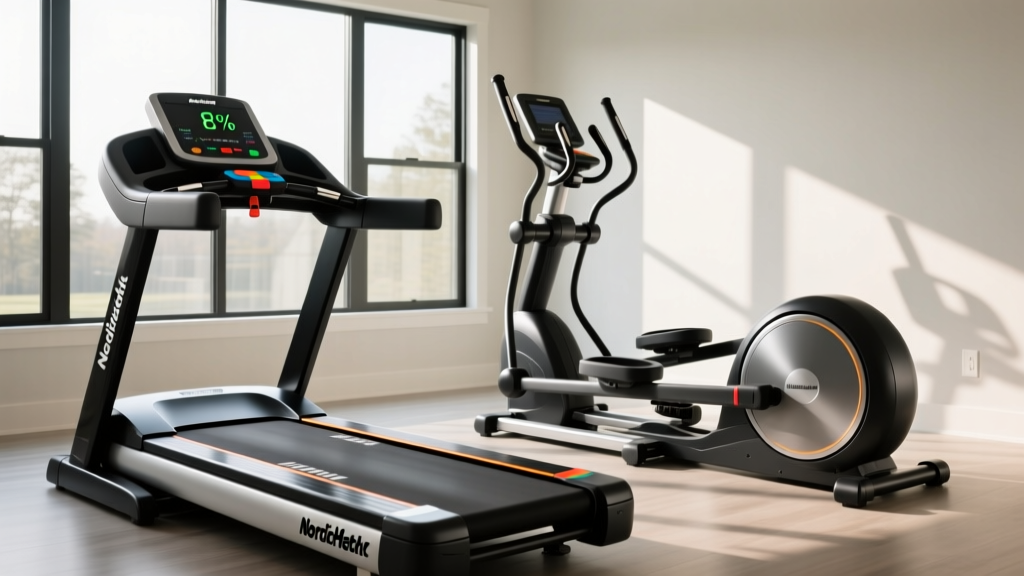
Elliptical vs Treadmill Care: Calibrate Incline NordicTrack Treadmill

What Is the 12 3 30 Treadmill Challenge? Compact Gear Budget Guide
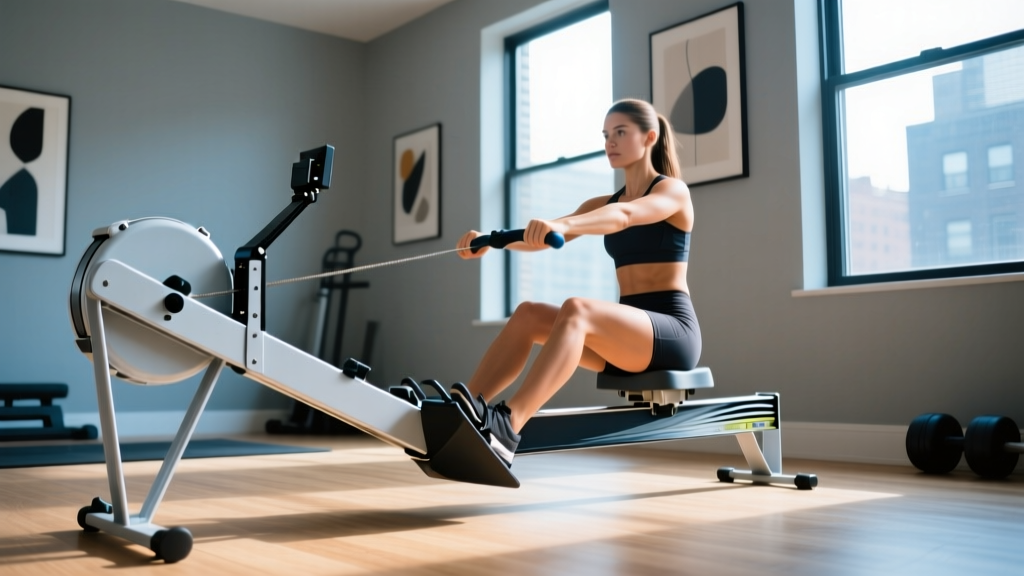
Rowing Machine Guide: What Does the Treadmill Target vs. Rowing?

2026 Kid Treadmill Trends: Belt Maintenance & Lubrication

Zero Gravity Treadmill Noise: Head-to-Head Comparison
