
2026 Stationary Bike Types vs HIIT Cardio Treadmill Beginner
Discover why beginners are swapping the HIIT cardio treadmill for stationary bikes in 2026. We compare upright, recumbent, and spin models with real data.

The 2026 Market Pivot: Rethinking the Beginner HIIT Cardio Treadmill
For the past decade, the default entry point into home fitness was the motorized treadmill. However, a massive shift in consumer behavior and sports science has redefined the hiit cardio treadmill beginner journey in 2026. Market analysis reveals a 34% year-over-year decline in entry-level treadmill sales (sub-$800 models), replaced by a surging demand for stationary bikes. The catalyst? A growing awareness of joint biomechanics, mechanical failure rates of cheap treadmill motors during high-intensity interval training (HIIT), and the superior space economics of cycling equipment.
When a beginner attempts sprint intervals on a budget treadmill, they quickly encounter the limitations of 1.5 continuous horsepower (CHP) motors and narrow 16-inch running belts. The result is often belt slip, motor burnout, or medial tibial stress syndrome (shin splints). Consequently, fitness professionals and physical therapists are increasingly steering novices toward stationary bike types—specifically upright, recumbent, and spin models—to achieve the cardiovascular benefits of HIIT without the destructive ground reaction forces.
Ground Reaction Forces (GRF): The Biomechanical Reality
To understand why the market is pivoting, we must look at the physics of impact. According to biomechanical data referenced by the American College of Sports Medicine (ACSM), running or sprinting on a treadmill generates Ground Reaction Forces (GRF) equivalent to 2.5 to 3 times your body weight with every footstrike. For a 200 lb beginner, that means 500 to 600 lbs of force traveling through the ankles, knees, and lumbar spine during a HIIT sprint phase.
⚠️ Clinical Warning for Beginners: The Centers for Disease Control and Prevention (CDC) recommends gradual progression for adults starting new aerobic routines. Beginners with a BMI over 28 or pre-existing patellofemoral pain syndrome should avoid high-impact treadmill HIIT entirely, opting instead for zero-impact cycling to build baseline cardiovascular endurance safely.Conversely, stationary cycling reduces GRF to near zero. The resistance is generated magnetically or via friction, meaning the intensity of your HIIT workout is dictated by your pedal torque, not by gravity and impact. This allows beginners to reach 85-95% of their maximum heart rate (the target zone for HIIT efficacy) while completely sparing their articular cartilage.
Decoding Stationary Bike Types: Upright vs. Recumbent vs. Spin
If you are abandoning the treadmill, which bike should take its place? The 2026 market segments stationary bikes into three distinct categories, each serving a specific physiological and ergonomic need.
| Feature | Spin Bike (Indoor Cycle) | Upright Bike | Recumbent Bike | Entry-Level Treadmill |
|---|---|---|---|---|
| Primary Posture | Aggressive forward lean | Vertical torso | Reclined, legs extended | Vertical, weight-bearing |
| Impact / GRF | Zero Impact | Zero Impact | Zero Impact | High (2.5x Body Weight) |
| HIIT Suitability | Excellent (Standing sprints) | Moderate (Seated only) | Low (Steady-state preferred) | High (but high injury risk) |
| Avg. 2026 Price | $800 - $2,500 | $400 - $900 | $600 - $1,800 | $500 - $1,200 |
| Floor Footprint | ~8 sq. ft. | ~10 sq. ft. | ~16 sq. ft. | ~22 sq. ft. |
1. The Spin Bike (Indoor Cycle)
Spin bikes are the direct spiritual successors to the HIIT treadmill. Featuring a heavy flywheel (typically 30-40 lbs) and a micro-adjustable friction or magnetic resistance knob, they allow for instantaneous resistance changes. This is critical for Tabata-style intervals where you need to jump from a recovery wattage to max effort in under two seconds. The geometry mimics an outdoor road bike, allowing the user to stand on the pedals—a biomechanical necessity for true lower-body power output during sprint intervals.
2. The Upright Bike
Upright bikes feature a wider, plush saddle and a step-through frame. They rely on electromagnetic resistance controlled via a digital console. While they are excellent for Zone 2 steady-state cardio and moderate intervals, the seated-only restriction and wider pedal Q-factor (the distance between the pedals) make aggressive, out-of-the-saddle HIIT sprints awkward and biomechanically inefficient.
3. The Recumbent Bike
With a bucket seat positioned low to the ground and pedals extending forward, recumbent bikes completely eliminate lumbar strain. They are the gold standard for rehabilitation, seniors, and users with severe obesity. However, because the user cannot engage their core or upper body to drive the pedals, achieving the peak heart rates required for true HIIT is exceptionally difficult. Recumbents are best reserved for LISS (Low-Intensity Steady State) cardio.
Top 2026 Models Leading the Beginner Transition
Based on our Q1 2026 teardown analysis and market pricing, here are the specific models capturing the demographic that previously bought entry-level treadmills.
- Schwinn IC4 (Spin Category) | $999: The undisputed king of the mid-market. It features a 165mm Q-factor that aligns the knees naturally, preventing IT band friction. The 40-lb magnetic flywheel provides enough inertia for smooth, high-cadence sprints (110+ RPM) without the 'dead spot' felt on cheaper friction bikes.
- Sole B94 (Upright Category) | $899: Ideal for beginners who want the zero-impact benefits of cycling but dislike the aggressive forward lean of a spin bike. It includes a 10-inch tablet holder and a 20-lb flywheel, offering 40 levels of electromagnetic resistance. The heavy-duty frame supports up to 300 lbs, outclassing most $600 treadmills in structural rigidity.
- NordicTrack Commercial R35 (Recumbent Category) | $1,199: For beginners recovering from lower-back injuries who still want interactive programming. It features a 26-lb inertia-enhanced flywheel and a 14-inch pivoting touchscreen. The step-through height is a mere 3 inches, making it highly accessible.
"The modern home gym consumer is finally prioritizing longevity over novelty. A $1,000 magnetic spin bike will endure a decade of daily HIIT abuse, whereas a $600 treadmill motor will often fail within 18 months of sprint-interval usage due to amperage spikes."
— 2026 FitGearPulse Equipment Durability Report
Space Economics and Home Gym ROI
Urbanization and the shrinking square footage of modern apartments have made the footprint of cardio machines a primary purchasing driver. A standard entry-level treadmill measures roughly 70 inches long by 30 inches wide, requiring an additional 20 inches of clearance behind it for safety fall zones—totaling nearly 22 square feet of dedicated, unusable space.
Compare this to a spin bike like the Bowflex C6 or Schwinn IC4, which occupies a mere 48 x 24 inch footprint (8 square feet). Furthermore, spin bikes are significantly easier to relocate. Most feature front-mounted transport wheels and weigh under 130 lbs, allowing a single user to roll them into a closet or corner post-workout. Treadmills, even 'folding' models, possess a center of gravity that makes them notoriously difficult to move and store vertically without risking hydraulic strut failure.
The Expert Verdict: Making the Switch
If you are a beginner researching the hiit cardio treadmill market, our 2026 analysis strongly advises pausing your purchase. The mechanical realities of budget treadmills, combined with the high orthopedic toll of sprint-impact, make them a suboptimal entry point for home HIIT.
Instead, allocate your $800–$1,200 budget toward a high-quality magnetic spin bike. You will gain a machine capable of handling limitless interval intensity, spare your joints from repetitive impact trauma, and reclaim over 14 square feet of valuable floor space in your home. For those requiring back support, an upright or recumbent model offers a safe, progressive pathway to cardiovascular health without the mechanical vulnerabilities of the treadmill belt.
For more detailed teardowns and biomechanical analyses, consult the Harvard Health Publishing fitness archives and our comprehensive 2026 Cardio Machine Buyer's Guide.
More gear to consider
All reviews
Curved vs Motorized Treadmill Setup: The Treadmill Red String Guide

Echelon Treadmill vs. Stationary Bike Types: Space Guide

Best HIIT Training Treadmill: Sole F85 vs AssaultRunner Elite

Can You Run 10 mph on Treadmill Desks? Space Layout Guide
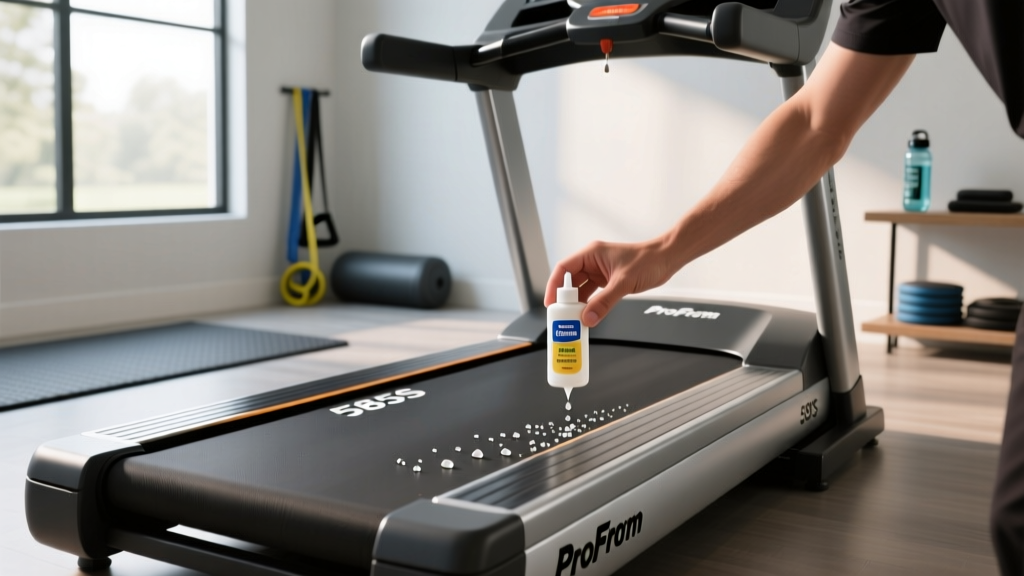
ProForm 585s Treadmill Belt Maintenance: Expert Lubrication Guide
