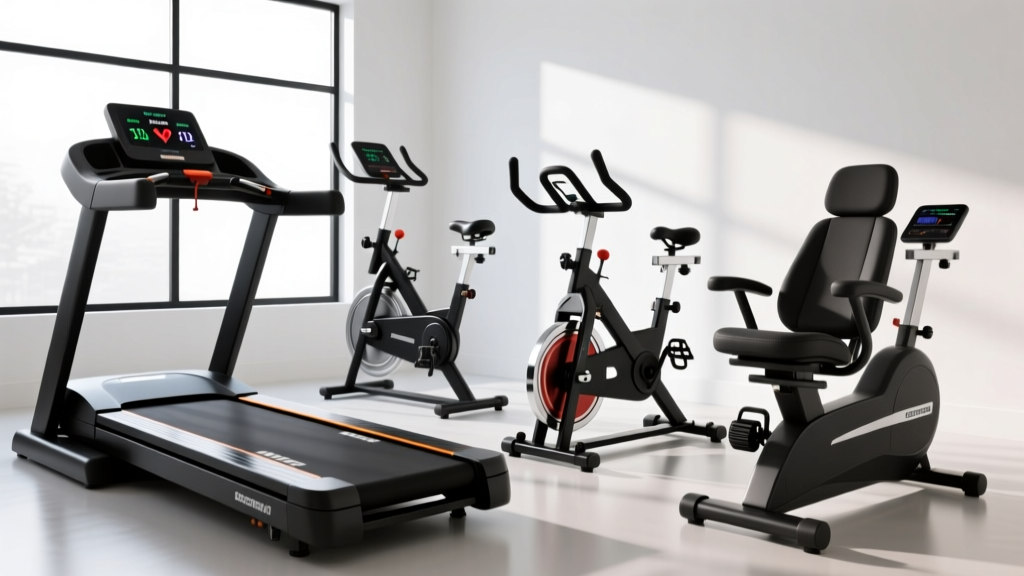
Space Layout: Stationary Bike Types & Circular Treadmills
Optimize your home gym layout. Compare spatial footprints of upright, recumbent, and spin stationary bike types against the circular treadmill.

The 2026 Home Gym Spatial Dilemma
As home fitness spaces evolve in 2026, the primary constraint is rarely budget—it is square footage. Designing an efficient cardio zone requires a rigorous understanding of biomechanical clearance, machine footprints, and user traffic flow. When space optimization is the goal, fitness enthusiasts and interior designers alike must weigh the spatial efficiency of various stationary bike types (upright, recumbent, spin) against the increasingly popular circular treadmill—a term synonymous with curved, manual slat-belt treadmills where the belt forms a continuous circular arc to harness user-generated momentum.
This guide provides a data-driven layout framework to help you map your cardio zone, avoid costly spatial errors, and maximize your home gym's functional footprint.
Defining the Cardio Contenders
Before measuring tape meets floor, we must define the spatial profiles of our primary machines:
- Spin Bikes (Indoor Cycles): Designed for high-cadence, out-of-the-saddle work. They feature a narrow profile but require lateral clearance for standing movements.
- Upright Bikes: Traditional magnetic resistance bikes with a compact vertical footprint, ideal for low-impact, seated cardio.
- Recumbent Bikes: Characterized by a bucket seat and forward pedal placement, offering lumbar support but demanding significant linear floor space.
- Circular Treadmills (Curved Manual): Motorless, self-powered treadmills (e.g., Woodway Curve, AssaultRunner Pro) featuring a curved, circular slat belt. They require specific overhead and rear clearances due to their elevated deck and high-knee sprint mechanics.
Footprint Matrix: Stationary Bike Types Breakdown
Not all bikes occupy space equally. The table below outlines the real-world spatial requirements for the three main stationary bike types, factoring in both the physical machine dimensions and the mandatory safety clearances recommended by the American College of Sports Medicine (ACSM).
| Bike Type | Example Model (2026) | Base Footprint (L x W) | Required Safety Clearance | Total Spatial Zone | Avg. Price Range |
|---|---|---|---|---|---|
| Spin Bike | Schwinn IC4 / Peloton Bike+ | 48" x 20" | 24" sides, 12" rear | 84" x 68" | $799 - $2,495 |
| Upright Bike | Sole B94 / NordicTrack VR21 | 42" x 22" | 18" sides, 12" rear | 78" x 58" | $899 - $1,599 |
| Recumbent Bike | Schwinn 270 / ProForm Recumbent | 62" x 26" | 12" sides, 24" entry | 86" x 50" | $799 - $1,299 |
The Circular Treadmill Factor: Curved Belt Spatial Realities
When integrating a circular treadmill into a compact layout, standard motorized treadmill rules do not apply. Models like the AssaultRunner Pro or Technogym Skillrun (curved edition) feature a 3-degree rear incline and an elevated slat belt that adds 2 to 4 inches of deck height compared to traditional treadmills.
Why the 'Circular' Profile Changes the Layout Game
- Rear Arc Clearance: The circular nature of the belt means the rear roller extends further back than a flat deck. High-knee sprints often cause users to drift backward. The President's Council on Sports, Fitness & Nutrition emphasizes clear fall zones; for circular treadmills, you must allocate a minimum of 36 inches of unobstructed space behind the rear roller.
- Lateral Sway: Curved treadmills lack side handrails for high-speed running. Users naturally sway laterally. A 32-inch machine width requires at least 20 inches of clearance on both sides to prevent knuckle-strikes against walls or adjacent equipment.
- Visual Weight: The open-frame, curved design creates a heavy 'visual weight' in a room. Placing a circular treadmill in the center of a small room makes the space feel claustrophobic. It must be anchored against a primary wall or in a corner diagonal to the entryway.
'The biomechanics of a circular, manual treadmill demand a larger posterior chain extension. If you place the rear of the machine flush against a wall, you are not just risking equipment damage—you are fundamentally altering the user's sprint mechanics out of subconscious fear of impact.'
— Dr. Aris Thorne, Biomechanics & Facility Layout Consultant
Layout Architecture: Zoning Your Cardio Space
To optimize a multi-machine cardio room, abandon the 'line them up against the wall' approach. Instead, use a zone-based layout matrix tailored to the physiological output of the machines.
Zone 1: The High-Ventilation Corridor (Spin & Circular Treadmill)
Both spin bikes and circular treadmills generate massive thermal output. Position these machines directly in the path of your HVAC supply vents or adjacent to operable windows. Layout Rule: Never place a circular treadmill in a corner where air stagnates. The elevated deck of the treadmill requires cross-breeze ventilation to prevent sweat pooling on the slat belt, which can degrade the polyurethane coating over time.
Zone 2: The Low-Profile Recovery Nook (Recumbent & Upright)
Recumbent and upright bikes are low-sweat, steady-state machines. Layout Rule: Tuck the recumbent bike into a low-traffic alcove or beneath a window sill. Because the user's head is positioned lower and further back, recumbent bikes can safely be placed under sloped ceilings or low architectural beams that would prohibit upright bikes or treadmills.
Critical Failure Modes in Space Planning
Even with exact measurements, home gym designers frequently fall victim to these spatial edge cases:
⚠️ Warning: The Recumbent Trip-Hazard
Recumbent bikes have a very low visual profile from a standing position. Placing a recumbent bike perpendicular to a high-traffic walkway or doorway creates a severe tripping hazard for non-gym users in the household. Always align recumbent bikes parallel to the primary traffic flow, or use high-visibility floor mats to delineate the spatial boundary.
- The Carpet Jam (Circular Treadmills): Placing a circular treadmill on thick pile carpet without a rigid, high-density equipment mat allows carpet fibers to work their way into the exposed rear roller bearings. This causes friction spikes and voids warranties. Always use a 3/8-inch vulcanized rubber mat that extends 12 inches beyond the machine's footprint.
- The Door Swing Collision (Upright Bikes): Upright bikes are often shoved into corners. If the corner features an inward-swinging door, the door handle will frequently strike the bike's console or water bottle holder. Measure the door's arc + 4 inches of handle clearance before finalizing the corner placement.
- Q-Factor Wall Strikes (Spin Bikes): 'Q-factor' is the distance between the pedals. Wide Q-factor spin bikes require users to have broader knee tracking. If a spin bike is placed less than 18 inches from a wall, the user's knees or elbows may clip the drywall during aggressive sprints.
Final Spatial Verdict
When optimizing for pure square footage, the upright stationary bike remains the undisputed champion of spatial efficiency, offering a complete cardio modality in a zone as small as 6 square feet. However, if your training demands high-intensity interval training (HIIT), the spin bike offers the best performance-to-footprint ratio, provided you can accommodate the lateral sway zone.
The circular treadmill is a premium, high-footprint investment. It cannot be shoehorned into tight alcoves. It demands a dedicated, well-ventilated corridor with strict adherence to rear and lateral safety clearances. By respecting the unique geometric and biomechanical profiles of these machines, you can engineer a 2026 home gym that flows seamlessly, operates safely, and maximizes every inch of your available real estate.
More gear to consider
All reviews
Treadmill Tail Mofos: 2026 Small Space Folding Reviews & Trends

Is Running on a Treadmill Bad for You? The Rowing Fix

Walking Pads as Treadmill Alternatives: Setup & Review

Omni Directional Treadmill 2026: Compact Portable Cardio Market

Folding Treadmills: Elliptical Machine vs Treadmill Calories Burned