Standard Treadmill Dimensions vs Folding Models: 2026 Budget Guide
Compare standard treadmill dimensions with top folding models. Our 2026 budget breakdown reveals the true cost and value of small-space cardio gear.

The Space vs. Budget Dilemma in Modern Home Gyms
As urban living spaces shrink and home fitness remains a staple of daily routines in 2026, the clash between wanting a commercial-grade running experience and having a 50-square-foot bedroom is more relevant than ever. When shopping for cardio equipment, understanding standard treadmill dimensions is the critical first step in planning your space. However, standard footprints often dominate a room, forcing many buyers to pivot toward folding alternatives. But does folding your treadmill actually save you money, or does it introduce hidden long-term costs?
In this comprehensive budget breakdown and value analysis, we will dissect the exact measurements of traditional versus folding treadmills, evaluate the structural compromises of compact designs, and review the top small-space models on the market to determine where your money is best spent.
The Baseline: Standard Treadmill Dimensions Explained
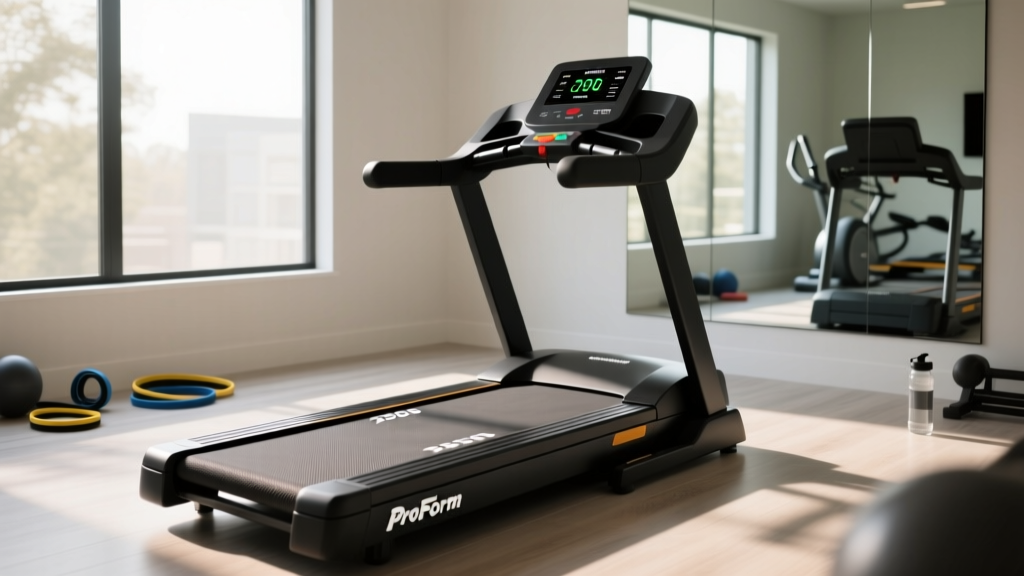
To understand the value of a folding treadmill, we must first establish the baseline. The industry standard treadmill dimensions for a non-folding, residential-grade machine typically measure 77 inches long, 32 inches wide, and 55 inches high.
Why do these specific dimensions exist? The answer lies in human biomechanics. According to the Mayo Clinic's guide to fitness equipment, selecting a machine that accommodates your natural stride length is vital for preventing joint and lower back injuries. A standard 60-inch long running belt allows a user up to 6 feet tall to run at top speed without clipping the front motor housing or stepping off the back roller. The 32-inch width provides a 20-inch running surface flanked by 6-inch safety rails on each side, offering necessary lateral stability.
While these dimensions provide an optimal, safe, and comfortable running experience, they require a dedicated floor space of roughly 17.5 square feet, plus an additional 24 inches of rear clearance for safety and airflow, bringing the total required footprint to over 23 square feet. For many apartment dwellers, this is simply not feasible.
The Small-Space Solution: Folding Treadmill Value Analysis
Folding treadmills solve the spatial crisis by utilizing a hydraulic or manual gas-shock hinge that allows the deck to pivot upward, locking into a vertical position. When folded, the footprint shrinks dramatically to approximately 30 inches long by 32 inches wide, reclaiming nearly 10 square feet of floor space.
However, engineering a folding mechanism introduces specific structural trade-offs that directly impact the machine's budget and long-term value:
- Frame Rigidity: Folding treadmills often utilize lighter, thinner steel uprights to reduce the overall weight of the lifting deck. This can result in lateral sway at speeds exceeding 6.0 mph.
- Motor Size Constraints: To keep the folding deck light enough for hydraulic shocks to lift, manufacturers often pair them with smaller motors (1.75 to 2.5 Continuous Horsepower), which can overheat during intense, prolonged running sessions.
- Hinge Degradation: The gas-shock struts used to assist in folding have a finite lifespan. Under daily use, these struts typically lose their pressure resistance after 3 to 5 years, requiring an $80 to $120 replacement.
2026 Budget Breakdown: The True Cost of Folding
When analyzing the market, folding treadmills span a wide financial spectrum. Below is a breakdown of what you can expect at different price points in 2026, highlighting the correlation between budget, dimensions, and component longevity.
| Model Tier | Price Range | Motor (CHP) | Belt Size | Folded Footprint | Expected Lifespan |
|---|---|---|---|---|---|
| Entry-Level | $300 - $599 | 1.5 - 1.75 CHP | 18" x 50" | 28" x 28" | 2 - 3 Years |
| Mid-Range | $600 - $999 | 2.5 - 2.75 CHP | 20" x 55" | 32" x 30" | 4 - 6 Years |
| Premium | $1,000 - $1,500 | 3.0+ CHP | 20" x 60" | 34" x 32" | 7 - 10+ Years |
Note: Entry-level models often sacrifice belt length, forcing users to adopt an unnatural, shortened stride, which contradicts the American Heart Association guidelines for safe, consistent cardiovascular exercise.
Top Folding Treadmills for Small Spaces (2026 Review)
To provide actionable value, we have evaluated three distinct folding treadmills that dominate the small-space market this year, analyzing their dimensions, pricing, and overall value proposition.
1. Sole Fitness F63: The Mid-Range Benchmark
Price: $1,199 | Motor: 3.0 CHP | Belt: 20" x 60"
The Sole F63 remains the gold standard for folding treadmills that refuse to compromise on standard treadmill dimensions when deployed. Despite its folding capability, it offers a full 60-inch commercial-length belt. The 3.0 CHP motor is robust enough to handle daily running without thermal throttling. The folding mechanism utilizes a heavy-duty hydraulic drop-fold system that feels secure and stable. While its folded footprint (34" x 30") is slightly larger than ultra-compact walking pads, the value-to-longevity ratio is unmatched in the mid-tier market.
2. Horizon Fitness T101: The Budget Champion
Price: $799 | Motor: 2.5 CHP | Belt: 20" x 55"
For buyers strictly capped under the $1,000 mark, the Horizon T101 offers exceptional value. The 55-inch belt is slightly shorter than standard, making it ideal for walking, jogging, and users under 5'10". Horizon's rapid-charge USB ports and Bluetooth connectivity add modern convenience without inflating the price tag. The frame is lighter than the Sole, resulting in minor console wobble at top speeds (10 mph), but the folding hinge is remarkably durable for the price point.
3. Echelon Stride-S: The Ultra-Compact Auto-Fold
Price: $999 | Motor: 1.25 CHP | Belt: 20" x 55"
Echelon targets the tech-forward, space-starved urbanite with the Stride-S. Its standout feature is the auto-fold mechanism; with the press of a button on the app, the deck lifts itself. However, the 1.25 CHP motor strictly limits this machine to walking and light jogging. It is a premium-priced solution for a specific edge case: users who need the machine to disappear into a closet automatically but do not require high-intensity running capabilities.
Pro-Tip: The 24-Inch Safety RuleWhen measuring your space for a folding treadmill, never calculate based solely on the folded dimensions. You must leave a minimum of 24 inches of clear space behind the rear roller. If a user trips or falls off the back of the belt, this clearance prevents them from colliding with a wall or furniture, a critical safety standard often overlooked in small apartment setups.
Hidden Costs & Edge Cases in Compact Treadmills
When performing a budget breakdown, the initial purchase price is only half the equation. Compact and folding treadmills introduce specific hidden costs and maintenance requirements that buyers must factor into their 2026 financial planning:
- High-Density Equipment Mats ($40 - $70): Because folding treadmills have a smaller footprint and lighter overall mass, they are more prone to 'walking' or shifting across hardwood floors during use. A high-density PVC mat is non-negotiable to anchor the machine and protect your flooring from concentrated weight distribution.
- Deck Lubrication Intervals: Smaller motors work harder to drive the belt, generating more friction and heat. While standard treadmills might require silicone deck lubrication every 6 months, budget folding models should be lubricated every 3 months to prevent the motor control board from burning out due to excessive amperage draw.
- Acoustic Transfer: Lighter folding frames lack the mass to absorb impact noise. If you live in a multi-story apartment, the impact of your footfalls will transfer through the floor joists much more severely than with a 200-pound standard treadmill. Investing in acoustic anti-vibration pads ($30) under the front feet is highly recommended to maintain good relations with downstairs neighbors.
"Consistency is the primary driver of cardiovascular health. If your fitness equipment is frustrating to deploy, too loud, or prone to breakdowns, adherence to your exercise routine will plummet. Invest in the highest quality hinge and motor your budget allows."
Final Verdict: Is the Folding Compromise Worth the Budget?
When comparing standard treadmill dimensions to their folding counterparts, it is clear that folding models require engineering compromises. You are trading a fraction of frame rigidity and motor mass for the ability to reclaim 10 square feet of living space.
From a strict budget breakdown perspective, spending less than $600 on a folding treadmill is a poor long-term investment; the motors and hinges in the entry-level tier simply cannot withstand daily mechanical stress, leading to premature e-waste. The sweet spot for value lies in the $800 to $1,200 range, where models like the Horizon T101 and Sole F63 offer robust hydraulic hinges, adequate belt lengths, and motors capable of surviving a 5-year daily running cycle. If your space demands a folding machine, do not compromise on the hinge quality or the motor size—your joints and your wallet will thank you in the long run.
More gear to consider
All reviews
NordicTrack C700 Treadmill Review: Small Space & Care Guide

Is Walking Outside Better Than a Treadmill? Elliptical vs Treadmill
Avoid Treadmill Falls: Home Stair Climber Safety & Setup Guide

Curved vs Motorized Treadmill or a Treadmill and Stair Climber Combo?
Vision Fitness Treadmill T9250 vs Stair Climbers: Home Mistakes