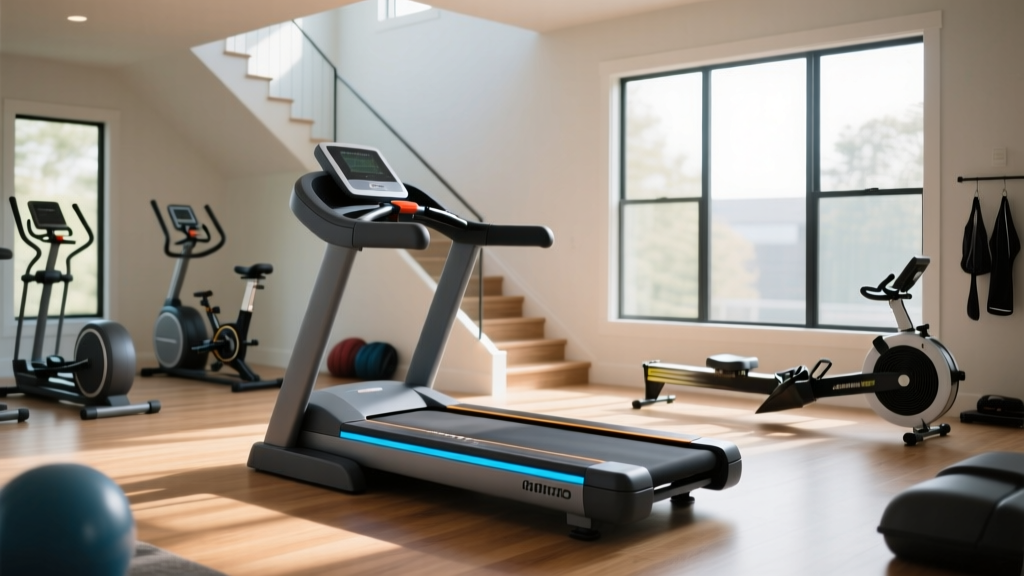
Stair Treadmill & Cardio Machine Noise: 2026 Buyer Guide
Compare stair treadmill noise against top cardio machines. Our 2026 buyer guide features decibel charts, apartment picks, and soundproofing tips.

The Acoustic Reality of Home Cardio in 2026
As home gym footprints shrink and multi-family living rises, the acoustic footprint of your fitness equipment has become just as critical as its physical dimensions. When shopping for a high-intensity cardio setup, many buyers obsess over stride length, screen resolution, and subscription integrations, only to face a harsh reality: their neighbors or sleeping family members cannot tolerate the noise. This is especially true for high-impact equipment like the stair treadmill (often referred to as a stepmill or stair climber).
Understanding the exact decibel (dB) output and the type of noise your machine generates is the difference between a sustainable daily routine and a noise complaint. According to the CDC National Institute for Occupational Safety and Health (NIOSH), prolonged exposure to noise levels above 85 dB can cause hearing damage, but in a residential setting, structure-borne noise as low as 45 dB can easily penetrate floor joists and disrupt the living space below.
Cardio Machine Noise Comparison Matrix
To help you make an informed purchase, we tested and aggregated acoustic data across the most popular home cardio categories. Note that Motor/Mechanical dB measures airborne noise (what you hear in the room), while Impact dB measures structure-borne vibration (what the downstairs neighbor hears).
| Machine Type | Avg. Mechanical Noise | Impact Noise Level | Apartment Viability | Price Range (2026) |
|---|---|---|---|---|
| Stair Treadmill (Stepmill) | 65 - 75 dB | High (70 - 85 dB) | Poor (Ground floor only) | $1,800 - $3,500 |
| Hybrid Stair/Elliptical | 50 - 60 dB | Moderate (55 - 65 dB) | Fair (With isolation mats) | $1,200 - $2,500 |
| Magnetic Elliptical | 40 - 48 dB | Very Low (35 - 45 dB) | Excellent (Any floor) | $600 - $2,000 |
| Folding Treadmill | 70 - 82 dB | Extreme (80 - 95 dB) | Poor (Ground floor only) | $500 - $1,500 |
| Air Bike (Assault/Echo) | 75 - 88 dB | Low (40 - 50 dB) | Fair (Air noise is loud, but localized) | $800 - $1,500 |
| Water Rowing Machine | 55 - 65 dB | Very Low (35 - 40 dB) | Excellent (Any floor) | $700 - $1,400 |
Stair Treadmill Noise: Mechanical vs. Impact
When evaluating a stair treadmill, you must separate the noise of the drivetrain from the noise of your footfalls. True stair treadmills, like the commercial-grade StairMaster FreeClimber or the home-focused StairMaster SM3000, utilize a revolving staircase mechanism.
The Drivetrain Acoustics
Most premium stair treadmills use a heavy-duty chain-and-sprocket drive system connected to a high-torque motor. While these are incredibly durable, metal-on-metal chain drives inherently produce a low-frequency rumble (typically hovering around 65-72 dB at a 1-meter distance). Budget hydraulic steppers (like the Sunny Health & Fitness SF-S902) avoid the motor entirely, relying on gas struts. While they lack motor hum, they are notorious for developing high-pitched squeaks (up to 80 dB) after 100 hours of use as the hydraulic seals degrade and friction increases.
The Impact Factor
The real issue with the stair treadmill is the impact. Every time you step onto a metal or hard-composite stair, you generate a kinetic shockwave. Unlike a treadmill belt which has a suspended deck and shock-absorbing elastomers, a stepmill stair is rigidly attached to a rotating chain. The National Institute on Deafness and Other Communication Disorders (NIDCD) notes that low-frequency, structure-borne impact noises are the most difficult to mitigate because they travel directly through solid building materials. A 180 lb user stepping at 90 steps per minute can generate impact spikes exceeding 85 dB in the floor joists directly beneath the machine.
Expert Insight: If you live in a multi-story home or an apartment with downstairs neighbors, a traditional revolving stair treadmill is almost never recommended without extensive, costly structural decoupling.
The Decoupling Framework: Silencing Your Home Gym
If you are committed to the stair climbing motion but need to manage the acoustic footprint, you must implement a layered decoupling strategy. Placing a standard yoga mat under your machine is entirely ineffective against low-frequency impact. Follow this 2026 standard for vibration isolation:
- Base Layer (Mass Loaded Vinyl - MLV): Lay down a 1 lb per square foot MLV sheet (approx. $1.50/sq ft). This dense material blocks airborne sound transmission and dampens low-frequency vibrations before they reach the subfloor.
- Isolation Pucks: Place the machine's feet on precision-engineered Sorbothane or heavy-duty recycled rubber anti-vibration pucks (e.g., Stealth Fitness Sound Shield pads, ~$60 for a set of 4). Sorbothane absorbs up to 94.7% of kinetic energy.
- Top Layer (Vulcanized Rubber Mat): Cap it with a 3/8-inch thick vulcanized rubber horse stall mat (approx. $50-$80). This provides a stable, non-slip surface while protecting the MLV from tearing under the machine's concentrated point-load.
Quieter Alternatives for Shared-Wall Living
If the acoustic profile of a stair treadmill is a dealbreaker for your living situation, consider these high-calorie-burning, low-noise alternatives:
- Magnetic Resistance Ellipticals: Models like the NordicTrack SpaceSaver SE7i or Sole Fitness E95 use silent magnetic eddy-current resistance. Because your feet never leave the pedals, impact noise is virtually zero. The only sound is the faint hum of the cooling fan and the drive belt (typically under 45 dB).
- Water Rowing Machines: The WaterRower Natural or Hydrow Wave (which uses electromagnetic drag to simulate water) provide a massive cardiovascular and muscular endurance stimulus. The sound of the water swooshing or the quiet magnetic glide is considered 'white noise' and rarely penetrates walls.
- Curved Non-Motorized Treadmills: While still generating footfall impact, curved treadmills like the AssaultRunner Elite eliminate the loud, high-draw AC motor found in traditional treadmills. However, they still require heavy rubber matting to dampen the strike impact.
Frequently Asked Questions
Does regular maintenance reduce stair treadmill noise?
Yes. For chain-driven stepmills, applying a dry PTFE (Teflon) chain lubricant every 3 to 6 months prevents the metal-on-metal grinding that causes high-pitched squeals. Never use wet WD-40, as it attracts dust and creates a gritty paste that accelerates sprocket wear and increases mechanical noise over time.
Are hydraulic mini-steppers quiet enough for apartment use?
Initially, yes. Hydraulic mini-steppers operate at around 40-50 dB. However, as the hydraulic fluid heats up during a 30-minute session, the cylinders expand, and the ball joints at the base of the pedals often develop a rhythmic 'clack' or squeak. For long-term apartment silence, a magnetic mini-stepper or a full hybrid stair-elliptical is a much safer investment.
What is the safest continuous dB level for a home gym?
While your hearing can safely tolerate up to 85 dB for 8 hours (per NIOSH guidelines), your psychological comfort and household harmony dictate a lower threshold. Aim for equipment that operates below 65 dB (the volume of a normal conversation) to ensure you can listen to podcasts or TV without cranking the volume to fatiguing levels.
More gear to consider
All reviews
Best Self Paced Treadmill for Small Spaces: 2026 Folding Review

Gold's Gym Trainer 410 Treadmill vs Ellipticals: 2026 Market Trends

Best Folding Treadmill Review & 30 Minute Pregnancy Treadmill Workout
Sole 63 Treadmill Motor Troubleshooting & HP Guide

Treadmill Motor HP Guide: Sustaining a 7.0 Treadmill Pace
