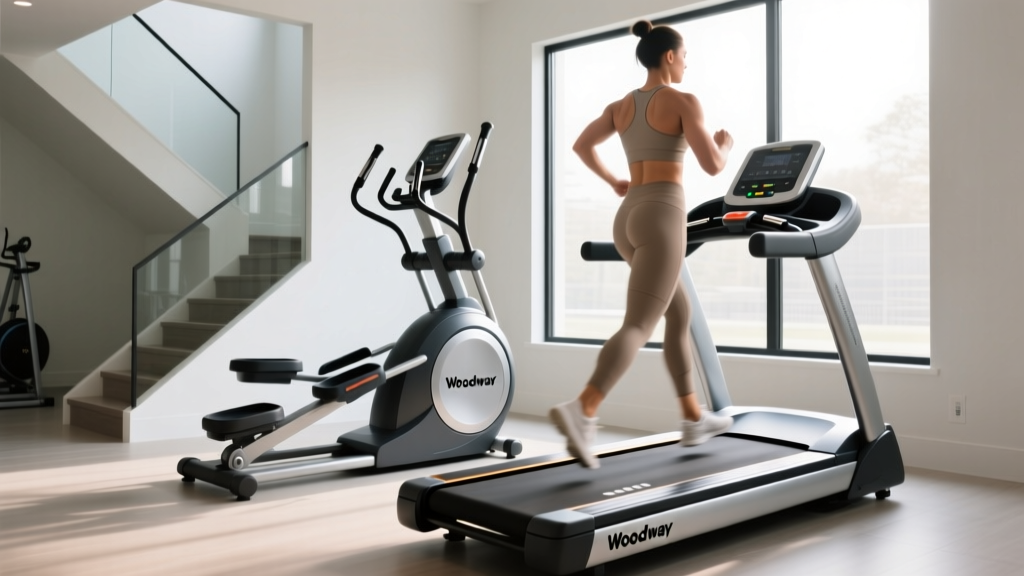
Stair Climber vs Woodway Curved Treadmill: Home Use Mistakes & Fixes
Master your home gym with our stair climber troubleshooting guide. Fix mechanical errors, correct form, and compare it to the Woodway curved treadmill.

The Biomechanical Divide: Vertical Steps vs. Slat-Belt Sprints
Equipping a home gym in 2026 requires balancing spatial constraints, budget, and biomechanical goals. Two of the most fiercely debated premium cardio machines on the market are the traditional stair climber (like the StairMaster SC4000) and the self-powered Woodway curved treadmill (such as the Curve XL). While both deliver elite cardiovascular conditioning and high caloric expenditure, they operate on fundamentally different kinetic chains. The stair climber isolates the sagittal plane with a continuous vertical load, heavily targeting the gluteus maximus, quadriceps, and soleus. Conversely, the Woodway curved treadmill demands a horizontal, self-propelled sprinting mechanic that engages the hamstrings and hip flexors through a full range of motion.
However, owning premium cardio equipment is only half the battle. According to the CDC's physical activity guidelines, adults need at least 150 minutes of moderate-intensity or 75 minutes of vigorous-intensity aerobic activity weekly. To achieve this without sustaining overuse injuries or burning out your machine's internal components, you must master proper form and basic mechanical troubleshooting. Below, we break down the most catastrophic mistakes home users make on stair climbers, how to fix common hardware failures, and how these issues contrast with maintaining a Woodway curved treadmill.
5 Critical Stair Climber Mistakes Ruining Your Home Workouts
Stair climbers are unforgiving. Unlike a motorized treadmill that pulls your feet backward, a stair climber requires you to lift your entire body weight against gravity with every single step. As noted by movement experts at ACE Fitness, improper form on vertical climbing machines can rapidly lead to lumbar strain and patellofemoral pain syndrome. Avoid these five common errors:
1. The "Handrail Hang" Posture Collapse
Leaning your body weight onto the handrails or console is the most pervasive mistake in home cardio. By supporting even 20% of your body weight on the rails, you reduce your actual caloric expenditure by up to 30%. More importantly, it forces your spine into sustained flexion, deactivating the glutes and shifting the load entirely to your lower back and anterior deltoids. The Fix: Keep your torso upright (between 85 and 90 degrees). Use the handrails strictly for balance, resting only your fingertips on the grips.
2. Plantar Flexion Overload (The "Toe-Dancer")
Many users stay exclusively on the balls of their feet, never allowing their heels to make contact with the pedal. This constant plantar flexion overworks the gastrocnemius and Achilles tendon, frequently leading to Achilles tendinopathy or severe calf cramping. The Fix: Drive through the mid-foot and heel. Imagine you are stepping onto a sturdy box; your entire foot should stabilize on the 8-inch pedal before you initiate the downward push.
3. Shallow Step Depth Utilization
Standing on the front two inches of the pedal restricts ankle dorsiflexion and limits the mechanical advantage of the quadriceps. The Fix: Place your foot dead-center on the pedal. This ensures the pneumatic or magnetic resistance cylinder engages evenly and prevents premature wear on the pedal arm bushings.
4. Locking the Knees at Peak Extension
Snapping the knee into full hyperextension at the top of the step transfers the load from the muscle belly directly into the knee joint capsule. The Fix: Maintain a "soft knee" (about 5 to 10 degrees of flexion) even when the pedal is at its highest point.
5. Ignoring the Descent Phase
Letting gravity slam the pedal down rapidly on the return stroke causes micro-trauma to the joints and damages the machine's internal dampeners. The Fix: Control the descent. The lowering phase should take approximately 0.5 seconds, engaging the hamstrings eccentrically.
⚠️ Biomechanical Warning: If you experience sharp pain directly behind the kneecap (retropatellar pain) during or immediately after your stair climber session, you are likely pushing the pedal down using only your quadriceps while leaning forward. Correct your posture immediately to prevent cartilage degradation.Troubleshooting Guide: Fixing Common Home Stair Climber Mechanical Issues
Home gym environments lack the daily maintenance routines of commercial fitness centers. Dust accumulation, humidity fluctuations, and uneven floor leveling can wreak havoc on a stair climber's drivetrain. Here is how to troubleshoot the most frequent hardware failures.
Alternator Squeal on Magnetic Resistance Climbers
Symptom: A high-pitched squealing or chirping noise emanating from the lower shroud, particularly on magnetic resistance models like the Bowflex Max Trainer M9 or older StairMaster Stepper models.
Diagnosis: The drive belt connecting the pedal crank to the magnetic alternator flywheel has either accumulated dust or lost tension.
The Fix: Unplug the machine and remove the lower plastic shroud (usually requiring a 5mm Allen key). Inspect the ribbed drive belt. If it is glazed, clean it with isopropyl alcohol. Check the belt tension by pressing the midpoint between the pulleys; it should have exactly 1/2 inch of deflection. If it is looser, adjust the alternator mounting bracket tensioner bolt until the correct deflection is achieved.
Speed Sensor Misalignment (Error Code 1)
Symptom: The console displays "Error 1" or "Speed Sensor Error" and halts the machine within 5 seconds of starting, common on the StairMaster SC4000 and SC7000 series.
Diagnosis: The magnetic reed switch (speed sensor) has vibrated out of alignment with the flywheel magnet, meaning the console cannot read the RPMs.
The Fix: Locate the reed switch near the main flywheel. Loosen the mounting screw slightly. Realign the sensor so it passes within 3mm of the flywheel magnet. Tighten the screw, recalibrate the console via the hidden technician menu (usually accessed by holding the 'Pause' and 'Level Up' buttons simultaneously for 3 seconds), and run the diagnostic test.
Pedal Arm Bearing Play and Clunking
Symptom: A distinct metallic "clunk" when shifting weight from the left to the right pedal, accompanied by lateral wobble.
Diagnosis: The bronze bushings or sealed bearings inside the pedal arm pivot point have degraded.
The Fix: Lift the pedal arm and check for lateral play. If movement exceeds 2mm, the bushings must be replaced. Order the OEM replacement kit (e.g., Part #SM-1042 for specific StairMaster models). Remove the pedal arm retaining clip, slide the arm off the crankshaft, and press the new bushings in using a standard bench vise.
Woodway Curved Treadmill Contrast: Slat-Belt Maintenance & Form Errors
While stair climbers rely on complex alternators, pneumatic cylinders, and stepper motors, the Woodway curved treadmill utilizes a brilliantly simple, motor-free design. The user's kinetic energy drives a belt made of vulcanized rubber slats over ball-bearing guide rails. However, this does not make it immune to user error or maintenance neglect.
Form Error: Running in the "Braking Zone"
The Woodway Curve XL features a distinct parabolic arc. The steepest part of the curve is designed for acceleration, while the flatter rear section is for maintaining top speed. A massive mistake home users make is running too far back on the flatter section while trying to accelerate. This forces the user into a "braking stride," over-striding and sending massive shockwaves through the tibia. The Fix: To accelerate, lean into the steeper front curve and drive your knees up. To cruise, shift slightly back. Never try to sprint from the flattest rear section.
Maintenance: Slat-Belt Guide Rail Lubrication
Unlike motorized treadmills that require you to lift the belt and apply silicone to a wooden deck, the Woodway requires lubrication on the guide rails. If you hear a dry, rubbery squeaking noise, the ball bearings are starved of lubricant. The Fix: Every 6 months (or every 500 miles), apply a specialized PTFE-based silicone spray directly to the left and right aluminum guide rails where the slat bearings make contact. Wipe away excess spray to prevent dust adhesion.
Home Gym Decision Matrix: Which Machine Survives Your Routine?
Choosing between a premium stair climber and a Woodway curved treadmill for your home gym in 2026 depends on your spatial allowances, budget, and joint health. Review the comparison matrix below to make an informed purchasing decision.
| Feature | StairMaster SC4000 (Stair Climber) | Woodway Curve XL (Curved Treadmill) |
|---|---|---|
| Approximate Retail Price | $3,499 - $3,899 | $8,500 - $9,200 |
| Footprint (L x W x H) | 46" x 30" x 76" (Compact vertical) | 76" x 33" x 64" (Requires long clearance) |
| Power Requirement | 120V Standard Outlet (Powers console/alternator) | Zero (100% Self-Powered, optional console battery) |
| Primary Joint Impact | Low impact, but high compressive load on lumbar/knees if form breaks | Low impact, reduces shear force on knees by 30% vs. flat treadmills |
| Key Maintenance Need | Drive belt tensioning, sensor alignment, pedal bushing replacement | Guide rail silicone lubrication, slat-belt tension adjustments |
| Ideal User Profile | Glute-focused hypertrophy, hikers, vertical sports conditioning | Sprinters, HIIT enthusiasts, runners rehabbing from shin splints |
Expert FAQ: Making the Final Decision for Your Home Setup
Can I use a stair climber if I have a history of patellar tendinitis?
Yes, but with strict caveats. The stair climber is a closed-chain kinetic exercise, which is generally safer for the knee than open-chain leg extensions. However, you must avoid deep flexion angles. Limit your step rate to a moderate 60-70 steps per minute and ensure you are driving through your heels to engage the posterior chain, taking the sheer stress off the patellar tendon.
Is the Woodway curved treadmill truly maintenance-free compared to a stair climber?
Not entirely. While the Woodway eliminates the need for motor repairs, alternator replacements, and complex circuit board fixes associated with motorized treadmills and magnetic stair climbers, its vulcanized rubber slats and bearing rails still require environmental care. High humidity can cause the rubber slats to expand slightly, requiring periodic tension adjustments using the hex bolts located at the rear axle. Furthermore, a stair climber's footprint makes it easier to keep covered and dust-free in a garage gym compared to the expansive surface area of a Woodway.
Which machine burns more calories per hour?
In a strictly controlled, maximum-effort vacuum, a self-powered curved treadmill yields a slightly higher caloric burn (roughly 10-15% more) due to the requirement of propelling your body weight horizontally while overcoming the friction of the slat belt. However, because the stair climber is easier to pace for long durations without central nervous system fatigue, most home users actually sustain longer workouts on the climber, resulting in a higher total session caloric expenditure.
More gear to consider
All reviews
Spirit XT685 Treadmill Review: Walking Pad Comparison Guide 2026

ProForm 520i treadmill vs 2026 Compact Cardio Market Trends

Stationary Bike Types vs GT5 Treadmill: 2026 Market Trend Report

CrossFit Treadmill: Best Models, Workouts & Programming Guide

NordicTrack Commercial Treadmill vs. Folding Treadmills for Small Spaces: 2026 Review
