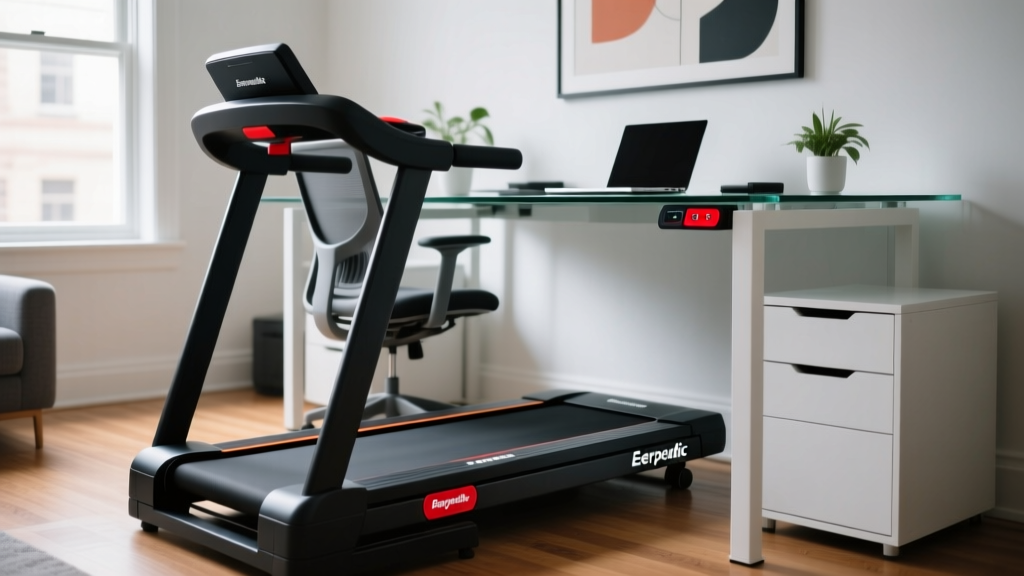
Stair Climber vs ProForm 285T Treadmill: 2026 Guide
Compare top home stair climbers against the ProForm 285T treadmill. Discover 2026 space-saving cardio specs, joint impact data, and buying advice.

The 2026 Home Cardio Landscape: Vertical Climbing vs. Incline Walking
Designing a home gym in 2026 requires a ruthless evaluation of spatial efficiency, metabolic output, and joint longevity. When consumers begin researching compact cardio solutions, they frequently find themselves caught in a cross-category debate: should you invest in a dedicated stair climber machine for home use, or opt for a budget-friendly, space-saving treadmill like the ProForm 285T treadmill? Both machines promise high caloric expenditure and cardiovascular conditioning, but their biomechanical realities, spatial footprints, and long-term maintenance profiles are vastly different.
This in-depth buying guide deconstructs the home stair climber market, establishes the ProForm 285T treadmill as our baseline for budget motorized walking, and provides a data-driven framework to help you choose the right machine for your specific ceiling height, joint health, and fitness goals.
Deconstructing Home Stair Climbers: Beyond the Marketing Hype
The term "stair climber" is frequently misused in the fitness equipment industry. To make an informed purchase, you must distinguish between the two primary categories of home climbing machines, as their engineering and physiological impacts differ drastically.
1. Vertical Cable Climbers (e.g., MaxiClimber XL-2, Bowflex Max Trainer Series)
These machines utilize a cable-and-pulley system or motorized magnetic resistance to simulate a continuous vertical ascent. The user supports a portion of their body weight on the handrails while driving the pedals downward. Key Specs to Demand in 2026: Look for a minimum step height of 8 inches, motorized electromagnetic resistance (which eliminates the need for manual tension knobs), and an integrated heart-rate monitor that adjusts resistance automatically to keep you in Zone 2 or Zone 4 cardio thresholds.
2. Twin-Cylinder Hydraulic Steppers (e.g., Sunny Health & Fitness SF-S9001)
Often marketed as "mini stair climbers," these rely on dual hydraulic pistons. They are incredibly cheap (often under $100) and have a footprint of less than 2 square feet. However, the stroke length is typically limited to 6 or 7 inches. This short range of motion forces a rapid cadence that spikes the heart rate quickly but fails to engage the gluteus maximus through a full range of motion, placing disproportionate fatigue on the calves and hip flexors.
⚠️ The Ceiling Clearance Formula (Critical for Vertical Climbers)Before purchasing any vertical stair climber, you must calculate your ceiling clearance. The most common reason for returning home stair climbers is head-strike during the peak of the stepping motion. Use this exact formula:
User Height + Machine Step-Up Height (usually 10-14 inches) + 12 inches of overhead clearance = Minimum Ceiling Height.
Example: A 6'0" (72") user on a machine with a 12" step-up requires a ceiling of at least 8'0" (96"). If you have standard 8-foot ceilings and are taller than 5'10", a vertical climber is likely unusable, making a treadmill like the ProForm 285T the only viable high-intensity option.
The Baseline: ProForm 285T Treadmill Profile
To accurately compare the stair climber category, we must establish the benchmark for entry-level, space-saving home treadmills. The ProForm 285T treadmill remains a dominant player in the budget cardio space in 2026, primarily due to its aggressive pricing and folding mechanics. However, buyers must understand its exact limitations.
- Motor: 2.0 CHP (Continuous Horsepower). This is sufficient for walking and light jogging but will overheat if subjected to sustained running over 6 MPH by users near the weight limit.
- Running Surface: 14" x 50". This is a narrow, short belt. It demands strict form and is entirely unsuitable for tall runners or sprinting.
- Incline Mechanism: 10% Maximum Incline. Crucial Note: The incline on the 285T is manual. You must step off the machine and physically adjust the rear feet to change the incline. It does not offer the automated incline intervals found on premium models.
- Weight Capacity: 250 lbs.
- Price Point: Typically retails between $299 and $349.
The ProForm 285T treadmill excels as a dedicated "walking pad" alternative that offers slight elevation changes, but it cannot replicate the sheer metabolic demand and lower-body muscular endurance required by a true stair climbing motion.
Head-to-Head Comparison Matrix
The following table contrasts the two dominant home stair climber types against the ProForm 285T treadmill across critical home-gym metrics.
| Feature | Vertical Cable Climber | Hydraulic Mini-Stepper | ProForm 285T Treadmill |
|---|---|---|---|
| Footprint (L x W) | 36" x 28" | 16" x 14" | 64" x 28" (Folded: 28" x 28") |
| Min. Ceiling Req. | 8'6" to 9'0" | Standard (No extra clearance) | Standard (No extra clearance) |
| Est. Caloric Burn (30m) | 320 - 450 kcal | 200 - 280 kcal | 150 - 250 kcal (at 10% manual incline) |
| Primary Muscle Focus | Glutes, Quads, Lats | Calves, Hip Flexors | Hamstrings, Calves, Core |
| Joint Impact (GRF) | Low (Zero heel-strike) | Low (Zero heel-strike) | Moderate (1.2x to 1.5x body weight) |
| 2026 Avg. Cost | $499 - $799 | $60 - $120 | $299 - $349 |
Biomechanics and Joint Loading Analysis
When evaluating cardio equipment, ground reaction forces (GRF) and joint torque are paramount, especially for aging demographics or those recovering from injuries. According to guidelines published by the Centers for Disease Control and Prevention (CDC), adults need at least 150 minutes of moderate-intensity aerobic activity weekly, making joint preservation a long-term necessity.
"Low-impact aerobic activities, such as stepping and swimming, elevate the heart rate while minimizing the repetitive concussive forces on the lumbar spine and articular cartilage of the knee, making them ideal for sustainable, lifelong cardiovascular health."
— Adapted from the American Heart Association (AHA) guidelines on joint-friendly aerobic conditioning.
The Patellofemoral Caveat
While stair climbers eliminate the impact shock of a treadmill belt, they do not eliminate joint loading. Ascending stairs (or a vertical climber) generates compressive forces on the patellofemoral joint (where the kneecap meets the femur) equivalent to 1.5 to 2.0 times your body weight. If you suffer from patellar tendinopathy or severe osteoarthritis, the repetitive deep flexion required by a stair climber may exacerbate pain. In this specific edge case, walking on the ProForm 285T treadmill at a moderate 3.0 MPH speed on a 0% to 5% manual incline is biomechanically safer, as it keeps the knee in a shallower flexion angle.
Maintenance and Real-World Failure Modes
Home gym equipment fails in predictable ways based on its engineering. Understanding these failure modes will dictate which machine you should buy based on your willingness to perform maintenance.
Hydraulic Stepper Failure: Heat Degradation
The most common failure in budget hydraulic mini-steppers is cylinder blowout. Hydraulic fluid viscosity decreases as it heats up during a 30-minute workout. If the tension knob is set too high, the internal seals experience immense friction, eventually leading to fluid leaks and a complete loss of resistance. Pro Tip: Limit hydraulic stepper sessions to 20 minutes and never store them in direct sunlight or unclimate-controlled garages, as ambient heat accelerates seal degradation.
Treadmill Failure: Belt Friction and Motor Burnout
The ProForm 285T treadmill utilizes a standard silicon-lubricated deck. The primary failure mode here is user neglect. If the 14" x 50" belt is not lubricated with 100% silicone treadmill oil every 40 to 60 hours of use, the friction coefficient between the belt and the MDF deck spikes. This forces the 2.0 CHP motor to draw excess amperage to maintain speed, eventually tripping the internal thermal breaker or permanently frying the motor control board. Furthermore, because the 285T features a manual incline, the rear roller bearings experience asymmetrical wear if the machine is left at a 10% incline for months without being leveled out.
Final Verdict: Which Machine Belongs in Your Home Gym?
The decision between a home stair climber and the ProForm 285T treadmill is not about which machine is universally "better," but which machine aligns with your architectural constraints and physiological needs.
Buy a Vertical Stair Climber if:
- You have ceilings higher than 8'6".
- Your primary goal is maximizing caloric burn and glute activation in under 30 minutes.
- You want to completely eliminate heel-strike impact shock from your routine.
- You have a budget exceeding $500 for a motorized electromagnetic model.
Buy the ProForm 285T Treadmill if:
- You have standard 8-foot ceilings or live in an apartment with strict spatial limits (utilizing its 28" x 28" folded footprint).
- You suffer from patellofemoral knee pain that is aggravated by deep flexion.
- Your primary use-case is daily low-intensity steady-state (LISS) walking or pacing during remote work.
- You are strictly limited to a sub-$350 budget and do not mind manually adjusting the incline pins.
By matching the machine's mechanical realities to your home's physical dimensions and your body's biomechanical requirements, you ensure that your 2026 cardio investment yields years of consistent, injury-free progress.
More gear to consider
All reviews
Does Goodwill Take Treadmills? Care for Upright & Spin Bikes
Space Treadmill vs Rower: Setup, Buying & Technique Guide

Treadmill Motor Setup: Sizing Guide & 100 Meters on a Treadmill Test
dogPacer MiniPacer Treadmill: 2026 Budget & Value Breakdown

Upright, Recumbent, Spin Bikes vs. Sole Treadmill Comparison Chart