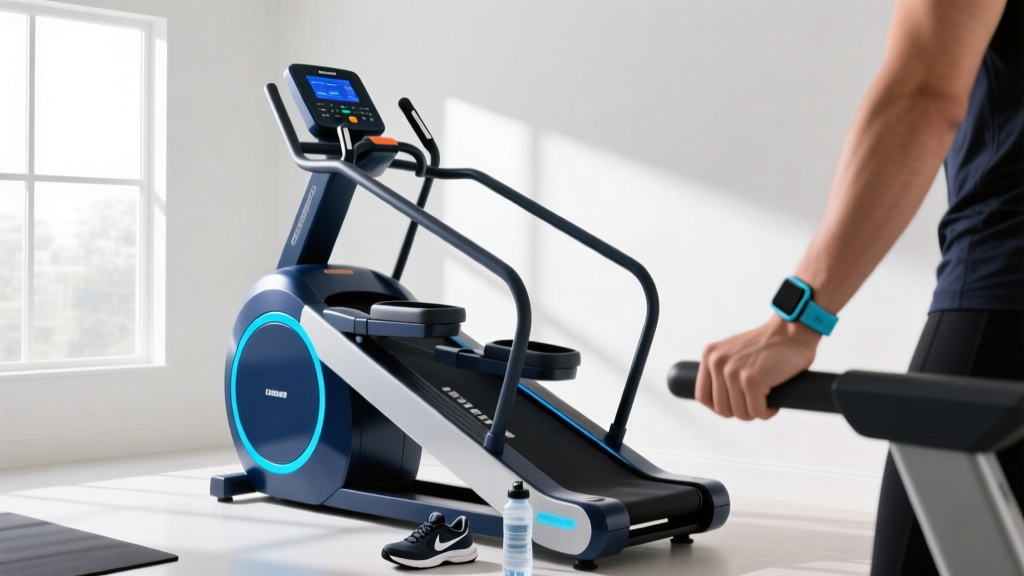
Stair Climber Machine for Home Use Guide: Treadmill Serial Number Fix
Master your home gym with our stair climber machine for home use guide. Plus, troubleshoot common errors and find your treadmill serial number fast.

The Ultimate Stair Climber Machine for Home Use Guide: Setup & Biomechanics
Bringing a stair climber into your home gym in 2026 is one of the most efficient ways to build lower-body power and cardiovascular endurance. However, whether you are unboxing a motorized powerhouse like the NordicTrack FS14i Freestyle Strider ($2,799) or a compact hydraulic mini-stepper like the Sunny Health & Fitness SF-S9002 ($150), improper setup and usage mistakes can lead to premature mechanical failure and joint pain. According to the American Council on Exercise (ACE), stair climbing engages the glutes, hamstrings, and quadriceps through a deep range of motion, but poor machine calibration ruins these biomechanical benefits.
⚠️ Common Setup Mistake: Ignoring Floor LevelingMini-steppers and motorized climbers rely on precise weight distribution. If your home gym floor is uneven by even a quarter-inch, the hydraulic cylinders on a mini-stepper will experience lateral shear stress, causing the O-rings to blow out within 30 days. Always use a digital level and place high-density rubber shims under the rear stabilizers before your first workout.
Form and Calibration Errors
Many users treat a stair climber like an escalator, leaning heavily on the handrails. This "hanging" technique reduces caloric expenditure by up to 20% and places dangerous shear forces on the machine's console uprights. Maintain an upright posture, lightly resting your fingertips on the rails for balance. For motorized stepmills, ensure the step rate (SPM) matches your natural cadence; forcing a stride that is too long on a machine with a fixed 8-inch step height (like the classic StairMaster StepMill) leads to excessive patellofemoral joint compression.
Mechanical Troubleshooting: Error Codes & Fixes
When your machine halts mid-climb, the console will typically throw an error code. Below is a troubleshooting matrix for the most common 2026 home cardio equipment failure modes.
| Error Code | Machine Type | Root Cause | Troubleshooting Fix |
|---|---|---|---|
| E1 / Err 1 | Motorized Striders / Stepmills | Optical speed sensor misalignment or dust buildup on the flywheel encoder. | Unplug the unit. Remove the front hood (usually 4 Phillips screws). Locate the optical sensor near the drive belt. Clean the encoder wheel with 99% isopropyl alcohol and a microfiber swab. Realign the sensor to sit exactly 2mm from the wheel. |
| E2 / Err 2 | Freestyle Striders (e.g., FS14i) | Incline or step-height actuator motor failure. The machine cannot verify its starting position. | Perform a hard reset by unplugging the machine for 10 minutes. If the error persists, the actuator limit switch is likely fried and requires a warranty part replacement. |
| Squeaking / Popping | Hydraulic Mini-Steppers | Cylinder pivot joints lack lubrication, or the hydraulic fluid is overheating and expanding. | Apply white lithium grease to the upper and lower pivot bolts. Limit continuous use to 15-minute intervals to prevent hydraulic seal blowouts. |
The Administrative Nightmare: Finding Your Treadmill Serial Number & Warranty Info
You have diagnosed the mechanical issue, ordered the replacement part, and now you need to file a warranty claim or register your equipment for the latest 2026 OTA (Over-The-Air) firmware updates. This is where thousands of home gym owners hit a brick wall. While you might be searching specifically for a treadmill serial number after buying a used NordicTrack or Peloton Tread on Facebook Marketplace, the exact same administrative hurdle applies to high-end stair climbers.
Failing to register your equipment or link it to apps like iFIT or JRNY because you cannot locate the ID decal is the most common non-mechanical mistake in home fitness. The Consumer Product Safety Commission (CPSC) strongly recommends registering all heavy motorized fitness equipment immediately upon purchase to ensure you receive critical safety recall notifications.
Step-by-Step: Locating the Serial Number Decal
Whether you are hunting for a treadmill serial number or a stair climber model ID, manufacturers hide these decals in notoriously difficult spots. Here is how to find them:
- The Power Receptacle Zone: On 80% of motorized treadmills and striders, a silver or white decal containing a 10-to-14 digit alphanumeric code is located within 3 inches of where the power cord plugs into the frame.
- Under the Running Board / Deck: For treadmills, you may need to loosen the rear roller adjustment bolts, slide the belt aside, and use a flashlight to read the sticker affixed to the underside of the wooden MDF deck.
- The Front Hood / Shroud: Look inside the plastic motor cover. Sometimes the decal is placed on the inner steel frame rather than the outside plastic.
- Under the Console Upright: On mini-steppers and climbers, check the bottom of the main vertical steel tube, near the floor stabilizer caps.
If the serial number sticker is sun-faded or rubbed off from years of use, do not guess the numbers. Place a piece of blank white paper over the decal and gently rub a graphite pencil or charcoal stick over it. The indentation from the dot-matrix printing will often reveal the hidden numbers. Alternatively, shine a UV flashlight at an extreme angle to catch the adhesive residue outline.
2026 Preventative Maintenance Matrix
To avoid needing your serial number for a major warranty claim, adhere to this strict maintenance schedule. Proper care extends the lifespan of a $2,500 stair climber from 4 years to over a decade.
| Frequency | Mini-Stepper (Hydraulic) | Motorized Strider / Stepmill |
|---|---|---|
| Weekly | Wipe down pivot joints with a damp cloth to remove sweat-induced corrosion. | Vacuum dust from the console vents and step treads to prevent optical sensor blockages. |
| Monthly | Inspect hydraulic cylinder shafts for pitting or micro-leaks. Replace if fluid is visible. | Check drive belt tension. Press down on the center of the belt; it should deflect exactly 1/2 inch. Adjust the rear tensioner bolts if it sags. |
| Annually | Replace the hydraulic cylinders proactively if you weigh over 220 lbs, as standard 250-lb rated cylinders degrade faster under high-heat friction. | Re-grease the internal chain drive (if applicable) with synthetic bicycle chain lube. Update firmware via Wi-Fi using your registered serial number. |
Final Thoughts on Home Cardio Troubleshooting
Troubleshooting home cardio equipment requires a blend of mechanical intuition and administrative diligence. By following this stair climber machine for home use guide, you will eliminate the physical setup errors that destroy joints and hydraulics. Furthermore, mastering the art of locating your treadmill serial number—or the equivalent ID on your climber—ensures you are never locked out of warranty support, software updates, or safety recalls. Treat your equipment with precision, and it will deliver years of uninterrupted, high-intensity aerobic conditioning right in your living room.
More gear to consider
All reviews
Elliptical vs Treadmill Maintenance: Is a Curved Treadmill Better?

Do Treadmills Help You Lose Weight? Curved vs Motorized Compared

How to Burn 500 Calories on the Treadmill: Beginner Buying Guide

Buying a Treadmill for Backward Treadmill Walking: Step-by-Step

How to Start ProForm Treadmill & Maintain All Stationary Bike Types
