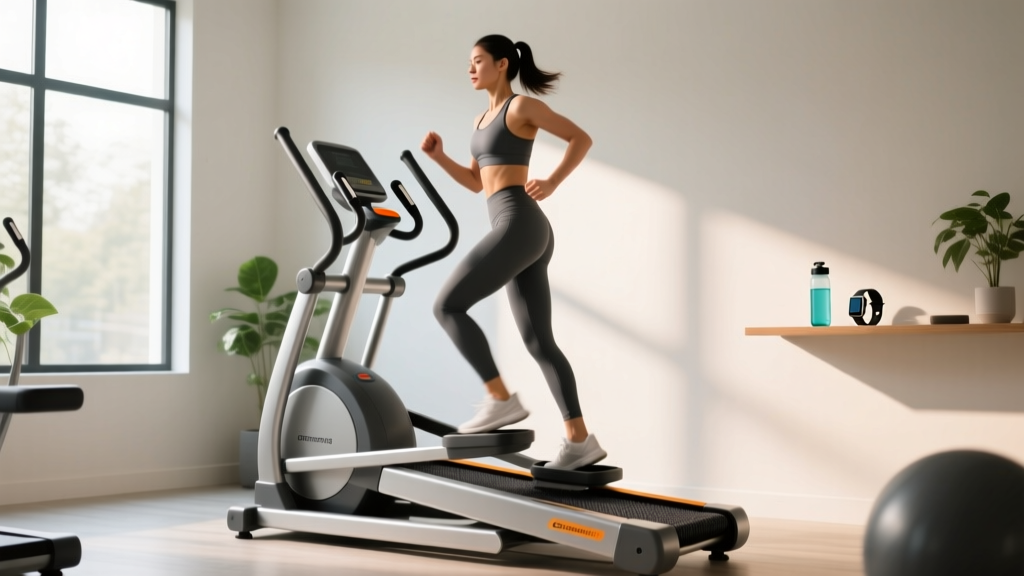
Home Stair Climbers: Can Strava Track Treadmill Runs & Climbs?
Master your home stair climber setup, avoid common form mistakes, and learn if Strava tracks treadmill runs and indoor climbing workouts.

Integrating a stair climber into your home gym is one of the most effective decisions you can make for cardiovascular health and lower-body hypertrophy. Machines like the Bowflex Max Trainer M9 or the commercial-grade Life Fitness CLST offer unparalleled VO2 max benefits in a compact footprint. However, setting up these machines involves more than just plugging them in; it requires spatial planning, biomechanical awareness, and digital ecosystem integration.
As indoor fitness technology has evolved in 2026, the line between hardware and software has blurred. When setting up their indoor cardio stations, users frequently ask: can Strava track treadmill runs and stair climbing sessions without a GPS signal? Furthermore, how do you troubleshoot the inevitable mechanical squeaks and sensor errors that plague home cardio equipment? This comprehensive guide addresses the digital tracking dilemma, breaks down critical form mistakes, and provides a mechanical troubleshooting matrix to keep your climber running smoothly.
The Digital Dilemma: Tracking Indoor Cardio on Strava
Before diving into the physical mechanics of the stair climber, we must address the software side of indoor cardio. The question 'can Strava track treadmill runs' is one of the most searched queries in the home fitness space, and the answer dictates how you log your stair climber sessions as well.
Strava is inherently a GPS-first platform. Outdoors, it maps your route and calculates pace via satellite. Indoors, GPS is useless. To track a treadmill run or a stair climber workout, Strava relies on one of three methods:
- Bluetooth FTMS Protocol: The Fitness Machine Service (FTMS) is a standardized Bluetooth Low Energy (BLE) profile. If your 2026 treadmill or stair climber supports FTMS (like the NordicTrack FS14i or Peloton Tread), it broadcasts speed, incline, and cadence directly to the Strava app or a bridging app like Zwift.
- Wearable Accelerometers: If your machine lacks smart connectivity, Strava can ingest data from an Apple Watch or Garmin smartwatch. These devices use internal accelerometers to detect the rhythmic arm swing of a treadmill run or the vertical oscillation of a stair climb, estimating distance and calories based on your biometric profile.
- Manual Entry & Footpods: For stair climbers, wrist-based tracking is notoriously inaccurate because users often hold the handrails, eliminating arm swing. The most accurate workaround is pairing a Bluetooth footpod (like the Stryde or Garmin HRM-Pro Plus) to your watch, which then syncs the exact step count and vertical gain to Strava's indoor activity database.
Biomechanical Blunders: 3 Form Mistakes Ruining Your Climb
Stair climbers are unforgiving. Unlike an elliptical, which uses momentum to carry you through the dead spots of a stride, a stair climber requires you to lift your entire body weight against gravity with every single step. According to research highlighted by the Mayo Clinic regarding aerobic exercise intensity, improper form on these machines doesn't just reduce calorie burn—it actively invites lumbar and patellar injuries.
1. The 'Death Grip' and Rail Leaning
The most pervasive mistake on home stair climbers is leaning heavily on the handrails, transferring up to 30% of your body weight to your upper body. This drastically reduces the metabolic demand on your glutes and quads. The Fix: Use a 'piano hands' approach. Rest only your fingertips lightly on the rails for balance. If you cannot maintain the RPM without gripping tightly, lower the resistance level by 15-20%.
2. Shallow Step Depth (The 'Tiptoe' Error)
Many users place only the balls of their feet on the pedals, keeping their heels suspended. This places immense shear force on the Achilles tendon and isolates the calves, bypassing the gluteus maximus. The Fix: Ensure your entire foot, including the heel, makes contact with the pedal on the downward drive. Think about 'pushing through the heel' to engage the posterior chain.
3. Anterior Pelvic Tilt and Hip Hinging
As fatigue sets in around minute 15, users tend to hinge at the hips, sticking their glutes out and arching their lower back to compensate for the incline. This compresses the lumbar spine. The Fix: Maintain a neutral spine. Imagine a straight line from your earlobe through your shoulder, hip, and ankle. Engage your core to prevent the pelvis from tipping forward.
Mechanical Troubleshooting Matrix
Home stair climbers endure massive vertical torque. Over time, drive belts stretch, optical sensors get clogged with dust, and magnetic resistance brakes lose calibration. Below is a diagnostic matrix for the most common hardware failures found in popular residential models like the Sole SC900 or Bowflex Max series.
| Symptom | Probable Cause | Exact Troubleshooting Fix |
|---|---|---|
| Erratic RPM / Cadence drops to zero mid-workout | Dust obstruction on the optical reed switch or misaligned magnet. | Remove the side shroud. Locate the optical sensor near the flywheel. Wipe the lens with a microfiber cloth and isopropyl alcohol. Ensure the flywheel magnet passes within 2-3mm of the sensor. |
| Pedals 'slip' or drop suddenly under heavy load | Stretched Poly-V drive belt or worn tensioner pulley. | Locate the motor mount tensioning bolts at the base of the drive assembly. Tighten the bolts to increase belt tension. If the belt shows micro-cracking on the ribs, replace it (Part cost: ~$35). |
| High-pitched squealing during the upstroke | Dry pedal guide rails or lack of silicone lubrication on the linear bearings. | Do NOT use WD-40. Apply 100% pure liquid silicone lubricant to the vertical guide rods and wipe away excess debris with a lint-free rag. |
| Resistance does not change regardless of console input | Servo motor failure or disconnected magnetic eddy current brake cable. | Check the Molex connector linking the servo motor to the main PCB. If secure, the servo motor itself has likely stripped its internal plastic gears and requires full replacement. |
Spatial Planning: Ceiling Clearance & Footprint Math
A frequently overlooked aspect of buying a stair climber for home use is the vertical clearance requirement. Unlike a treadmill where your head remains relatively level, a stair climber elevates your entire body by the maximum step height at the peak of the pedal stroke.
'The most common home gym installation error I see is users mounting their stair climbers in basements with drop ceilings. They forget to account for the pedal elevation at maximum extension, leading to head strikes on ceiling joists.' — Mark Davis, Certified Home Gym Architect
The 2026 Clearance Formula:
To calculate your minimum ceiling height, use this exact formula:
User Height + Machine Base Pedal Height (at lowest point) + Max Step Height + 4-inch Safety Buffer
For example, if you are 6'0" (72 inches), using a machine with a 10-inch base height and a 14-inch maximum step depth (like the Life Fitness PowerMill), the math is: 72 + 10 + 14 + 4 = 100 inches (8 feet, 4 inches). If your ceiling is a standard 8 feet, you will hit your head at the top of the stride. Always measure from the floor to the lowest hanging obstacle (like a ceiling fan or HVAC duct), not just the drywall.
Preventative Maintenance Schedule
To avoid the mechanical failures listed in the troubleshooting matrix, adhere to this strict maintenance cadence. The American Heart Association recommends up to 300 minutes of vigorous activity per week for optimal cardiovascular health; if you are hitting these numbers on your climber, your machine is working overtime.
- Weekly: Vacuum the floor beneath and around the machine. Stair climbers generate significant static electricity, which acts as a magnet for dust and pet hair, pulling debris directly into the flywheel housing.
- Monthly: Inspect the pedal straps and tensioning buckles. The repetitive upward pull often frays the nylon webbing near the plastic adjustment clips.
- Bi-Annually: Remove the main shroud and use compressed air to blow out the internal PCB (Printed Circuit Board) and motor housing. Overheating is the number one killer of magnetic resistance controllers in poorly ventilated home gyms.
Frequently Asked Questions
Do stair climbers build muscle or just burn fat?
Stair climbers primarily target Type I (slow-twitch) muscle fibers for endurance, but by increasing the resistance level and slowing the RPM to 40-50 steps per minute, you can induce hypertrophy in the gluteus maximus, quadriceps, and soleus. It is a hybrid tool, but it will not replace heavy barbell squats for maximal strength gains.
Why does my smartwatch overestimate calories on the stair climber?
Wrist-based optical heart rate monitors struggle with the 'grip effect.' When you tightly grasp the handlebars, the flexor muscles in your forearms contract, restricting blood flow and causing the watch to misread your heart rate. This erratic HR data causes the watch's algorithm to artificially inflate your calorie burn. Use a chest strap monitor for accurate metabolic tracking.
Is a stepper or a climber better for bad knees?
A true vertical stair climber (where pedals move up and down) is generally superior to a mini-stepper or an elliptical for knee rehabilitation, provided you do not lock your knees at the bottom of the stroke. The vertical vector minimizes the shear force on the patellofemoral joint compared to the forward-momentum impact of a treadmill.
More gear to consider
All reviews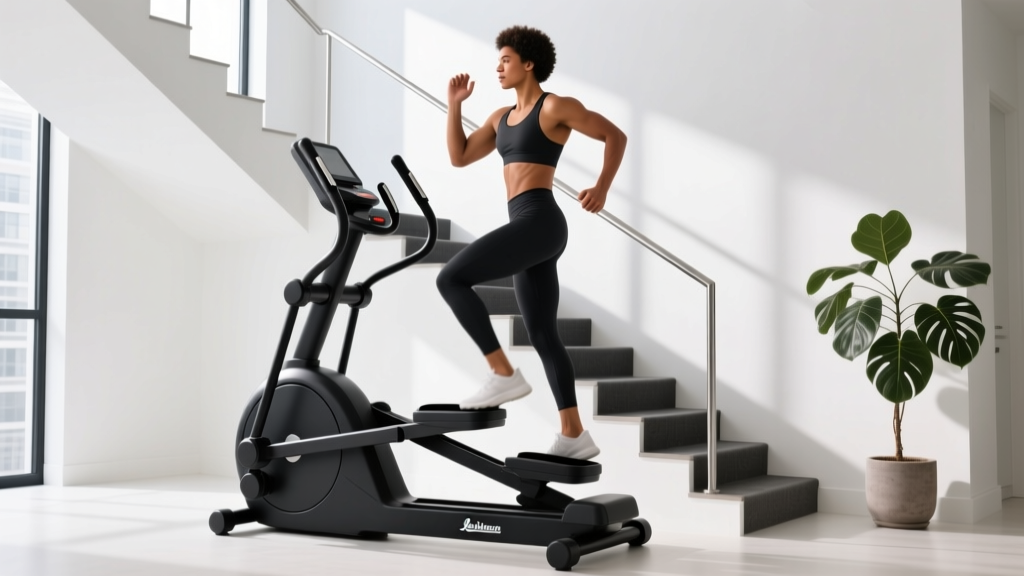
Beyond the Taylor Swift Treadmill Workout: Home Stair Climber Guide

Home Stair Climber Fixes & The Wooden Treadmill Without Electricity
Vision Fitness Treadmill T9600 vs Portable Cardio Trends 2026
Treadmill or Exercise Bike? Motor Size & Setup Guide

Running Barefoot on Treadmill: Compact Portable Gear Guide
