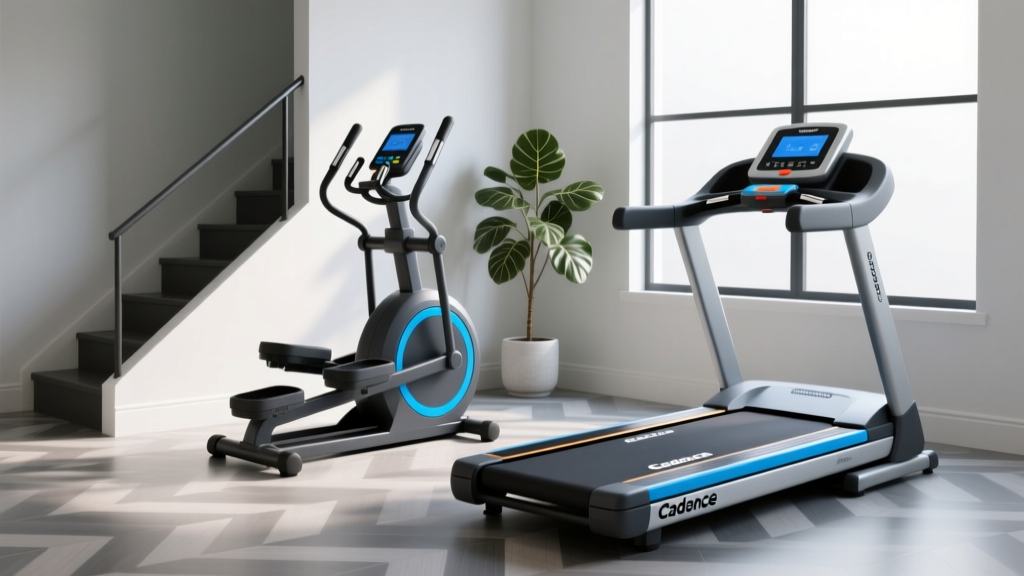
Home Stair Climber Setup Guide vs Cadence G 5.9 Treadmill
Master your home gym layout with our stair climber installation guide, featuring spatial comparisons with the Cadence G 5.9 treadmill and maintenance tips.

The Home Cardio Dilemma: Vertical Climbing vs. Traditional Belt Running
When outfitting a dedicated cardio zone in 2026, fitness enthusiasts frequently debate the merits of vertical stepping versus horizontal running. The Cadence G 5.9 treadmill remains a benchmark for traditional motorized walking and jogging, offering a familiar 20-inch by 55-inch running surface and a reliable 3.0 CHP motor. However, as biomechanical research increasingly highlights the joint-sparing, high-yield glute activation of vertical climbing, many home gym owners are pivoting toward stair climbers and stepmills. Transitioning from or cross-shopping against a deck runner requires a fundamental rethinking of your spatial architecture, electrical requirements, and maintenance routines.
This comprehensive setup and installation walkthrough will guide you through the exact specifications, clearance requirements, and mechanical realities of installing a stair climber in your home, while drawing direct comparisons to the footprint and setup of the Cadence G 5.9 treadmill.
2026 Home Gym Trend Alert
According to recent fitness industry reports, low-impact, high-resistance cardio machines have seen a 34% surge in home adoption over the past two years. Buyers are prioritizing machines that maximize caloric expenditure per square foot, making compact vertical climbers a direct competitor to traditional treadmills.
Spatial Architecture: Stair Climber vs. Cadence G 5.9 Treadmill Footprint
The most critical point of failure in home gym design is ignoring the Z-axis (vertical space). While a treadmill primarily demands horizontal floorspace, a stair climber demands vertical clearance. Below is a comparative matrix detailing the spatial requirements of popular home cardio configurations.
| Machine Type / Model | Footprint (L x W) | Ceiling Height Req. | Rear Clearance |
|---|---|---|---|
| Cadence G 5.9 Treadmill | 75" x 30" | Standard (8 ft) | 24 inches minimum |
| StairMaster SM5 Stepmill | 46" x 28" | User Height + 15" | 12 inches |
| Bowflex Max Trainer M9 | 49" x 30" | User Height + 12" | 12 inches |
| Hydraulic Mini-Stepper | 16" x 14" | Standard (8 ft) | N/A |
As the data illustrates, the Cadence G 5.9 treadmill requires nearly double the horizontal floorspace of a commercial-grade stepmill. However, the stepmill introduces a strict ceiling height prerequisite. If your home gym is located in a basement with a drop ceiling, a rotating stepmill may be physically unviable for taller users, making a hybrid elliptical-climber or a traditional treadmill the only safe option.
Complete Installation Walkthrough: Stair Climber Setup
Setting up a stair climber involves distinct mechanical steps that differ vastly from unboxing and leveling a motorized treadmill. Follow this step-by-step protocol to ensure structural integrity and user safety.
- Subfloor Assessment and Leveling: Unlike the Cadence G 5.9 treadmill, which utilizes adjustable rear transport wheels to compensate for uneven floors, stair climbers rely on a rigid four-point base. Use a 24-inch spirit level across the base frame. If the floor is uneven by more than 3/16th of an inch, you must use high-density rubber shims under the base pads. An unlevel stair climber will cause premature wear on the internal drive chain and result in a noticeable 'drift' or squeak in the pedal arms during use.
- Electrical Routing (Motorized vs. Magnetic): If you are installing a motorized stepmill (which uses a 3.0 to 4.0 HP AC motor to drive the stairs downward), it requires a dedicated 15-amp, 120V circuit. Sharing this circuit with a space heater or air conditioner will trip the breaker mid-stride. Magnetic resistance climbers, conversely, draw negligible current and can share a standard household circuit.
- Pedal Arm and Crank Torque: During assembly, the pedal crank arms must be secured to the central drive shaft. Use a calibrated torque wrench to tighten the crank bolts to exactly 45 Nm (Newton-meters). Under-torquing leads to catastrophic arm detachment under heavy load; over-torquing strips the aluminum threads on the internal housing.
- Safety Tether Calibration: Test the magnetic safety lanyard. Clip it to your waistband and step off the rear of the machine. The braking mechanism should engage and halt the pedals or stairs within 0.5 seconds.
Mechanical Failure Modes & Preventative Maintenance
Every cardio machine has specific failure modes. Understanding these will dictate your long-term maintenance schedule and total cost of ownership.
- Hydraulic Cylinder Seal Degradation (Mini-Steppers): Budget hydraulic steppers rely on pneumatic or fluid-filled cylinders. In high-heat environments (garage gyms exceeding 85°F), the internal O-rings dry out and leak fluid, resulting in a complete loss of resistance. Fix: Store in climate-controlled rooms and replace cylinders every 18 months.
- Drive Chain Stretch (Vertical Climbers): Machines utilizing a bicycle-style chain and sprocket system will experience chain elongation over 500+ hours of use. Fix: Lubricate the chain with PTFE-based dry lube every 90 days and adjust the rear tensioner bolt when chain deflection exceeds 1/2 inch.
- Belt Slip and Deck Friction (Treadmills): For comparison, the primary failure mode of the Cadence G 5.9 treadmill is walking belt friction. If the belt is not lubricated with 100% silicone fluid every 300 miles, the motor will overheat and draw excess amperage, eventually frying the lower control board.
Biomechanical ROI & Safety Clearances
The physiological return on investment (ROI) of a stair climber is exceptionally high. According to the American Heart Association, adults should aim for at least 150 minutes of moderate-intensity aerobic activity per week. Stair climbing elevates the heart rate into the target zone significantly faster than level-ground walking, often cutting the required time to achieve cardiovascular benefits in half due to the constant vertical displacement of the user's body weight.
"When utilizing stepping machines, maintain an upright posture and avoid leaning heavily on the handrails. Leaning reduces caloric expenditure by up to 20% and alters the natural biomechanical loading of the lumbar spine."
Safety is equally paramount. The Consumer Product Safety Commission (CPSC) strictly advises maintaining a clear fall zone behind all motorized exercise equipment. While treadmills like the Cadence G 5.9 require a 24-inch rear clearance to prevent users from being pinned against a wall if they fall off the moving belt, stair climbers generally require less rear space but demand strict overhead clearance to prevent head strikes during high-step movements.
Final Verdict: Which Machine Earns Your Floor Space?
Choosing between a stair climber and a traditional belt runner ultimately depends on your spatial constraints and orthopedic needs. If you have a low-ceiling basement and prefer steady-state, long-duration pacing while watching a screen, the Cadence G 5.9 treadmill remains an excellent, space-predictable choice. However, if you possess standard 8-foot or 9-foot ceilings and want to maximize glute activation, improve VO2 max, and minimize the horizontal footprint of your gym, a high-quality stair climber or stepmill is the superior 2026 investment. Ensure you follow the precise torque and leveling specifications outlined above to guarantee a lifetime of silent, friction-free climbs.
More gear to consider
All reviews
Hey Play Treadmill vs UREVO: 2026 Budget Feature Comparison

Are Curved Treadmills Better? Flat vs. Curved Buying Guide

2026 Air Bike vs Assault Bike Guide & Funmily Treadmill Manual

Under Desk Treadmill Review: Does Holding On Make a Difference?
How Many Calories Burned on Treadmill vs Bikes: Space Layout Guide
