Beyond the Treadmill Incline Workout 12 3 30: Stair Climber Guide
Master the home stair climber with our beginner guide. Compare it to the viral treadmill incline workout 12 3 30 and learn step-by-step routines.

The 12-3-30 Phenomenon vs. The Stair Climber Reality
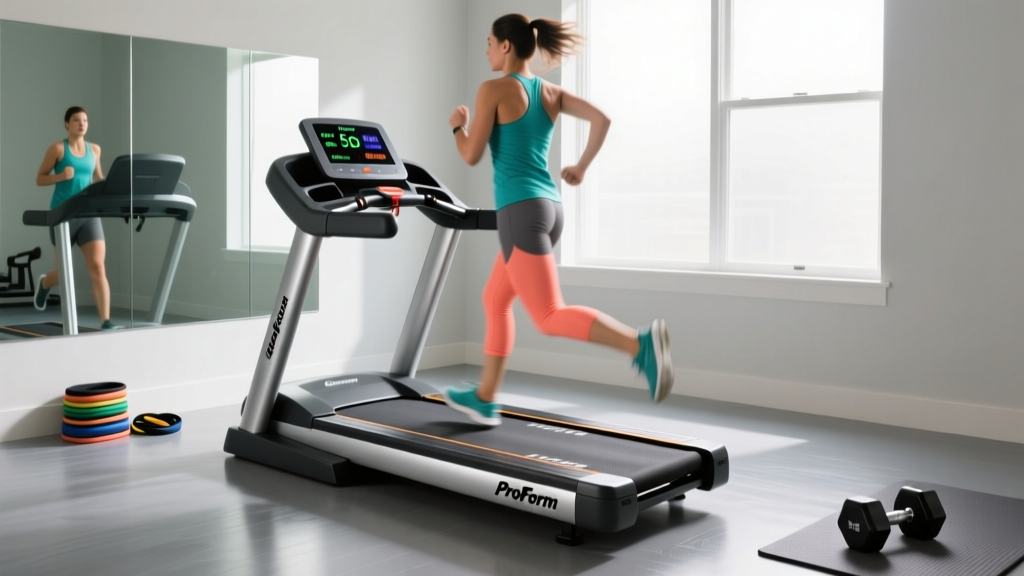
Over the past few years, the viral treadmill incline workout 12 3 30 (12% incline, 3 mph, 30 minutes) has dominated home fitness routines. While it is an excellent low-impact cardiovascular challenge, it has distinct limitations: it requires a massive, expensive treadmill with a powerful motor to sustain a 12% grade, and it places immense strain on the Achilles tendon and calf muscles due to extreme ankle dorsiflexion. As we evaluate cardio equipment in 2026, the home stair climber has emerged as the ultimate biomechanical alternative for beginners seeking intense glute activation without the spatial footprint or joint shear of a max-incline treadmill.
This beginner-friendly, step-by-step guide will help you transition from the treadmill to the stair climber, select the right machine for your home, and build a sustainable 30-day conditioning protocol.
Expert Insight: Walking at a 12% incline forces your ankle into roughly 20 degrees of dorsiflexion. If you lack ankle mobility, your body compensates by hyperextending the lower back. A stair climber keeps the ankle in a neutral position while driving the hip into deep extension, isolating the gluteus maximus much more safely.Why Pivot to a Home Stair Climber?
Before diving into the step-by-step routine, it is crucial to understand why a stair climber might serve your long-term fitness goals better than the traditional treadmill incline workout 12 3 30. According to the American Heart Association, achieving 150 minutes of moderate-intensity aerobic activity weekly is the gold standard for cardiovascular health. Stair climbers help you hit this target efficiently.
- Superior Caloric Expenditure: Data from Harvard Health Publishing indicates that a 155-pound individual burns approximately 216 calories in 30 minutes on a general stair stepper, but modern motorized climbers with resistance can push this past 350 calories, rivaling or exceeding the 12-3-30 treadmill routine.
- Reduced Achilles Strain: The continuous vertical displacement of a stair climber eliminates the harsh eccentric loading on the calf muscles that often leads to Achilles tendinopathy in daily incline walkers.
- Space Efficiency: True pedal climbers and vertical climbers often have a footprint of just 3 to 5 square feet, compared to the 20+ square feet required for a long-deck incline treadmill.
2026 Home Stair Climber Market: What to Buy
Not all stair climbers are created equal. Mini-steppers with hydraulic cylinders do not replicate the continuous momentum needed for a 30-minute endurance session. For a true alternative to the treadmill incline workout 12 3 30, you need a motorized or magnetic resistance pedal climber. Below is a comparison of the top home models available this year.
| Model | Type | Price Range | Footprint | Best For |
|---|---|---|---|---|
| Bowflex Max Trainer M9 | Elliptical/Stair Hybrid | $1,999 | 49 x 30 inches | Premium HIIT & Steady State |
| ProForm Carbon HIIT H7 | Vertical Climber | $1,299 | 34 x 20 inches | Small Spaces & Glute Focus |
| Sunny Health SF-E723016 | Air Resistance Climber | $199 - $249 | 26 x 16 inches | Budget Beginners |
Note: Always verify ceiling height requirements before purchasing a vertical climber like the ProForm H7, as the pedal apex can require up to 15 inches of clearance above your standing height.
Step-by-Step Beginner Protocol: Translating 12-3-30 to the Stairs
The biggest mistake beginners make is attempting 30 continuous minutes on a stair climber on day one. While 3 mph on a 12% treadmill incline is a brisk walk, 30 minutes on a stair climber is an elite-level endurance feat. The Centers for Disease Control and Prevention recommends easing into vigorous activity to prevent musculoskeletal injury. Here is your step-by-step progression to build up to a 30-minute stair climbing session.
Phase 1: The Interval Adapter (Weeks 1 and 2)
Your goal here is tendon adaptation and cardiovascular baseline building. Do not worry about speed; focus on full pedal depression.
- Warm-up (5 Minutes): Set the machine to the lowest resistance. Step at a relaxed 40-50 steps per minute (SPM).
- Work Interval (2 Minutes): Increase resistance to level 4 (or medium). Aim for 60 SPM. Keep your torso upright.
- Recovery Interval (2 Minutes): Drop resistance to level 1. Slow to 40 SPM.
- Repeat: Complete 4 cycles (16 minutes total of intervals).
- Cool-down (4 Minutes): Lowest resistance, slow pace, followed by standing calf stretches.
Phase 2: The Steady-State Builder (Weeks 3 and 4)
Now we mimic the continuous nature of the treadmill incline workout 12 3 30, but with strategic micro-breaks to maintain form.
- Warm-up (5 Minutes): Low resistance, 50 SPM.
- The Climb (10 Minutes): Set resistance to level 5. Find a sustainable rhythm (around 55-65 SPM). Do not hold the handrails tightly; lightly rest your fingertips on them for balance only.
- Active Flush (2 Minutes): Drop resistance, keep legs moving slowly to clear lactic acid.
- The Second Climb (10 Minutes): Return to level 5 resistance. Focus on driving through the heel to maximize glute engagement.
- Cool-down (3 Minutes): Gradual deceleration.
Form Killers: 3 Mistakes That Destroy Your Knees
When fatigue sets in around minute 15, form breaks down. Avoid these common pitfalls to protect your patellofemoral joint (kneecap).
1. The Handrail Lean
Leaning heavily onto the console or side rails shifts your center of gravity backward. This reduces the weight your legs must lift by up to 20%, effectively nullifying the workout and placing unnatural shear force on the lower back. Fix: Use a 'piano fingers' grip on the rails. If you cannot maintain the pace without gripping tightly, lower the resistance or step rate.
2. Shallow Stepping (The Shuffle)
Many beginners take rapid, shallow steps, barely pushing the pedal down halfway. This keeps the quadriceps engaged but completely bypasses the glutes and hamstrings, leading to anterior knee pain. Fix: Focus on 'full range of motion.' Push the pedal all the way to the bottom floor plate before lifting the opposite foot.
3. The Forward Hinge
Hinging at the hips and staring at the floor mimics the posture of cycling, not climbing. This restricts diaphragmatic breathing and limits hip extension. Fix: Keep your chest proud, shoulders pulled back, and eyes fixed on the console or a point straight ahead.
Frequently Asked Questions
Can I do the stair climber every day like the 12-3-30 routine?
While the 12-3-30 treadmill routine is often done daily by influencers, stair climbing is more taxing on the central nervous system and the quadriceps due to the concentric lifting of your entire body weight against gravity. Beginners should start with 3 days a week, allowing 48 hours of recovery between sessions to prevent patellar tendonitis.
Is a stair climber bad for bad knees?
If you have existing patellofemoral pain syndrome or severe osteoarthritis, the repetitive deep knee flexion under load might aggravate symptoms. In such cases, a recumbent bike or a flat treadmill walk is safer. However, for healthy knees, the stair climber is actually a fantastic tool for strengthening the VMO (vastus medialis oblique), which stabilizes the kneecap.
How do I track my progress without a smart treadmill screen?
Most budget and mid-tier stair climbers lack the advanced telemetry of a $3,000 treadmill. Invest in a basic chest strap heart rate monitor (like the Polar H10 or Garmin HRM-Dual). Tracking your heart rate recovery—how quickly your BPM drops in the 60 seconds after your workout ends—is a far more accurate measure of cardiovascular improvement than the calorie counter on the machine.
More gear to consider
All reviews
How to Ship a Treadmill: Setup & Noise Comparison

Are Treadmills Good for You? Curved vs Motorized Guide

Noise Levels Compared: Quiet Cardio & Your Incline Treadmill Workout

Rowing vs Precision Run Treadmill: Beginner's Guide

ProForm Treadmill 415 Crosswalk & Air vs Assault Bike Guide