ST90 Treadmill Review: Small Space Care & Longevity Guide
Read our ST90 treadmill review for small spaces. Learn essential maintenance, folding hinge care, and longevity tips to protect your home gym investment.

The ST90 Treadmill: Small-Space Footprint & Core Specs
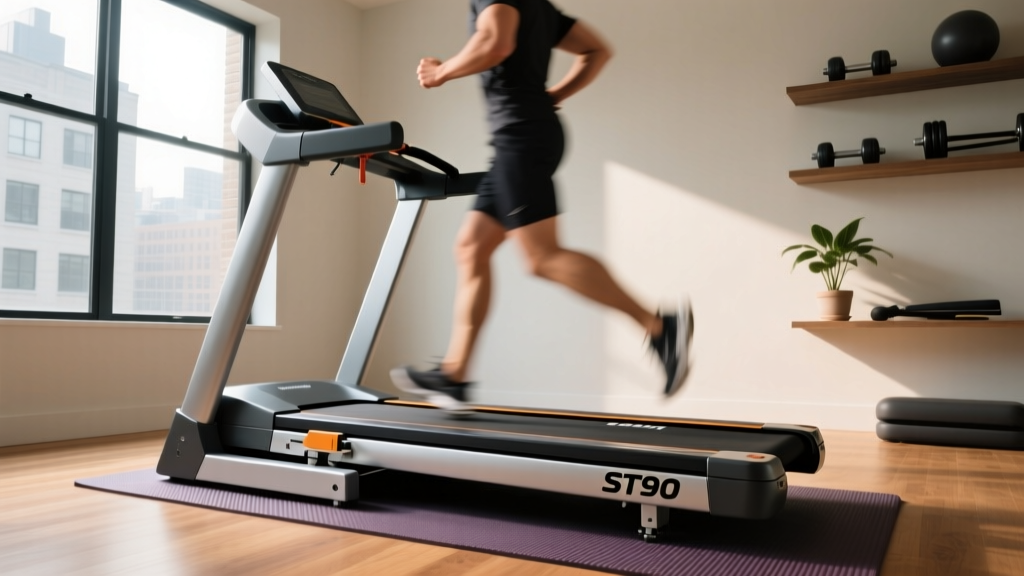
As urban living spaces shrink and home gyms adapt to micro-apartments, folding treadmills have transitioned from a luxury to a necessity. The Spirit Fitness ST90 has emerged as a popular contender in the compact cardio market. Priced between $1,299 and $1,499 as of 2026, it offers a compelling balance of a 3.0 continuous horsepower (CHP) motor and a foldable deck. However, reviewing a folding treadmill for small spaces requires looking past the initial footprint. The true test of the ST90 treadmill lies in its long-term structural integrity and the unique maintenance demands placed on its hydraulic folding mechanism.
According to Consumer Reports' treadmill buying guide, compact models often suffer from accelerated motor wear and hinge degradation if not maintained correctly. Below, we break down the exact specifications of the ST90 and how they dictate your long-term care routine.
| ST90 Specification | Small-Space Maintenance Impact |
|---|---|
| 3.0 CHP Motor | Requires strict dust management; small rooms trap motor exhaust heat and particulate matter. |
| 20" x 55" Belt | Narrower belt requires precise alignment checks every 30 days to prevent edge fraying against the side rails. |
| Hydraulic Drop-Fold Deck | Pivot points and gas shocks need bi-annual PTFE lubrication to prevent squeaking and latch failure. |
| Flex Cushioning System | Deck elastomers compress faster when the machine is folded and stored in upright positions for long durations. |
The Hidden Wear-and-Tear of Folding Mechanisms
When evaluating any folding treadmill for small spaces, the hinge assembly is the most critical point of failure. The ST90 treadmill utilizes a heavy-duty steel locking pin and a dual-piston hydraulic shock to lower the deck safely. In a compact apartment, users tend to fold and unfold the machine daily—sometimes twice a day. This high-frequency articulation introduces stress that stationary commercial treadmills simply do not experience.
"The leading cause of structural noise in home folding treadmills isn't the motor; it's the microscopic accumulation of debris in the folding pivot joints, combined with the breakdown of factory-applied lithium grease." — Biomechanical Equipment Repair Standards, 2025
To prevent the notorious "pop" or "squeak" when lowering the ST90's deck, you must abandon wet oils. Wet oils attract the heavy dust found in small, multi-purpose rooms (like a bedroom or living room). Instead, use a PTFE-based dry lubricant spray directly on the hinge pivot bolts every six months. Furthermore, inspect the primary locking latch pin for micro-fractures. If the pin shows any signs of shearing or bending, it must be replaced immediately to prevent the deck from collapsing during use—a replacement part typically costs under $35 directly from the manufacturer.
Step-by-Step ST90 Longevity Maintenance Routine
Proper maintenance is the difference between a treadmill that lasts three years and one that lasts a decade. Follow this exact protocol to maximize the lifespan of your ST90 treadmill in a confined environment.
- Belt Tension & Alignment (Every 150 Miles)
- Check the belt slip: Run the machine at 2.0 MPH and step firmly on the belt. If the belt stutters but the front roller continues to turn, the belt is too loose.
- Adjust using a 6mm Allen wrench on the rear roller bolts. Turn both the left and right bolts exactly one-quarter turn clockwise. Never over-tighten, as this will burn out the 3.0 CHP motor and void your warranty.
- Silicone Lubrication (Every 3 Months)
- The ST90 ships with a wax-infused belt, but it still requires periodic 100% silicone liquid lubricant. Apply exactly 1 ounce (half a standard squeeze bottle) under the center of the belt. Do not use petroleum-based sprays or WD-40, which will dissolve the deck's phenolic coating.
- Motor Hood Vacuuming (Monthly)
- Unplug the machine. Remove the four Phillips-head screws securing the front motor hood.
- Use a vacuum with a soft brush attachment to remove carbon dust from the motor brushes and the drive board. Compressed air should be avoided in small apartments, as it simply blows the conductive dust into your room's HVAC vents.
- Deck Rotation (Annually)
- While the ST90 does not feature a reversible deck like some commercial models, you can extend the life of the phenolic surface by ensuring your running gait is centered. Uneven wear on the left or right side indicates a need to adjust the deck leveling feet at the base of the uprights.
Environmental Threats: Dust, Heat, and Static
Small spaces present unique environmental hazards to cardio electronics. According to the EPA's guide on indoor air quality, smaller rooms with poor ventilation trap higher concentrations of household dust and humidity fluctuations. When a 3.0 HP motor operates in a 10x10 bedroom, the ambient temperature around the drive board can spike, accelerating capacitor degradation.
⚠️ Warning: Static Discharge in Compact RoomsSmall rooms with synthetic carpets or low humidity (below 35%) generate massive static electricity. If you experience console flickering or the ST90 shutting off mid-run, static is likely arcing through the deck into the control board. The Fix: Do not spray anti-static products on the treadmill. Instead, treat the surrounding floor mat and carpet with an anti-static fabric spray, and ensure the treadmill's grounding prong is securely plugged into a dedicated 15-amp outlet.
Additionally, ensure your ST90 is positioned at least 18 inches away from any wall or heating vent. Blocking the rear roller's airflow forces the motor to draw higher amperage, which over time will warp the motor's internal windings. For a deep dive into how room layout affects equipment thermals, Wirecutter's treadmill testing methodology highlights the importance of rear-deck clearance for heat dissipation.
Troubleshooting Common ST90 Folding Treadmill Issues
Even with meticulous care, folding treadmills in small spaces encounter specific edge-case failures. Use this diagnostic matrix to identify and resolve issues before they require a costly technician visit.
| Symptom | Probable Cause | Targeted Solution |
|---|---|---|
| Loud "thumping" noise at regular intervals | Belt seam passing over a worn deck spot or misaligned front roller. | Inspect the belt seam for delamination. Realign the front roller using the tension bolts; replace the deck if the phenolic layer is scored. |
| Deck refuses to lock in the upright position | Dust accumulation in the latch receiver or weakened latch spring. | Clean the receiver hole with a cotton swab and isopropyl alcohol. If the spring lacks tension, replace the latch assembly ($25 part). |
| Console dims when the incline motor engages | Voltage drop due to an overloaded circuit or failing incline gearbox. | Move the treadmill to a dedicated 15-amp circuit. If the issue persists, the incline motor gearbox is stripping and requires replacement. |
| Squeaking only when the deck is being lowered | Dry hydraulic pivot pins or metal-on-metal friction at the base hinge. | Apply white lithium grease to the base hinge plate and PTFE dry spray to the upper pivot bolts. |
Final Verdict: Is the ST90 Worth the Upkeep?
The Spirit ST90 treadmill remains one of the most robust folding treadmills for small spaces on the market in 2026. Its 325-pound weight capacity and 3.0 CHP motor punch well above its price class. However, its longevity is entirely dependent on the user's willingness to manage the unique stressors of a folding design and a compact environment. If you are committed to a strict monthly vacuuming routine, quarterly silicone lubrication, and mindful hinge care, the ST90 will deliver a decade of reliable, space-saving cardio. If you prefer a "plug and forget" machine, the inherent maintenance demands of a folding hinge may make a stationary, under-desk walking pad a more realistic alternative for your floor plan.
More gear to consider
All reviews
BXT8J Treadmill Noise Guide: Step-by-Step Cardio Machine Comparison

UREVO Strol 1 Pro Treadmill Review & Walking Pad Comparison 2026

Compact Cardio 2026: 770T Treadmill & Portable Picks

AoraPulse Treadmill Reviews: Motor Size & Setup Walkthrough

12 3 30 Treadmill Before and After: 2026 Under Desk Office Review