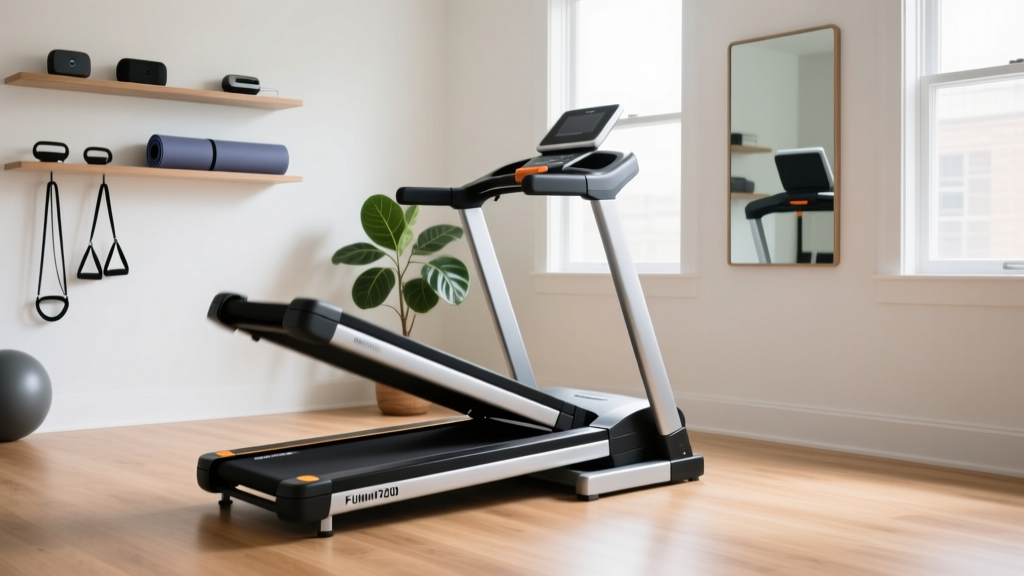
Spirit 685 Treadmill Setup & Motor Horsepower Guide
Master your Spirit 685 treadmill setup with our complete installation walkthrough. Learn how motor horsepower dictates electrical and flooring needs.

Why Motor Size Dictates Your Treadmill Installation
Unboxing a premium cardio machine is only the first step in building a safe, functional home gym. When dealing with commercial-grade equipment, the physical assembly is entirely dependent on the machine's powerplant. The Spirit 685 treadmill (often designated in the XT685 series) is a powerhouse built around a 4.0 Continuous Horsepower (CHP) motor. This massive motor delivers exceptional performance for heavy runners and high-incline training, but it also imposes strict electrical and structural requirements during setup.
Many homeowners make the critical mistake of treating a 4.0 CHP treadmill like a basic 2.0 HP walking pad. In this complete setup and installation walkthrough, we will explore how treadmill motor size and horsepower ratings directly influence your electrical prep, flooring choices, and mechanical calibration, ensuring your investment operates flawlessly for years to come.
⚠️ The 'Peak HP' Marketing Trap: Never base your installation requirements on 'Peak Horsepower.' Peak HP only measures the maximum output the motor can hit for a fraction of a second before overheating. Always look for Continuous Duty Horsepower (CHP), which measures the power the motor can sustain indefinitely during a standard workout.Decoding Treadmill Motor Size: CHP vs. HP
Before you plug in the Spirit 685 treadmill, you must understand what its 4.0 CHP rating actually means for your home. According to Consumer Reports, a motor's continuous rating determines its torque, heat dissipation, and lifespan. A 4.0 CHP motor features a larger flywheel, heavier copper windings, and a more robust PWM (Pulse Width Modulation) controller board than standard residential models.
How Motor Size Impacts the User Experience
- Under 2.5 CHP: Suitable only for walking or light jogging. Motors run hot and wear out quickly if pushed beyond 10 mph.
- 3.0 to 3.5 CHP: The standard for serious home runners. Handles speeds up to 12 mph with moderate inclines.
- 4.0+ CHP (Spirit 685 Class): Commercial-grade. Provides zero belt hesitation when a 250+ lb user steps on at 5 mph. Capable of sustained 15% inclines without thermal shutdown.
Electrical Prep: Matching the Circuit to the Motor
The most common point of failure during a high-end treadmill setup is electrical. A 4.0 CHP motor draws significant amperage, particularly during startup (inrush current) and heavy load intervals. The Electrical Safety Foundation International (ESFI) strongly advises against sharing circuits with high-draw appliances.
Step-by-Step Electrical Verification
- Identify the Circuit: The Spirit 685 treadmill requires a 20-amp dedicated circuit. Do not plug it into a standard 15-amp bedroom or living room outlet.
- Check the Receptacle: Look for a NEMA 5-20R receptacle (one slot will be turned sideways in a 'T' shape). If you only have standard 15-amp NEMA 5-15R outlets, you must hire a licensed electrician to install a 20-amp line with 12 AWG copper wiring.
- Eliminate Extension Cords: Never use an extension cord or a standard power strip. Voltage drop across a 15-foot extension cord can starve the motor controller, leading to blown capacitors or erratic speed behavior.
- Test with a Multimeter: Before plugging in the treadmill, use a digital multimeter to verify the outlet reads between 110V and 120V. Anything below 108V under load will cause the motor to overheat.
Motor Size to Installation Specs Matrix
Use this reference table to match your treadmill's motor size to the correct home infrastructure.
| Motor Rating (CHP) | User Weight Capacity | Electrical Circuit Required | Flooring Support Needed |
|---|---|---|---|
| 2.0 - 2.5 CHP | Up to 250 lbs | 15-Amp Standard | Standard PVC Mat |
| 3.0 - 3.5 CHP | Up to 300 lbs | 15-Amp Dedicated | Reinforced Rubber Mat |
| 4.0 CHP (Spirit 685) | Up to 350+ lbs | 20-Amp Dedicated | Heavy-Duty 3/8' Rubber |
Physical Placement and Flooring Load
The heavy copper windings and steel flywheel required for a 4.0 CHP motor add substantial weight to the chassis. The Spirit 685 treadmill weighs approximately 350 lbs unboxed. When combined with a 250 lb runner, the dynamic load on your floor joists can exceed 600 lbs, concentrated on four small leveling feet.
Setup Action: Place the treadmill perpendicular to your floor joists to distribute the weight across multiple beams. Use a 3/8-inch thick vulcanized rubber equipment mat. This not only protects hardwood from indentations but also dampens the low-frequency vibration generated by the high-torque motor at top speeds.
Step-by-Step Spirit 685 Treadmill Assembly
With the electrical and flooring prep complete, proceed to the mechanical assembly. High-horsepower treadmills require precise alignment to prevent belt drift and motor strain.
Phase 1: Uprights and Data Cable Routing
The most frequent cause of post-installation console failure is a pinched data cable. The Spirit 685 utilizes a multi-pin harness that runs from the lower motor controller up through the left upright.
- Feed the cable through the upright before securing the frame bolts.
- Use the included foam wrap to protect the wire where it passes through the steel hinge point.
- Torque the upright bolts to 30 Nm using a calibrated socket wrench. Overtightening can warp the frame and misalign the running belt.
Phase 2: Console and Handrail Attachment
Mount the console and connect the data harness. Ensure the locking tab clicks securely into place. A loose connection here will result in an 'E1' or 'E2' error code, indicating a communication failure between the console and the motor controller.
Motor Calibration and Belt Tensioning
According to Spirit Fitness Support guidelines, a new treadmill belt requires a specific break-in and tensioning procedure to protect the motor from unnecessary friction loads.
💡 The 'Slip Test' Calibration:- Power on the treadmill and set the speed to 3.0 mph.
- Step onto the side rails, then walk onto the belt. If the belt hesitates or 'slips' under your foot while the front roller continues to turn, the tension is too low.
- Stop the machine. Locate the rear roller adjustment bolts at the back of the deck.
- Turn both the left and right bolts exactly 1/4 turn clockwise.
- Repeat the slip test. Never tighten more than 1/2 turn total from the factory setting, as overtightening will destroy the motor bearings and stretch the belt.
Post-Installation Troubleshooting
Even with meticulous setup, high-CHP treadmills can exhibit quirks during the first week. Here is how to troubleshoot motor-related issues:
- Breaker Trips at High Speeds: If the 20-amp breaker trips only when running above 8 mph on an incline, check for voltage drops at the outlet. The motor is drawing max amperage, and poor wiring is causing the breaker to heat up and trip.
- Burning Smell During First Use: A slight ozone or warm wax smell is normal for the first 45 minutes as the factory belt lubricant heats up. However, a sharp, acrid plastic smell indicates the motor controller is overheating. Stop immediately and verify the ventilation grille on the motor hood is not blocked by the equipment mat.
- Speed Fluctuations: If the speed surges and drops rhythmically, the wax on the deck may be uneven. Run the treadmill at 2.0 mph for 15 minutes with no one on it to evenly distribute the silicone lubricant across the deck.
Frequently Asked Questions
Can I use a 15-amp outlet with an adapter for the Spirit 685?
No. Using a 15-amp adapter on a 20-amp plug bypasses the safety engineering of the machine. The inrush current of a 4.0 CHP motor can exceed 15 amps momentarily, which will either trip the breaker instantly or, worse, melt the adapter and cause an electrical fire.
Does a larger motor consume more electricity?
Paradoxically, no. A 4.0 CHP motor operates with much greater efficiency under load than a 2.5 CHP motor. A smaller motor struggling to pull a heavy runner up a 10% incline will draw more amperage and generate excess heat, wasting energy. The Spirit 685's oversized motor runs cool and efficient, keeping your utility costs stable.
How much clearance does the motor hood require?
The motor hood at the front of the treadmill requires at least 12 inches of clearance from the wall for proper airflow and heat dissipation. Never push the treadmill flush against a baseboard, as the motor's cooling fan will recirculate hot air, leading to thermal shutdowns.
More gear to consider
All reviews
Curved Manual vs Motorized: Troubleshooting the Wahoo KICKR Treadmill

Rowing Machine vs Ovicx Treadmill: 2026 Cardio Guide

NordicTrack Commercial 1750 Treadmill Reviews: Belt Care & Layout

Almost Threw Up After Treadmill HIIT? Quiet Cardio Machines Compared

Lijiujia Treadmill vs UREVO: 2026 Walking Pad Review