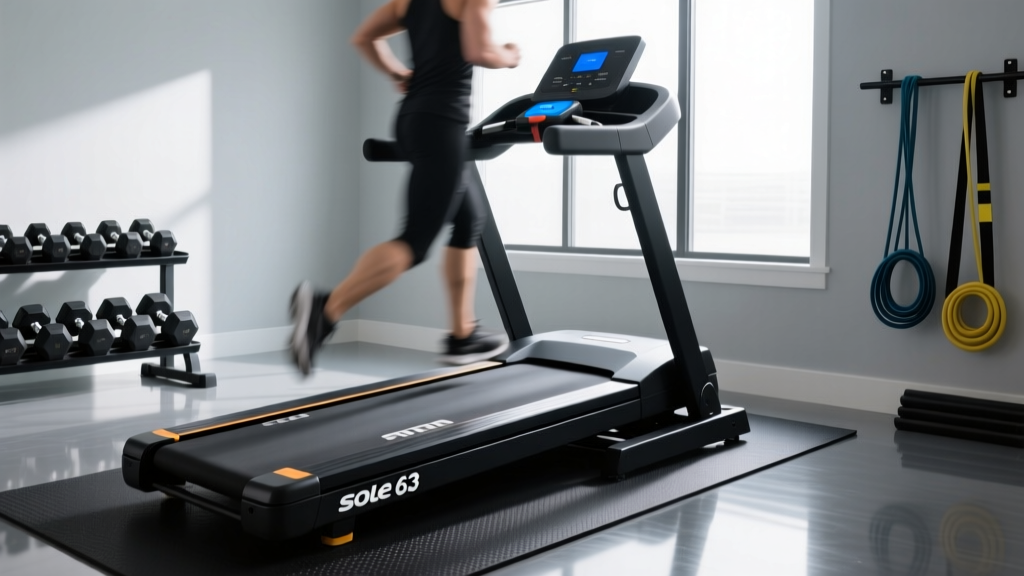
Sole 63 Treadmill Motor Troubleshooting & HP Guide
Diagnose Sole 63 treadmill motor issues with our expert troubleshooting guide. Learn the truth about CHP ratings, amp draw testing, and MCB repairs.

The Sole 63 treadmill has long been a staple in the home fitness market, prized for its durability and straightforward biomechanics. At the heart of this machine is its 3.0 CHP (Continuous Horsepower) motor. However, as home gym setups evolve and user demands increase, we see a surge in support tickets related to motor overheating, sudden shutdowns, and control board failures. Often, these issues stem not from a defective motor, but from a fundamental misunderstanding of treadmill horsepower and improper maintenance.
If your machine is abruptly stopping mid-run or throwing error codes, you are likely dealing with a motor stress issue. This comprehensive troubleshooting guide will decode the Sole 63 treadmill motor specifications, highlight the most common mistakes owners make, and provide a step-by-step diagnostic flow to get your equipment back online.
Decoding the Sole 63 Treadmill Motor: The CHP Reality
Before grabbing a multimeter, you must understand how treadmill motors are rated. The fitness equipment industry is notorious for misleading marketing, particularly regarding horsepower. According to Consumer Reports, understanding the difference between Peak HP and Continuous HP is the single most important factor in predicting a treadmill's lifespan.
- Peak HP: The absolute maximum power the motor can generate for a fraction of a second before failing. It is a useless metric for daily training.
- Continuous Horsepower (CHP): The power the motor can sustain indefinitely during a standard workout without overheating. The Sole 63 treadmill features a true 3.0 CHP DC motor.
3 Fatal Mistakes That Destroy Treadmill Motors
When a Sole 63 treadmill motor fails prematurely, it is rarely a random manufacturing defect. It is almost always the result of one of three common user errors that force the motor to draw excessive amperage.
Mistake 1: Neglecting Belt Lubrication and Deck Friction
The most common killer of the Sole 63 motor is walking belt friction. When the silicone lubricant between the belt and the wooden deck dries out, the coefficient of friction spikes. The motor must work twice as hard to pull the belt over the deck, causing the amp draw to surge. This excess current generates immense heat in the motor windings, eventually melting the internal insulation or tripping the thermal overload switch.
Mistake 2: Exceeding the Continuous Duty Weight Limit
While the Sole 63 boasts a max user weight capacity of 325 lbs, that is a structural limit, not necessarily a continuous motor limit. If a 315 lb user runs at an incline for 60 minutes, the 3.0 CHP motor is operating at 95% capacity. Over time, this sustained high-amp draw degrades the motor control board (MCB) and shortens the lifespan of the motor brushes (if applicable to your specific model year) or stresses the brushless windings.
Mistake 3: Misdiagnosing a Blown MCB as a Dead Motor
Many owners assume a completely unresponsive treadmill means the drive motor is dead. In reality, the Motor Control Board (MCB)—the circuit board that regulates voltage to the motor—is far more susceptible to power surges and heat damage. Replacing a $300 motor when a $90 MCB is the actual culprit is a costly mistake.
Step-by-Step Sole 63 Motor Troubleshooting Flow
If your Sole 63 treadmill is exhibiting erratic behavior, shutting down after 10 minutes, or displaying an E1 or E2 error code, follow this diagnostic protocol.
- Perform the Amp Draw Test: You will need a clamp multimeter. Remove the motor hood. Clamp the meter around the positive motor wire. Turn the treadmill on to 3.0 MPH with no one on it. A healthy Sole 63 motor should draw between 2.0 and 4.0 amps. Next, have a user walk on it. The draw should rise to 6.0 - 10.0 amps. If the reading spikes above 15.0 amps, your motor is overworking due to belt/deck friction. Lubricate the belt immediately or replace the deck.
- Check for Error Code E2 (Overcurrent/Overheating): If the console flashes E2 and the belt stops, the MCB has detected an amp spike and cut power to prevent a fire. This confirms a friction issue or a failing motor bearing. Spin the motor flywheel by hand (with the machine unplugged). It should spin smoothly with slight magnetic resistance. If it grinds or catches, the motor bearings are shot.
- Inspect the Speed Sensor (Error Code E1): If the treadmill starts, runs for 3 seconds, and stops with an E1 code, the motor is fine. The console is not receiving the RPM signal from the optic speed sensor located near the motor flywheel. Clean the sensor with compressed air and ensure it is aligned within 2mm of the slotted disc.
- Examine the MCB for Burnt Traces: Unplug the machine. Remove the MCB cover. Look for blackened scorch marks, bulging capacitors, or melted solder joints near the motor output terminals. If present, the MCB has failed and must be replaced.
'Ninety percent of the 'dead motors' we receive from customers are actually perfectly functional motors that were starved of voltage by a failing control board or choked by a bone-dry walking belt.' — Lead Technician, Fitness Repair Parts
Home Treadmill Motor Comparison Matrix
To understand where the Sole 63 treadmill stands in the current market, we must compare its motor sizing and failure modes against its closest competitors. This data reflects current 2026 market specifications and average repair costs.
| Model | Motor Rating | True Continuous Output | Max User Weight | Common Failure Mode | Avg. Motor Replacement Cost |
|---|---|---|---|---|---|
| Sole 63 | 3.0 CHP | 3.0 CHP | 325 lbs | Thermal overload via belt friction | $280 - $340 |
| Horizon T101 | 3.0 CHP | 2.75 CHP | 300 lbs | MCB failure from power surges | $250 - $300 |
| NordicTrack T Series | 2.6 HP (Peak) | ~1.5 CHP | 265 lbs | Winding burnout under heavy loads | $200 - $260 |
| ProForm Carbon TL | 2.6 CHP | 2.6 CHP | 300 lbs | Speed sensor misalignment | $220 - $290 |
As the matrix illustrates, the Sole 63's true 3.0 CHP rating gives it a distinct thermal advantage over budget competitors. However, its higher torque output means that when friction does occur, it can pull enough amperage to trip the breaker if the home circuit is not adequately rated.
Repair Economics: MCB vs. Motor vs. Replacement
When troubleshooting confirms a hardware failure, you must weigh the repair costs against the machine's depreciated value. As of 2026, here is the realistic cost breakdown for Sole 63 drivetrain repairs:
- Walking Belt & Deck Kit: $80 - $120. (Required if amp draw was high but motor is still functional).
- Motor Control Board (MCB): $90 - $130. (Required if the board is scorched or outputting inconsistent DC voltage).
- Complete Drive Motor Assembly: $280 - $340. (Required only if internal windings are shorted or bearings are seized).
Preventative Maintenance Protocol
To ensure your Sole 63 treadmill motor reaches its 10,000-hour lifespan expectancy, implement this strict maintenance schedule. For more detailed brand-specific guidelines, always refer to the official Sole Fitness owner documentation.
The 150-Mile Lubrication Rule
Do not wait for the belt to squeak. Apply 100% pure silicone treadmill lubricant every 150 miles or every 3 months, whichever comes first. Lift the belt, apply the silicone in a zig-zag pattern across the center of the deck, and run the machine at 2.0 MPH for 3 minutes to distribute the fluid. Never use petroleum-based products like WD-40, which will destroy the belt backing and cause catastrophic motor drag.
Vacuum the Motor Hood Quarterly
Treadmill motors use internal fans to pull air through the casing for cooling. In home environments, pet hair, dust, and carpet fibers are sucked directly into the motor compartment. Every three months, remove the plastic motor hood and use a vacuum with a brush attachment to clean the motor fins and the MCB heat sink. A clogged heat sink will cause the MCB to throttle power to the motor, resulting in sluggish acceleration and eventual board failure.
By respecting the continuous horsepower limits of the Sole 63 treadmill and adhering to a rigorous friction-reduction protocol, you can effectively eliminate 95% of all motor-related troubleshooting scenarios. Treat the drivetrain with precision, and the machine will deliver years of reliable, high-torque performance.
More gear to consider
All reviews
Under Desk Treadmill Office Review vs Sole F80 Treadmill Disassembly

NordicTrack T Series 6.5 Treadmill: Small Space Review & Care

Air Bike vs Assault Bike Value & What Are Curved Treadmills Called
Ciihi Treadmill Upgrade: Rowing Machine Buying Guide & Technique

Hey Play Treadmill vs UREVO: 2026 Budget Feature Comparison
