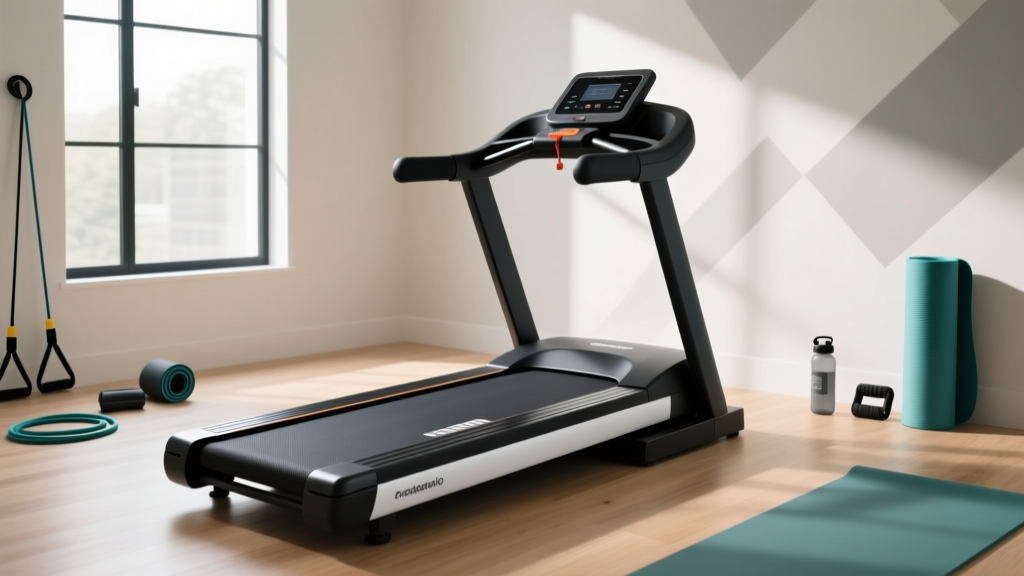
Slat Treadmill Buying Guide: Feature Comparisons & Common Mistakes
Compare top slat treadmill features to avoid costly buying mistakes. Learn expert troubleshooting tips for curved manual treadmills in our complete guide.

The Biomechanical Advantage: Why Slat Treadmills Dominate
The shift from traditional motorized decks to curved, manual slat treadmills has fundamentally altered home and commercial cardio training. By removing the motor, these machines force the user to generate the belt's momentum, resulting in higher caloric expenditure and improved running mechanics. According to biomechanical research highlighted by the National Strength and Conditioning Association (NSCA), running on a curved, non-motorized treadmill can increase metabolic demand and heart rate by up to 30% compared to a motorized equivalent at the same perceived speed.
However, the premium price tag of a high-quality slat treadmill—ranging from $2,500 to over $7,000—means that buying the wrong model or failing to maintain it properly is an expensive error. This guide breaks down the critical feature comparisons you need to make before purchasing, highlights the most common buyer mistakes, and provides an expert-level troubleshooting matrix for maintaining your equipment.
Feature Comparison Matrix: Top Slat Treadmills
Not all slat treadmills are engineered equally. The material of the slats, the bearing type, and the dynamic weight capacity dictate the machine's lifespan and feel. Below is a comparison of the current market leaders.
| Model | Slat Material | Bearing System | Max User Weight | Approx. Price |
|---|---|---|---|---|
| Woodway Curve | Vulcanized Rubber | Sealed Cartridge | 1,000 lbs | $7,200 |
| TrueForm Runner | Polyurethane Tread | Sealed Ball Bearings | 400 lbs | $3,295 |
| AssaultRunner Elite | Rubber Slats | Sealed Ball Bearings | 350 lbs | $2,999 |
| Technogym Skillrun (Boot) | Multidrive Belt | Industrial Roller | 400 lbs | $11,500+ |
Top 4 Buying Mistakes to Avoid
When investing in a manual cardio machine, consumers often focus on the digital console rather than the mechanical drivetrain. Avoid these critical purchasing errors:
1. Ignoring the Q-Factor and Track Width
The 'Q-factor' refers to the distance between the left and right running tracks. A narrow track forces an unnatural, crossover gait that can lead to IT band syndrome and hip impingement. The American Council on Exercise (ACE) notes that maintaining natural hip-width biomechanics is crucial for injury prevention. Always measure the inner gap of the slat tracks; it should be at least 4 to 5 inches wide to accommodate a natural foot strike without clipping the center rail.
2. Confusing Static vs. Dynamic Weight Capacity
A machine might boast a 400 lb static weight limit, but the dynamic load of a 200 lb runner sprinting at 15 mph generates impact forces up to 3 times their body weight. If you weigh 220 lbs and plan to sprint, a machine with a 350 lb dynamic limit (like the AssaultRunner) will experience premature bearing wear and slat deflection. Always buy a machine with a dynamic rating at least 2.5 times your body weight.
3. Overlooking Slat Thickness and Durometer
Cheaper models use thin, high-durometer (hard) plastic slats that transmit severe shock directly to the user's joints. Premium models use 8mm to 12mm vulcanized rubber with a lower durometer rating, which absorbs kinetic energy. Press your thumb into the slat; if it doesn't yield slightly, it will feel like running on concrete.
4. Assuming All Bearings Are Serviceable
Some budget slat treadmills use sleeve bearings or cheap, non-sealed ball bearings that grind to a halt when exposed to sweat and dust. Ensure the manufacturer uses sealed cartridge bearings (often standard 6204-2RS industrial sizes) that can be easily pressed out and replaced for under $5 each when they eventually fail.
Expert Insight: The Console TrapDo not pay a $1,500 premium for a built-in touchscreen. The mechanical resistance and curve geometry of the treadmill dictate 95% of your workout quality. Buy the machine for its drivetrain, and use a separate tablet or smartwatch for your metrics and programming.
Troubleshooting Guide: Fixing Common Slat Treadmill Issues
Even premium curved treadmills require mechanical sympathy. When issues arise, they usually stem from tension imbalances or debris in the guide rails. Use this step-by-step troubleshooting protocol.
Issue 1: Slat Stuttering or 'Sticking' at the Apex
The Cause: The apex (the flat bottom section where your foot strikes) is the highest friction zone. Sticking is usually caused by polyurethane degradation, dust accumulation in the UHMW (Ultra-High Molecular Weight) polyethylene guide rails, or lack of lubrication.
The Fix:
- Unplug the console (if applicable) and secure the belt with a velcro strap to prevent it from rolling.
- Wipe down the underside of the slats and the side guide rails with isopropyl alcohol to remove oxidized rubber and sweat salts.
- Apply a 100% pure silicone-based treadmill lubricant to the guide rails. Never use WD-40 or petroleum-based oils, as these will melt the UHMW plastic guides and void your warranty.
- Manually rotate the belt 10 full revolutions to distribute the silicone evenly.
Issue 2: Belt Drifting to the Left or Right
The Cause: Unequal tension on the rear roller. If you consistently push off harder with your dominant leg, or if the machine is placed on an uneven floor, the belt will track off-center, causing the slats to scrape against the side frame.
The Fix:
- Locate the two tensioner bolts at the very rear of the treadmill frame (usually requiring an 8mm or 10mm Allen key).
- If the belt is drifting left, turn the left tension bolt clockwise by exactly 1/4 turn.
- If the belt is drifting right, turn the right tension bolt clockwise by exactly 1/4 turn.
- Walk on the treadmill at a slow pace (3 mph) for two minutes to let the belt self-center. Repeat the 1/4 turn adjustment if necessary. Never adjust more than 1/2 turn at a time, or you risk overstretching the Kevlar-reinforced drive belt.
Issue 3: High-Pitched Squeaking from the Roller Assembly
The Cause: The sealed cartridge bearings inside the front or rear aluminum rollers have failed due to moisture ingress or metal fatigue.
The Fix: Sealed bearings cannot be re-lubricated. You must remove the side cap (usually 4 Phillips-head screws), slide out the roller axle, and use a standard bearing puller to extract the old bearing. Press in a new, identical sealed bearing (check the laser-etched code on the bearing seal, typically 6204-2RS or 6205-2RS). This repair costs less than $10 in parts but restores factory-silent operation.
Preventative Maintenance Protocol
To align with safety and longevity standards referenced by the U.S. Consumer Product Safety Commission (CPSC) regarding home fitness equipment maintenance, implement this bi-annual checklist:
- Monthly: Vacuum the rear roller guard and side rails to prevent dust from mixing with sweat and forming an abrasive paste.
- Bi-Annually: Check the main drive belt tension (if your model uses a toothed belt to connect the front and rear rollers). It should have exactly 1/2 inch of deflection when pressed with moderate thumb pressure.
- Annually: Inspect the slat fasteners. The vibrations from heavy foot strikes can loosen the hex bolts securing the rubber slats to the underlying drive belt. Tighten to the manufacturer's specified torque (usually 4-6 Nm).
'A slat treadmill is essentially a heavy-duty mechanical conveyor. Treat the guide rails and bearings with the same respect you would give to a high-end bicycle drivetrain, and it will outlast any motorized treadmill on the market.'
Frequently Asked Questions
Can I use a slat treadmill for walking, or is it only for running?
While designed to reward the biomechanics of running, slat treadmills are excellent for walking. However, because there is no motor to pull your foot back, you must actively push through the heel-to-toe transition. Users with severe Achilles tendonitis may find the initial push-off phase taxing and should start with flat, motorized options until rehabilitated.
Do slat treadmills require a specialized floor mat?
Yes. Because manual treadmills lack a heavy motor block, their weight distribution is heavily biased toward the user's impact zone. Use a high-density, 3/8-inch thick rubber equipment mat to prevent the machine's leveling feet from punching into soft drywall or hardwood subfloors during heavy sprinting intervals.
More gear to consider
All reviews
Euphamism Treadmill Belt Maintenance for Compact Spaces
Dandy's World Treadmill vs Rowing: 2026 Buying Guide

Triumph Treadmill Review: 2026 Small-Space Market Analysis
Air Bike vs Assault Bike Care: ProForm Carbon TL Folding Treadmill
Air Bike vs Assault Bike: Space Layouts & Half Moon Treadmill Fits