Rowing Machine vs ProForm Trainer 8.7 Treadmill: 2026 Guide
Compare the biomechanics, cost, and space of a rower vs the ProForm Trainer 8.7 treadmill. Expert buying guide and rowing technique tips.

The Home Cardio Dilemma: Full-Body Erg vs. Traditional Treadmill
As home fitness setups evolve in 2026, buyers are increasingly scrutinizing the biomechanical ROI and spatial footprint of their cardio investments. The debate frequently narrows down to two distinct philosophies: the total-body, zero-impact engagement of a dedicated rowing machine versus the accessible, weight-bearing routine of a mid-tier treadmill like the ProForm Trainer 8.7 treadmill. While the ProForm Trainer 8.7 remains a staple for power-walkers and light joggers, the rowing machine has surged in popularity for its unparalleled cardiovascular and muscular efficiency.
This comprehensive buying guide and technique breakdown will dissect the mechanical realities, pricing structures, and physiological benefits of rowing machines, while objectively comparing them to the ProForm Trainer 8.7 to help you make an informed, data-driven decision for your home gym.
Biomechanical Matrix: Rower vs. ProForm Trainer 8.7
Before diving into specific models, it is crucial to understand how these machines interact with the human body. According to Harvard Health Publishing, vigorous rowing can burn between 255 and 440 calories in just 30 minutes depending on body weight, rivaling or exceeding treadmill running, but with a fraction of the joint load.
| Feature | Magnetic/Air Rowing Machine | ProForm Trainer 8.7 Treadmill |
|---|---|---|
| Muscle Recruitment | 86% (Legs, Core, Back, Arms) | Lower Body & Core Stabilizers |
| Joint Impact | Zero (Seated, fluid motion) | Low to Moderate (1-3x body weight) |
| Footprint (In Use) | ~8 ft x 2 ft (Narrow profile) | ~6.5 ft x 2.5 ft (Wider, longer) |
| Storage | Stands upright or splits in half | Hydraulic folding (Vertical deck) |
| 2026 Avg. Price | $900 - $2,500 | $599 - $799 |
| Primary Limitation | Requires technique mastery | 55-inch belt limits tall runners |
The 2026 Rowing Machine Buying Guide
If you are leaning toward the ergometer (rowing machine), the market is currently segmented by three primary resistance types. Choosing the right one dictates your maintenance schedule, noise levels, and overall feel.
1. Air Resistance (The Gold Standard)
Air rowers use a flywheel with fan blades. The harder you pull, the more resistance is generated. The undisputed king of this category is the Concept2 RowErg (retailing around $1,200). It is the standard for CrossFit, Olympic training, and competitive indoor rowing. The trade-off? Air rowers are inherently noisy, producing a distinct 'whoosh' that can drown out television audio.
2. Magnetic Resistance (The Quiet Contender)
Magnetic rowers use electromagnetic braking to create resistance. They are virtually silent, making them ideal for apartments or early-morning workouts. Models like the NordicTrack RW900 ($1,199) feature massive interactive touchscreens and automatic resistance adjustments tied to scenic video content. However, the maximum resistance ceiling on magnetic rowers is often lower than air rowers, which may frustrate elite power athletes.
3. Water Resistance (The Aesthetic Choice)
Water rowers, pioneered by WaterRower ($1,695+), use a paddle spinning in a tank of water. They offer a highly realistic 'on-water' feel and a soothing, rhythmic splashing sound. The resistance scales naturally with your effort. The primary edge case to watch for is water maintenance; you must drop a purification tablet into the tank every 6 months to prevent algae buildup.
Expert Buying Tip: Rail Geometry & Inseam LimitsBefore purchasing any rower, check the rail length. Standard rails accommodate up to a 38-inch inseam. If you are taller than 6'3', you must verify that the manufacturer offers an extended rail option (e.g., Concept2 offers a 54-inch tall-user rail for an additional $50). Failing to check this will result in your seat hitting the backstop before your legs fully extend.
When the ProForm Trainer 8.7 Treadmill Wins
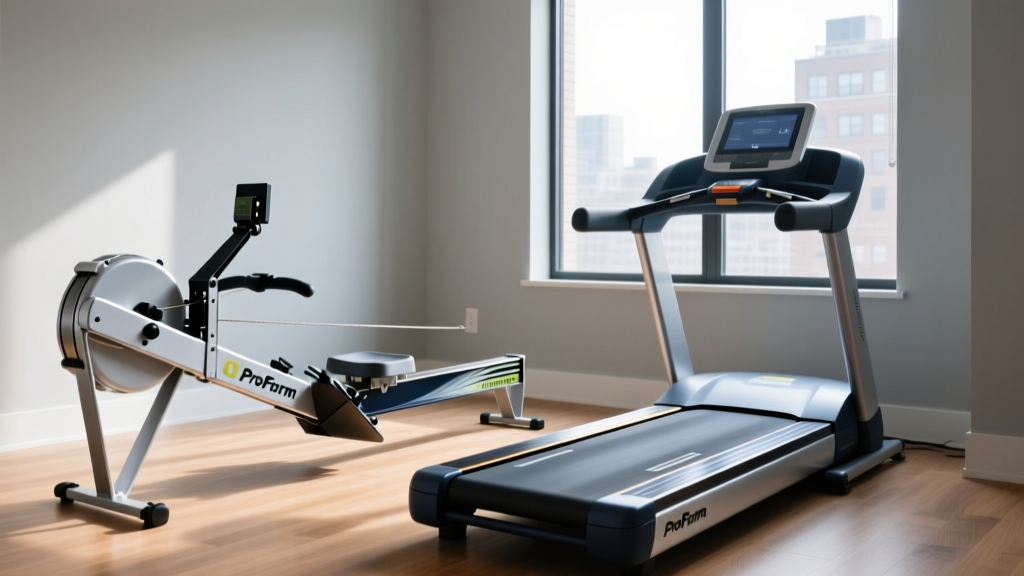
While rowing offers superior full-body engagement, the ProForm Trainer 8.7 treadmill occupies a specific, highly valuable niche. Priced aggressively around $699, it features a 2.5 CHP Mach Z motor, an 18" x 55" tread belt, and a 12% incline capability.
You should pivot to the ProForm Trainer 8.7 if:
- You prioritize weight-bearing bone density work: The Mayo Clinic notes that weight-bearing aerobic exercises like walking and jogging are critical for maintaining bone mineral density, which seated rowing does not provide.
- You want 'passive' cardio: Rowing demands continuous cognitive engagement with your form. The ProForm 8.7 allows you to zone out, watch a movie, or catch up on emails while maintaining a steady-state walking pace on a 5% incline.
- You have specific knee flexion limitations: While rowing is zero-impact, the 'catch' position requires deep knee and hip flexion. Users with severe patellofemoral pain or limited hip mobility often find the adjustable stride and incline of a treadmill much more forgiving.
Mastering the Erg: Technique and Failure Modes
The most common reason rowing machines end up as expensive clothes racks is improper technique. Unlike the ProForm Trainer 8.7 treadmill, where the machine dictates the pace, a rower requires you to generate and sequence the power correctly.
The 4-Phase Stroke Sequence
- The Catch: Shins vertical, torso leaned forward at 11 o'clock, arms straight. You should feel tension in your hamstrings and lats.
- The Drive: The power phase. Push explosively with the legs (60% of the power). Once the legs are nearly straight, hinge the hips back (20%), and finally draw the handle to your sternum with your arms (20%).
- The Finish: Legs extended, torso slightly leaned back at 1 o'clock, handle resting just below the pectorals.
- The Recovery: The exact reverse of the drive. Arms extend first, torso hinges forward, then the knees bend to slide back to the catch. The recovery should take twice as long as the drive.
The most destructive technical error is 'shooting the slide'—when your hips and seat move backward, but the handle remains stationary. This means your legs are pushing, but your back is absorbing the shear force, leading to severe lumbar strain. Ensure your arms and back lock into position before the leg drive initiates movement on the handle.
The Damper Setting Myth
Beginners almost universally set the air damper to 10, assuming it equates to a 'heavier' workout. This is a critical error. A damper setting of 10 is akin to riding a bicycle in the highest gear; it causes localized muscular fatigue long before you reach your cardiovascular threshold. For 90% of aerobic workouts, set the damper between 3 and 5. This mimics the drag factor of a sleek racing shell on water (roughly 110-130 drag factor) and allows for sustained, high-yield caloric output.
Maintenance Realities: What the Showroom Doesn't Tell You
Every machine has a failure mode. Understanding maintenance requirements will save you hundreds of dollars in out-of-warranty repairs.
Rowing Machine Upkeep
- Chain vs. Belt: The Concept2 uses a nickel-plated steel chain that requires 3-in-One oil every 40 hours of use. Neglecting this leads to a noisy, gritty stroke. Conversely, magnetic rowers like the Hydrow use a braided nylon belt that requires zero lubrication but is incredibly expensive to replace if it frays.
- Rail Cleaning: The seat rollers pick up microscopic dust and skin cells, transferring them to the aluminum rail. If left uncleaned, this creates a grinding paste that will eventually pit the metal. Wipe the rail with a damp microfiber cloth weekly. Never use abrasive chemical cleaners.
Treadmill Upkeep (ProForm 8.7)
The primary failure point on budget-to-mid-tier treadmills like the ProForm 8.7 is the walking belt and deck friction. If the 2.5 CHP motor is forced to pull a dry belt, it will overheat and trip the internal thermal breaker, eventually burning out the motor controller board. You must inspect the belt tension monthly and apply 100% silicone treadmill lubricant under the belt every 150 miles or every 3 months, whichever comes first.
Frequently Asked Questions
Can I use a rowing machine if I have lower back pain?
If your back pain is acute or disc-related, consult a physical therapist first. However, for general postural weakness, rowing strengthens the erector spinae and posterior chain. The key is maintaining a neutral spine during the 'catch' and avoiding rounding the shoulders.
Is the ProForm Trainer 8.7 good for running?
The ProForm Trainer 8.7 tops out at 10 MPH and features a 55-inch belt. This is excellent for brisk walking, incline hiking, and light jogging. However, runners taller than 5'10" will find the 55-inch belt too short for a natural, full-extension sprinting stride, making a dedicated rower or a treadmill with a 60-inch belt a better choice for high-speed running.
Final Verdict
If your goal is maximum caloric expenditure, full-body muscular endurance, and zero joint impact, a high-quality air or magnetic rowing machine is the undisputed champion of 2026 home cardio. However, if you prefer weight-bearing bone health benefits, passive entertainment-friendly workouts, and a lower entry price point, the ProForm Trainer 8.7 treadmill remains a highly capable, space-efficient walking and jogging platform. Align your purchase with your biomechanical needs, not just the marketing hype.
More gear to consider
All reviews
Rowing Machine Setup & Buying Guide vs 5.0 mph on Treadmill

Rowing Machine Buying Guide & Technique: Yamaguchi Treadmill Alternative

Walking Pad Review: Horizon Treadmill App Setup & Installation

NordicTrack 1750 Treadmill Review: Small Space Maintenance Guide

Treadmill Starts Then Stops? 2026 Home Stair Climber Machine Guide