Rowing Buying Guide & Technique: Calibrate NordicTrack Treadmill
Master your home gym with our rowing machine buying guide, technique troubleshooting, and steps to calibrate NordicTrack treadmill incline and speed.

The Dual-Cardio Home Gym: Mastering Rowers and Treadmills
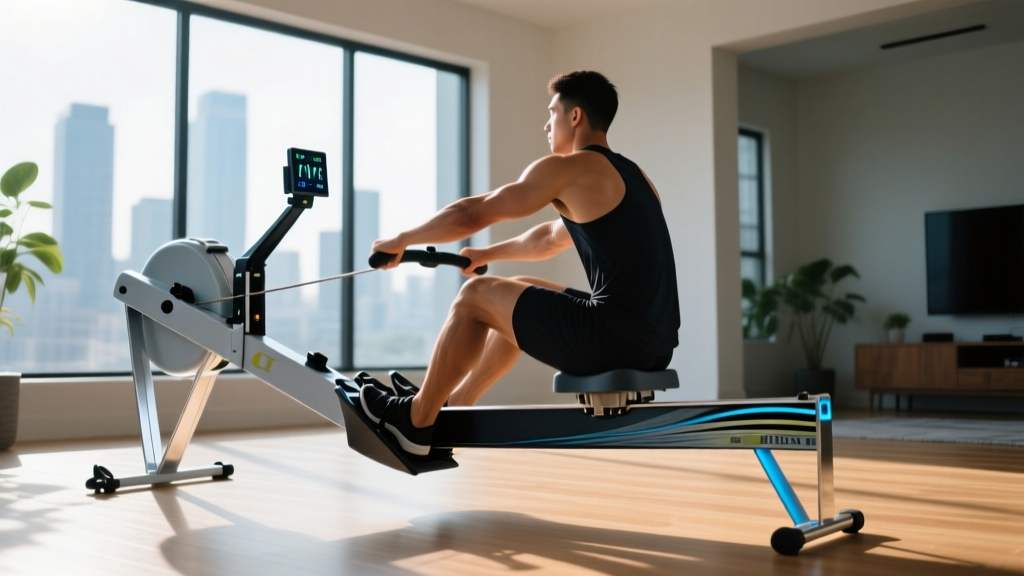
Building a comprehensive home gym in 2026 requires balancing high-impact endurance with low-impact, full-body conditioning. The two undisputed kings of this domain are the treadmill and the indoor rowing machine. However, owning this equipment is only half the battle. Whether you are trying to fix a slipping belt, learn how to calibrate NordicTrack treadmill incline sensors, or troubleshoot a frustrating 'shooting the slide' error on your rower, mechanical and technical flaws will ruin your training adaptations.
This guide serves as your ultimate troubleshooting and buying matrix. We will dissect the most expensive mistakes buyers make when shopping for rowing machines, break down the biomechanics of perfect rowing technique, and provide the exact engineering steps to recalibrate your NordicTrack treadmill.
Rowing Machine Buying Guide: Avoiding Costly Mistakes
The indoor rowing market has fractured into three distinct resistance categories. Buying the wrong type for your specific training goals and living space is the most common mistake we see in the cardio equipment space.
Air vs. Magnetic vs. Water Resistance
| Feature | Air Rower (e.g., Concept2 RowErg) | Magnetic Rower (e.g., Hydrow Athlete) | Water Rower (e.g., WaterRower Natural) |
|---|---|---|---|
| 2026 Price Range | $1,195 - $1,350 | $2,495 - $2,995 | $1,899 - $2,200 |
| Resistance Feel | Infinite, wind-based, scales with effort | Electromagnetic, ultra-smooth, quiet | Fluid, organic, mimics boat catch |
| Maintenance | Chain oiling, monitor battery, filter | Virtually none, firmware updates | Water purification tablets, seal checks |
| Best For | CrossFit, competitive erg testing, HIIT | Immersive tech, apartment living, rehab | Aesthetics, steady-state cardio, Zen |
If you are taller than 6'2" (188 cm), do not buy a compact or budget magnetic rower without checking the inseam clearance. Many budget models cap out at a 34-inch slide rail, which will cause you to 'bottom out' at the catch, destroying your knees and the machine's bumper. Always opt for standard or extended rail configurations.
Troubleshooting Rowing Technique: 3 Form Killers
Even with a $2,500 machine, poor biomechanics will lead to lumbar strain and suboptimal VO2 max adaptations. According to the ACE Fitness Exercise Library, the rowing stroke is 60% legs, 30% core, and 10% arms. Here is how to troubleshoot the most common errors.
1. The Damper Setting Myth
Walk into any commercial gym, and you will see the damper lever on the Concept2 set to 10. This is a massive mistake. The damper is not a 'difficulty' dial; it is a gearing system. Setting it to 10 is like riding a bicycle in the heaviest gear—it causes rapid muscular fatigue before your cardiovascular system is taxed.
The Fix: Access the monitor's Drag Factor menu. For most male athletes, a drag factor between 120-130 (usually damper setting 4-5) perfectly simulates the hydrodynamics of a sleek racing shell on water. Female athletes generally optimize between 110-120. Consult the Concept2 Damper Settings Guide to calibrate this to your specific machine, as dust buildup in the flywheel housing can alter the drag factor over time.
2. Shooting the Slide
The Error: Your legs drive back, but the handle doesn't move. Your hips shoot up first, transferring all the load to your lower back.
The Troubleshooting Fix: Implement the 'pause drill'. Row at 18 strokes per minute (spm), but pause for two full seconds at the catch (shins vertical). This forces your brain to sequence the drive correctly: Legs push -> Hips hinge -> Arms pull. If your seat moves backward before the chain goes taut, you are shooting the slide.
3. The Death Grip
The Error: White-knuckling the handle, leading to premature forearm pump and blistering.
The Troubleshooting Fix: Use a 'hook grip'. Wrap your fingers over the handle, but keep your thumbs resting lightly underneath (or even on top of the handle). The power should transfer through the skeletal structure of your wrists, not the muscular tension of your grip.
Treadmill Maintenance: How to Calibrate NordicTrack Treadmills
While rowing machines require technique calibration, treadmills require mechanical and software calibration. Over time, power surges, belt friction, and incline motor drift can cause your NordicTrack treadmill to display inaccurate speeds or fail to reach its maximum incline. If your iFIT workouts are telling you to run at an 8% incline but the deck feels flat, you need to recalibrate.
Step-by-Step: Incline Calibration
The incline calibration sequence is universal across most modern NordicTrack and ProForm models (including the Commercial 1750, T Series, and EXP Series). This process forces the console to find the absolute physical limits of the incline motor and reset the optical sensor.
- Clear the Deck: Ensure no one is standing on the treadmill belt. The machine will move violently during this test.
- Remove the Safety Key: Pull the red magnetic safety lanyard from the console.
- Enter Calibration Mode: Press and hold both the Incline Up and Incline Down buttons simultaneously.
- Reinsert the Safety Key: While continuing to hold both incline buttons, have a partner reinsert the safety key. (If alone, you may need to press the buttons, insert the key, and quickly press the buttons again depending on the exact console generation).
- Release and Observe: Release the buttons. The console will beep, and the treadmill will automatically drive the deck up to its maximum incline (usually 15% or 40% on Incline Trainers), stop, and then lower back to 0%.
- Completion: Once it returns to 0%, the console will beep again. The incline is now calibrated.
Speed Calibration vs. Belt Slippage (The Real Issue)
Many users search for ways to calibrate NordicTrack treadmill speed because the belt feels like it is 'stuttering' or lagging when they step on it, even though the console reads 6.0 mph. 90% of the time, this is not a software calibration issue; it is a friction issue.
Expert Troubleshooting Matrix: Speed Lag- Symptom: Console reads correct speed, but belt hesitates underfoot.
Diagnosis: Dry walking belt or loose drive belt.
Fix: Apply 100% silicone treadmill lubricant under the deck. Tighten the rear roller bolts by 1/4 turn if the belt slips over the front motor pulley. - Symptom: Console speed reading fluctuates wildly (e.g., jumps from 5.0 to 7.2 mph).
Diagnosis: Dirty or misaligned optical speed sensor near the motor flywheel.
Fix: Unplug the machine, remove the motor hood, and wipe the optical sensor eye and the slotted interrupter disc with isopropyl alcohol. - Symptom: True speed discrepancy verified by a tachometer.
Diagnosis: Console software drift.
Fix: Access the Engineering Menu (usually by holding Speed Up + Incline Up for 5 seconds) and run the automated speed band calibration, which tests the motor controller at 1, 3, 5, 7, and 10 mph intervals.
For persistent error codes (such as Error 1 or Error 2 related to incline motor communication), always refer to NordicTrack Customer Support or consult your specific model's schematic, as capacitor failures on the lower control board are common in machines older than 4 years.
Summary: The 2026 Home Gym Maintenance Checklist
To ensure your cardio equipment delivers accurate metrics and prevents injury, implement this monthly checklist:
- Rowers: Wipe down the monorail with a damp cloth (never use harsh chemicals that degrade the plastic wheels). Check the bungee cord tension if the handle fails to retract smoothly. Verify your drag factor monthly.
- Treadmills: Check belt alignment and tension. Lubricate the deck every 150 miles or 3 months. Run the incline calibration sequence if you move the machine or experience a hard power outage.
By treating your equipment with the same analytical rigor you apply to your training programming, you guarantee that every watt produced on the rower and every mile logged on the treadmill is an accurate reflection of your physiological output.
More gear to consider
All reviews
Under Desk Treadmill Value: How Much Incline on Treadmill for Glutes

Lifestyler Treadmill Noise: A Step-by-Step Cardio Machine Comparison

Under Desk Treadmill Review: Value vs Running Treadmill vs Outdoors

Rowing Machine Setup vs Treadmill Belly Fat Workout

Stair Climber Home Guide vs Life Fitness Treadmill Models by Year
