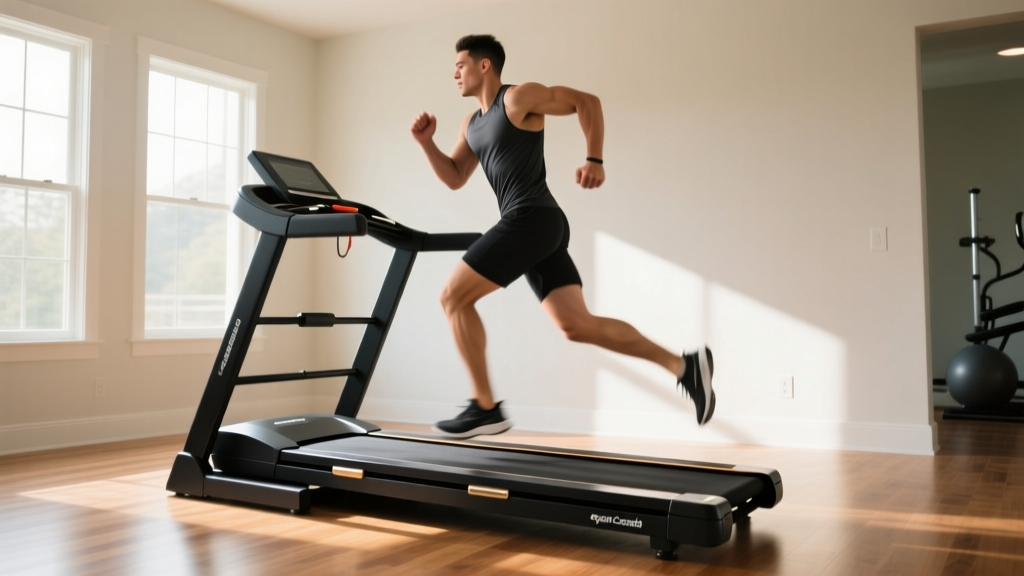
Rowing Machine Buying Guide: Technique & 1750 Treadmill Comparison
Master rowing machine technique and buying choices with our beginner guide. See how top rowers compare to the NordicTrack 1750 treadmill for home cardio.

The Home Gym Dilemma: Rower vs. 1750 Treadmill
When outfitting a home gym in 2026, buyers frequently face a major crossroads: invest in a premium running machine like the NordicTrack 1750 treadmill, or opt for a full-body, space-efficient rowing machine. The 1750 treadmill remains a gold standard for home running, boasting a 3.0 CHP motor, a 14-inch pivoting HD touchscreen, and a -3% to 15% incline range, typically retailing around $2,199. However, a high-quality rower offers a vastly different biomechanical stimulus, engaging 86% of the body's musculature while occupying a fraction of the floor space when stored upright.
This beginner-friendly guide will walk you through the exact step-by-step technique required to row safely, break down the top rowing machines on the market, and provide a direct comparison to help you decide if a rower is the right alternative to a 1750 treadmill for your specific fitness goals.
Expert Insight: While the 1750 treadmill excels at impact-loading for bone density and specific run-training, rowing provides a zero-impact, high-yield cardiovascular workout that is vastly superior for individuals with joint degradation or those seeking simultaneous upper-back and core conditioning.Biomechanics and Caloric Burn: Rowing vs. Incline Walking
According to the American Heart Association, adults need at least 150 minutes of moderate-intensity aerobic activity per week. Both the 1750 treadmill (via its famous 12-3-30 incline walking method) and indoor rowing fulfill this requirement, but the physiological pathways differ.
| Feature | Premium Rower (e.g., Concept2) | NordicTrack 1750 Treadmill |
|---|---|---|
| Muscle Engagement | 86% (Legs, Core, Back, Arms) | 45% (Primarily Lower Body) |
| Joint Impact | Zero Impact (Seated) | Low to High (Depending on speed) |
| Footprint (In Use) | ~8 ft x 2 ft | ~6.5 ft x 3 ft |
| Storage | Stands vertically (2 ft x 2 ft) | Folds, but remains heavy and bulky |
| Average 2026 Price | $1,100 - $2,500 | $2,199 (plus subscription) |
The Beginner’s Step-by-Step Rowing Technique Guide
Unlike walking on a treadmill, rowing requires technical proficiency. Poor form on a rower doesn't just reduce caloric output; it actively invites lumbar spine injuries. The official Concept2 technique guidelines dictate a strict four-phase sequence. Memorize this 60/20/20 power ratio: 60% of the power comes from the legs, 20% from the core hinge, and 20% from the arms.
Phase 1: The Catch
This is the starting position. Sit with your shins completely vertical (do not let your knees push past your ankles). Your torso should be hinged forward at roughly an 11 o'clock angle. Arms are fully extended, gripping the handle lightly with your thumbs wrapped underneath. Shoulders must be relaxed, not shrugged up to your ears.
Phase 2: The Drive
This is the power phase. Do not pull with your arms first. Initiate the movement by aggressively pushing through your heels, extending the knees. Once the handle passes your knees, hinge your torso backward to a 1 o'clock position using your core. Finally, draw the handle into your lower sternum using your lats and biceps.
Phase 3: The Finish
At the end of the drive, your legs are fully extended, your torso is leaned back slightly (1 o'clock), and the handle is resting just below your pectoral muscles. Your elbows should be drawn back and grazing your ribcage. Pause for a microsecond here.
Phase 4: The Recovery
The recovery is the exact reverse of the drive and should take twice as long. Extend your arms forward first. Once your hands clear your knees, hinge your torso forward to 11 o'clock. Finally, bend your knees to slide back to the Catch. Never bend your knees before your hands have cleared them, or you will experience jarring 'chain-catch' impacts.
2026 Rowing Machine Buying Guide: Top Models
If you have decided to bypass the 1750 treadmill in favor of a rower, you must choose the right resistance type. Here is a breakdown of the top-tier machines currently dominating the home fitness market.
1. Concept2 RowErg (Standard Legs)
- Price: ~$1,100
- Resistance: Air
- Best For: Purists, CrossFit athletes, and data nerds.
- Pros: Unmatched durability, universally recognized performance monitor (PM5), retains resale value incredibly well.
- Cons: The air flywheel is notoriously loud; the standard seat is quite firm for sessions over 45 minutes.
2. Hydrow
- Price: ~$2,495
- Resistance: Electromagnetic
- Best For: Tech-forward buyers who want a premium, quiet, immersive experience.
- Pros: Whisper-quiet magnetic drag, stunning 22-inch touchscreen with live on-water coaching, sleek aesthetic.
- Cons: Requires a mandatory monthly subscription ($44/mo) to access the core library; cannot be stored vertically without an optional wall-anchor kit.
3. Echelon Row Connect
- Price: ~$599
- Resistance: Magnetic (32 levels)
- Best For: Budget-conscious beginners.
- Pros: Very affordable, folds compactly, connects to a proprietary app.
- Cons: Build quality feels plasticky; the rail can become sticky after a year of heavy use; footplates lack secure heel-cupping.
Equipment Maintenance and Common Failure Modes
Treadmills like the 1750 require belt lubrication and motor dusting. Rowers have entirely different maintenance profiles. Understanding these failure modes will extend your machine's lifespan by a decade.
Warning: Chain MaintenanceOn air rowers, the nickel-plated steel chain stretches and accumulates dead skin and dust. You must wipe the chain with a damp cloth and apply purified mineral oil (not WD-40, which attracts grit) every 50 hours of use. Failure to do so will result in sprocket wear and a rattling drive phase.
- Bungee Cord Fatigue: The internal elastic bungee that retracts the chain loses elasticity after 2 to 3 years of heavy use. If your handle retracts slowly to the cage, you need to order a replacement bungee kit (usually under $30) and re-tension it.
- Rail Pitting: Wiping the stainless steel rail with a damp cloth after every sweaty session is mandatory. Sweat contains salts that will pit and corrode the rail, causing the seat rollers to bump and grind.
- Monitor Battery Drain: Standard PM5 monitors run on D-cell batteries. If you leave the machine plugged into a USB wall outlet continuously without a smart-plug, it can cause logic-board glitches. Remove batteries if storing the machine for over a month.
Frequently Asked Questions
Can a rowing machine replace my 1750 treadmill for marathon training?
No. While rowing builds phenomenal VO2 max and cardiovascular endurance, it does not provide the impact-loading necessary to condition your bones, tendons, and joints for the repetitive pounding of a 26.2-mile run. Runners should use rowers for cross-training and active recovery, not as a complete replacement.
How much ceiling clearance do I need?
If you are tall, be mindful of your ceiling height. At the 'Catch' position, your head is at its highest point. For a 6-foot-tall athlete on a standard-leg Concept2, you need at least 7 feet of ceiling clearance to avoid clipping light fixtures during intense drives.
Is rowing bad for lower back pain?
When executed with proper 60/20/20 form, rowing actually strengthens the erector spinae and posterior chain, which can alleviate back pain. However, if you 'shoot the slide' (pushing with legs before engaging the core) or row with a rounded lumbar spine, you will rapidly exacerbate disc issues. Always prioritize form over split times.
Final Verdict
Choosing between a rowing machine and a 1750 treadmill ultimately comes down to your spatial constraints, joint health, and training preferences. If you are training for a road race or prefer passive, screen-based walking, the treadmill wins. But if you want a time-efficient, zero-impact, full-body conditioning tool that can be tucked into a corner when not in use, a high-quality rower like the Concept2 RowErg is an unbeatable investment for your 2026 home gym.
More gear to consider
All reviews
Space-Saving Cardio: Katie Austin Treadmill Reviews & Compact Picks

ProForm Treadmill Disassembly & Small Space Folding Reviews

NordicTrack 2450 Treadmill Review: 2026 Feature Comparison Guide
Why Does Getting Off a Treadmill Feel Weird? Air vs Assault Bike Layouts
Stair Climber Guide: Is It Harder to Run on a Treadmill or Outside?