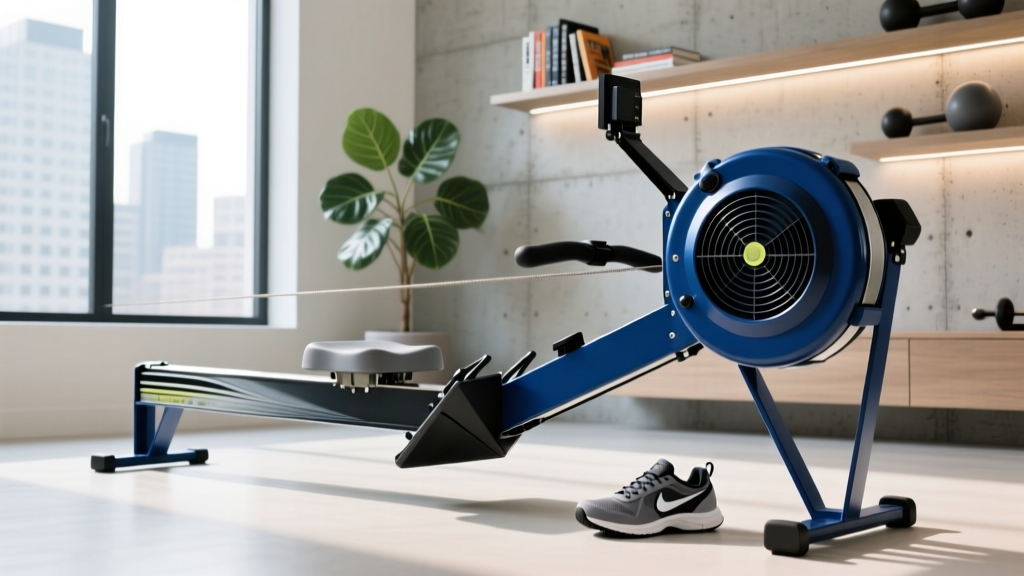
Ditch the Rose Gold Treadmill: Beginner Rowing Machine Guide
Swapping the viral rose gold treadmill for a rowing machine? Discover our beginner-friendly buying guide and step-by-step technique for full-body cardio.

Scroll through any fitness influencer's feed, and you will inevitably spot the viral rose gold treadmill. These aesthetically pleasing, pastel-coated walking pads and curved treadmills are designed to match modern bedroom decor and look incredible on camera. While these machines—typically priced between $400 and $1,500—are fantastic for getting your daily steps in without disrupting your interior design, they represent a common beginner trap: prioritizing style over comprehensive cardiovascular conditioning.
If you have already invested in the aesthetic home gym trend but are wondering why your fitness progress has plateaued, it is time to introduce the ultimate full-body antidote: the rowing machine. This guide will help you pivot from passive, lower-body walking to high-yield, full-body rowing, complete with a step-by-step buying framework and technique breakdown.
The Aesthetic Trap: Style vs. Substance in Home Cardio
The rose gold treadmill trend exploded because it solved a real problem: traditional cardio equipment is often bulky, black, and visually intrusive. However, walking pads and light-duty aesthetic treadmills generally max out at 3 to 7 miles per hour and lack incline capabilities. You are primarily engaging your lower body in a low-impact, low-heart-rate zone.
While walking is excellent for joint health and daily NEAT (Non-Exercise Activity Thermogenesis), it does not build upper-body muscular endurance or spike your VO2 max efficiently. To transform your physique and cardiovascular health, you need an implement that demands simultaneous upper and lower body output.
Why the Rowing Machine is the Ultimate Beginner Upgrade
According to the Cleveland Clinic, rowing engages approximately 86% of the body's musculature. Unlike the rose gold treadmill, which isolates the legs, a rowing machine forces your quads, glutes, hamstrings, core, lats, and biceps to work in a synchronized kinetic chain.
The Caloric Reality Check
A 155-pound person walking at 3.5 mph on a flat treadmill burns roughly 260 calories per hour. That same person rowing at a moderate, beginner-friendly pace (18-22 strokes per minute) can burn between 400 and 500 calories in the same timeframe, while simultaneously building posterior chain strength.
Step-by-Step Rowing Machine Buying Guide
Before you add a rower to your home gym, you must understand the three main resistance types. Your choice will dictate the noise level, maintenance, and 'feel' of the machine.
| Resistance Type | Pros | Cons | Avg. Price Range |
|---|---|---|---|
| Air | Infinite dynamic resistance; gold standard for data accuracy. | Can be loud; utilitarian aesthetic. | $700 - $1,000 |
| Magnetic | Whisper-quiet; smooth feel; great for apartments. | Resistance feels less 'organic' than air or water. | $300 - $800 |
| Water | Beautiful wood aesthetics; soothing water swoosh sound. | Requires water purification tablets; heavy to move. | $1,000 - $2,500 |
Sizing and Ergonomics: The Rail Length Rule
If you are transitioning from a compact walking pad, be prepared for the footprint of a rower. Most rowers require an 8-foot by 2-foot clearance. More importantly, if you are taller than 6'0", you must verify the rail length. Look for a machine with a minimum 54-inch inseam capacity to ensure you do not hit the backstop during the 'catch' phase of your stroke.
Mastering the Stroke: A 4-Step Technique Breakdown
Rowing is highly technical. Using poor form is a fast track to lumbar strain. According to Concept2's official technique guide, the stroke is broken down into four distinct phases. Memorize this sequence: Legs, Core, Arms on the pull, and Arms, Core, Legs on the return.
- The Catch (The Setup): Slide forward until your shins are vertical (perpendicular to the floor). Keep your chest up, hinge slightly at the hips, and extend your arms fully to grip the handle. Your lats should be engaged, not shrugged.
- The Drive (The Power): Push explosively with your legs first. When your legs are about 75% extended, swing your torso back using your core. Finally, draw the handle to your lower ribcage using your biceps and lats. Power distribution: 60% legs, 20% core, 20% arms.
- The Finish (The Hold): Your legs are fully extended, torso is leaned back slightly past vertical (about 11 o'clock), and the handle is resting just below your chest. Pause for a micro-second here.
- The Recovery (The Return): Reverse the sequence. Extend your arms fully, hinge forward from the hips to clear your knees, and finally bend your knees to slide back to the catch. The recovery should take twice as long as the drive.
⚠️ The Drag Factor Myth
Beginners often crank the side damper to 10, thinking higher equals a better workout. This is a massive mistake that leads to lower back fatigue. A damper setting between 3 and 5 (a drag factor of 100-130) best simulates the feel of a sleek racing shell gliding on water. Save the heavy drag for short, 100-meter sprints, not your daily 20-minute beginner conditioning sessions.
Top Beginner-Friendly Rowers to Consider in 2026
If you are ready to retire the rose gold treadmill to the bedroom and put a serious piece of equipment in your garage or living space, here are three top-tier options for beginners.
1. Concept2 RowErg (Standard Legs) - $990
The undisputed king of indoor rowing. It uses air resistance, meaning the harder you pull, the more resistance it generates. The PM5 monitor is universally compatible with all major fitness apps, and the machine holds its resale value better than almost any other fitness equipment on the market.
2. NordicTrack RW600 - $699
For those who want a quieter, magnetic resistance experience without breaking the bank. The RW600 offers a smooth, adjustable drag and folds up vertically, making it an excellent space-saver for apartment dwellers who still want a robust cardio stimulus.
3. Sunny Health & Fitness SF-RW5515 - $160
If you maxed out your budget on aesthetic gym decor and need a hyper-budget entry point, this magnetic rower is a solid, no-frills choice. It lacks the advanced telemetry of a Concept2, but it allows you to practice the 4-step stroke sequence safely before upgrading.
Common Beginner Mistakes (and How to Fix Them)
- Shooting the Slide: This happens when you push your legs down but your handle doesn't move, meaning your core disconnected. Fix: Ensure your arms and torso act as a rigid strap connecting your hips to the handle.
- Gripping the Handle Too Tight: White-knuckling the handle causes forearm fatigue and blisters. Fix: Hook your fingers over the handle; your thumbs don't even need to wrap around it completely.
- Rushing the Recovery: Beginners often slide back to the catch too fast, ruining their rhythm and heart rate management. Fix: Count the tempo. One beat on the drive, two beats on the recovery.
The Final Verdict: Form Over Aesthetics
There is nothing inherently wrong with owning a rose gold treadmill; low-intensity steady-state (LISS) walking has its place in a well-rounded fitness regimen. However, as a standalone cardio machine, it leaves half your body untrained and limits your cardiovascular ceiling. By investing in a rowing machine and dedicating two weeks to mastering the Catch, Drive, Finish, and Recovery, you will unlock a level of full-body conditioning that no walking pad can provide. Start with a 15-minute session at 18 strokes per minute, focus on that 60/20/20 power distribution, and watch your endurance transform.
More gear to consider
All reviews
Asuna Treadmill Noise Troubleshooting & Cardio Machine Comparison

Curved Manual vs Motorized: Commercial X22i Treadmill Compared

Does StairMaster Burn More Calories Than Treadmill? (Under-Desk Review)
Bowflex T6 Treadmill vs Stair Climber: Home Guide

The Soap Treadmill Myth: Belt Maintenance Budget Breakdown
