
Rat Treadmill Squeaks? Cardio Machine Noise Troubleshooting
Stop your cardio machine from sounding like a rat treadmill. Compare noise levels and troubleshoot squeaks on treadmills, ellipticals, and rowers.

The 'Rat Treadmill' Phenomenon: Why Your Cardio Machine is Squeaking
In laboratory research, a literal rat treadmill is used to test rodent endurance. But in the home fitness community, the term 'rat treadmill' has become a frustrated slang phrase for a neglected, squeaking, rattling cardio machine that sounds like a cage full of rodents. If your morning run or rowing session is accompanied by high-pitched squeals, rhythmic thumping, and grinding bearings, you are dealing with severe mechanical friction and vibration transfer. Ignoring these sounds does not just ruin your workout playlist; it accelerates component wear and can void your warranty.
As of 2026, manufacturers have made massive strides in acoustic dampening, utilizing brushless DC motors and polyurethane dampeners. Yet, user error and improper maintenance remain the leading causes of excessive cardio machine noise. This troubleshooting guide breaks down the exact decibel outputs of popular cardio machines and provides deep-dive mechanical fixes to silence your home gym.
Cardio Machine Noise Level Comparison Matrix
Understanding the baseline acoustic footprint of your equipment is the first step in troubleshooting. According to the CDC National Institute for Occupational Safety and Health (NIOSH), prolonged exposure to noise above 85 decibels (dB) can cause hearing fatigue and damage. Below is a comparative matrix of average operational noise levels for top-tier home cardio equipment.
| Machine Type | Example Model (2026) | Average dB Range | Primary Noise Source |
|---|---|---|---|
| Magnetic Elliptical | Sole E95 / NordicTrack SE7i | 45 - 55 dB | Pedal arm bearings, cooling fan |
| Belt-Drive Rower | WaterRower / Hydrow | 40 - 55 dB | Water sloshing, belt retraction |
| Manual Curved Treadmill | AssaultRunner Pro | 55 - 65 dB | Footfall impact, slat belt friction |
| Chain-Drive Rower | Concept2 Model D / RowErg | 60 - 75 dB | Chain rattle, flywheel wind drag |
| Motorized Treadmill | NordicTrack 1750 / Sole F80 | 70 - 85 dB | Motor whine, deck impact, belt slip |
| Air Resistance Bike | Rogue Echo / Assault Bike | 75 - 90 dB | Wind displacement, bottom bracket |
Note: dB is a logarithmic scale. A machine operating at 80 dB is perceived as roughly twice as loud as one operating at 70 dB.
Common Mistakes: Why Your Treadmill Sounds Like a Rat Cage
Treadmills are the most frequent offenders when it comes to home gym noise complaints. The combination of a heavy motor, a high-friction belt, and repetitive impact forces creates a perfect storm for acoustic issues. Here are the most common maintenance mistakes and how to fix them.
Mistake 1: Improper Belt Tension and Alignment
A belt that is too loose will slip on the front drive roller, causing a loud, rhythmic 'thwapping' sound and a sudden jolt in your stride. A belt that is too tight forces the motor to work harder, resulting in a high-pitched whining noise and premature motor brush wear.
- The 2-Inch Lift Test: Turn off and unplug the machine. Lift the running belt from the center of the deck. It should lift exactly 2 to 3 inches. If it lifts higher, it is too loose. If it barely moves, it is over-tensioned.
- The Fix: Locate the two rear roller adjustment bolts at the back of the treadmill. Adjust them in exact 1/4 turn increments using an Allen wrench. Never adjust one side more than the other, or the belt will track off-center and fray against the side rails.
Mistake 2: Using the Wrong Lubricant (The WD-40 Disaster)
Applying petroleum-based lubricants like WD-40 or 3-in-One oil to a treadmill deck is a catastrophic mistake. These chemicals degrade the urethane coating on the deck and the rubber backing of the belt, turning them into a sticky, squeaking mess that sounds exactly like a rat treadmill.
- The Fix: Use only 100% pure liquid silicone treadmill lubricant. Apply exactly 15ml (half an ounce) in a zig-zag pattern directly onto the wooden deck beneath the belt. Run the machine at 2.0 MPH for three minutes to distribute the silicone evenly. This should be done every 150 miles or every six months.
Mistake 3: Motor Hood Debris and Glazed Drive Belts
If your treadmill emits a burning rubber smell accompanied by a loud squeal upon startup, the motor drive belt (the small ribbed belt connecting the motor to the front roller) is likely glazed or slipping.
Expert Troubleshooting Tip: Remove the motor hood cover (usually 4 to 6 Phillips head screws). Inspect the drive belt for shiny, hardened grooves. If glazed, the belt must be replaced. While the hood is off, use a shop-vac to clear out dust bunnies from the motor fan shroud. Clogged cooling vents cause the motor to overheat and whine loudly.
Silencing Non-Treadmill Cardio Machines
While treadmills get the most attention, ellipticals, rowers, and air bikes have their own unique failure modes that lead to excessive noise.
Elliptical Pivot Point Degradation
Magnetic ellipticals like the Sole E95 are inherently quiet, but the mechanical pivot points where the pedal arms connect to the flywheel crank are subject to immense lateral stress. When the factory lithium grease dries out, you will hear a metallic 'clunk' or 'creak' at the top and bottom of your stride.
- Identify the squeak by manually rocking the pedal arms without standing on them.
- Wipe away old, blackened grease from the bearing housings using a microfiber cloth and isopropyl alcohol.
- Apply a generous layer of white lithium grease or marine-grade PTFE lubricant to the pivot joints. Avoid aerosol sprays, as they attract dust and drip onto your flooring.
Rowing Machine Chain Rattle and Wind Drag
Chain-driven rowers, such as the legendary Concept2 Model D, are incredibly durable but naturally louder than belt or water rowers. The metallic rattle of the chain and the whoosh of the flywheel are normal, but excessive clattering indicates poor maintenance. According to the official Concept2 maintenance guidelines, the chain must be cleaned and oiled regularly to prevent stretching and noisy operation.
- Chain Maintenance: Every 50 hours of use, wipe the chain with a paper towel soaked in mineral spirits to remove black carbon buildup. Follow up by applying 20W motor oil or purified chain oil on a clean cloth, pulling the chain through to coat it evenly. Wipe off the excess to prevent it from slinging onto the monorail.
- Seat Roller Noise: If the seat sounds like a grinding skateboard, the urethane wheels have likely picked up debris or developed flat spots. Clean the stainless steel monorail with glass cleaner and inspect the wheels for grooves.
Air Bike Bottom Bracket Failure
Air bikes (like the Rogue Echo or Assault Bike) generate massive wind noise (up to 90 dB at max RPM), which is unavoidable. However, a rhythmic clicking or grinding beneath the pedals indicates a failing bottom bracket cartridge. Because air bikes are often used for high-intensity interval training (HIIT) with heavy standing pedaling, the lateral load on the bottom bracket bearings is extreme. If the crank arms wobble even slightly when pushed side-to-side, the sealed bottom bracket cartridge must be pressed out and replaced.
Structural Vibration: The Hidden Noise Multiplier
Sometimes the machine itself is perfectly maintained, but the room acoustics amplify the sound. Low-frequency impact noise (like footfalls on a treadmill deck) travels through floor joists, turning your home gym into a giant speaker diaphragm. This is especially problematic for second-floor home gyms or apartments.
The 2026 Vibration Isolation Framework
- Ditch the Cheap EVA Foam: Standard 3/8-inch interlocking EVA foam mats do nothing to stop low-frequency structural vibration. They only dampen high-frequency airborne noise.
- Upgrade to High-Density Rubber: Use 3/4-inch thick, high-density vulcanized rubber horse stall mats (typically 4x6 feet, weighing around 100 lbs each). The sheer mass of the rubber absorbs kinetic energy before it reaches the subfloor.
- Decouple the Machine: Place specialized anti-vibration washing machine pads or Sorbothane hemispheres directly under the leveling feet of your treadmill or elliptical. This creates an air gap and breaks the mechanical bridge between the machine frame and the floor.
Frequently Asked Questions (FAQ)
Can I use a silicone spray lubricant instead of liquid silicone for my treadmill?
No. Aerosol silicone sprays contain propellants and solvents that can degrade the rubber backing of your treadmill belt. Furthermore, the overspray can coat the optical speed sensors near the motor, causing the console to display erratic speed readings or shut down entirely. Always use 100% pure liquid silicone applied directly to the deck.
Why does my treadmill noise change when I step on the belt?
If the machine is quiet when running empty but squeaks or thumps under your weight, the issue is likely deck flex or worn deck cushions. Over time, the elastomer shock absorbers between the metal frame and the wooden deck compress and fail. When you step on the belt, the deck bows downward, creating acute friction against the belt. Replacing the deck cushions or flipping a reversible deck (if your model supports it) will resolve this.
Are magnetic resistance rowers completely silent?
While magnetic rowers (like the Echelon Row or NordicTrack RW900) eliminate the wind noise and chain rattle of air rowers, they are not completely silent. You will still hear the mechanical hum of the belt drive, the hum of the electronic console, and the physical sound of the seat rolling on the rail. However, they generally operate in the 40-50 dB range, making them ideal for early morning workouts in shared living spaces.
Final Thoughts on Home Gym Acoustics
Transforming your 'rat treadmill' back into a smooth, whisper-quiet cardio machine requires a shift from reactive repairs to proactive maintenance. By understanding the specific acoustic profile of your equipment, adhering to strict lubrication schedules, and properly decoupling your machines from your home's structural framing, you can protect your hearing, extend the lifespan of your expensive fitness gear, and keep the peace with your household. For more detailed guidance on protecting your hearing during intense workouts, refer to the Occupational Safety and Health Administration (OSHA) noise exposure standards, which provide excellent baselines for managing prolonged acoustic environments.
More gear to consider
All reviews
Leveling Treadmill Setups: Beginner's Buying & Feature Guide

Folding Treadmill Review: Top Heart Rate Monitor for Treadmill Tech

Treadmill Tray vs Bike Desk: 2026 Upright, Recumbent & Spin Trends
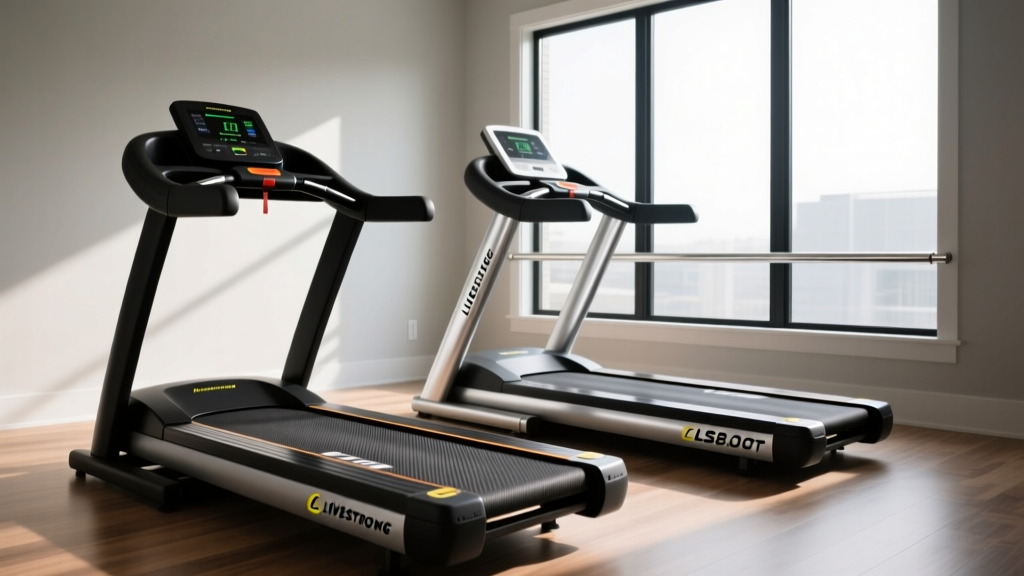
Curved Manual vs Motorized: Livestrong Treadmill LS8.0T Showdown

Stair Climber Machine for Home Use vs Urevo Foldi Mini Treadmill
