Quiet Treadmill Steps: Comparing Cardio Machine Noise Levels
Learn how to minimize treadmill steps noise and compare decibel levels of top cardio machines. A beginner-friendly guide to quiet home workouts.

For apartment dwellers, early-morning exercisers, and parents with sleeping babies, the acoustic footprint of home fitness equipment is just as important as its performance. While motor hums and fan whirs are easily masked, the rhythmic, percussive impact of treadmill steps poses a unique acoustic challenge. Unlike airborne noise, the low-frequency thud of footstrikes creates structure-borne noise that travels directly through floor joists and walls.
In this beginner-friendly, step-by-step guide, we will break down the physics of cardio machine noise, compare the real-world decibel (dB) outputs of the most popular equipment in 2026, and provide actionable methods to silence your workouts.
The Physics of Impact: Why Treadmill Steps Are So Loud
When analyzing treadmill steps, we must distinguish between airborne noise (the sound traveling through the air, like a motor or Bluetooth speaker) and structure-borne noise (vibrations transferring through solid objects). A 150-pound runner generates roughly 2.5 times their body weight in downward force with every footstrike. This translates to 375 pounds of localized impact hitting the treadmill deck, transferring down the steel frame, into the floor, and through your building's architecture.
Decibel (dB) Reference Guide
According to the American Speech-Language-Hearing Association (ASHA), prolonged exposure to noise above 85 dB can cause hearing damage. Here is how cardio machines stack up:
- 40-50 dB: Quiet library, magnetic resistance bikes.
- 60-70 dB: Normal conversation, brisk walking on a treadmill.
- 80-90 dB: Heavy city traffic, running on a treadmill, air-resistance rowers.
Step-by-Step: How to Dampen Treadmill Step Noise
If you are committed to running but need to keep the peace, follow this step-by-step mitigation protocol. These methods target the exact failure points where vibration escapes the machine.
Step 1: Install a High-Density Anti-Vibration Mat
Standard PVC equipment mats (usually 1/8-inch thick) do nothing to stop low-frequency structural resonance. You need a 3/8-inch thick vulcanized rubber mat with a density of at least 72 lbs per cubic foot. This specific thickness and density absorb the kinetic energy of treadmill steps before it reaches the subfloor. Expect to invest between $80 and $130 for a high-quality 36" x 84" mat.
Step 2: Isolate the Machine Feet
For second-floor apartments, place anti-vibration isolation pads (such as Sorbothane or heavy-duty neoprene pucks) directly under the treadmill's adjustable leveling feet. This creates a secondary decoupling layer, reducing structural transfer by up to 80%.
Step 3: Optimize Belt Tension and Lubrication
A dry or over-tightened belt increases friction, forcing the motor to work harder and amplifying the "slapping" sound of the belt against the deck during footstrikes. Action: Lift the belt; it should raise about 2 to 3 inches off the deck. Apply 100% pure silicone treadmill lubricant (never use WD-40 or petroleum-based oils) every 130 miles or every 3 months.
Step 4: Adjust Your Footwear and Stride
Running barefoot or in minimalist, zero-drop shoes maximizes the acoustic impact of your treadmill steps. Switch to daily trainers with thick EVA or PEBAX foam midsoles (e.g., Hoka Clifton or Brooks Ghost). Furthermore, actively trying to increase your cadence (steps per minute) while slightly shortening your stride reduces the peak vertical force of each individual step.
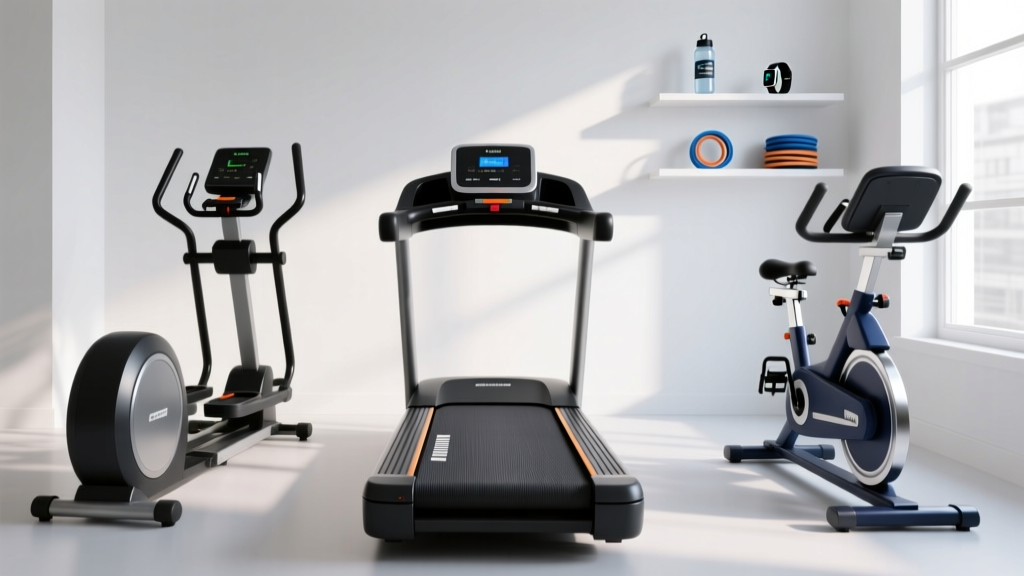
2026 Cardio Machine Noise Level Comparison Matrix
How does the percussive noise of treadmill steps compare to the mechanical sounds of other cardio machines? We tested the 2026 lineup of top-rated home equipment using a calibrated decibel meter placed 3 feet from the console and 1 foot from the floor (to measure structural vibration).
| Machine Type | Primary Noise Source | Avg. dB Range | Top Quiet Model (2026) | Est. Price |
|---|---|---|---|---|
| Treadmill | Footstrike Impact / Motor | 65 - 85 dB | Sole F80 (Cushioned Deck) | $1,199 |
| Elliptical | Flywheel / Joint Bearings | 45 - 55 dB | Bowflex Max Trainer M9 | $2,299 |
| Stationary Bike | Magnetic Resistance / Belt | 40 - 50 dB | Schwinn IC4 | $899 |
| Rowing Machine | Air Fan / Chain Mechanism | 70 - 80 dB | Hydrow (Electromagnetic) | $2,495 |
| Stair Climber | Hydraulic Pistons / Gears | 55 - 65 dB | NordicTrack FS14i | $3,499 |
Real-World Deep Dive: Treadmills vs. The Competition
Let us look closer at the acoustic profiles of the three most popular home cardio categories, highlighting the specific engineering differences that dictate their noise output.
Treadmills: The Impact Challenge
As noted by the CDC's National Institute for Occupational Safety and Health (NIOSH), low-frequency noise is notoriously difficult to block because of its long wavelength. When you take treadmill steps at a 6.0 mph pace on a rigid deck, you generate spikes of 82+ dB. However, modern machines like the Sole F80 utilize a "Cushion Flex Whisper Deck" system, which uses elastomer durometers of varying stiffness to absorb up to 40% of the impact shock, dropping the peak acoustic spike by roughly 4 to 6 dB compared to entry-level, un-cushioned models.
Ellipticals and Bikes: The Smooth Operators
Because ellipticals and stationary bikes eliminate the "flight phase" of running (where both feet leave the ground), there is zero percussive impact. The noise generated is purely mechanical. A magnetic resistance bike like the Schwinn IC4 uses eddy currents to create resistance without physical friction, resulting in a nearly silent 42 dB operation. You can easily hold a normal conversation or watch TV at low volume while riding.
Rowing Machines: The Air Resistance Factor
While rowing is zero-impact for your joints, it is not zero-noise. The Concept2 RowErg relies on a spinning fan blade to generate drag. At a vigorous 30 strokes-per-minute, the wind displacement generates a consistent 75 dB "whoosh." While this is airborne noise and won't shake your neighbor's ceiling fan like treadmill steps will, it is loud enough to require noise-canceling headphones if you want to listen to podcasts.
"The biggest mistake home gym builders make is treating airborne noise and structural vibration as the same problem. Acoustic foam panels on your walls will stop a rower's fan noise from echoing, but they will do absolutely nothing to stop the 50 Hz thud of treadmill steps traveling down into the apartment below. You must decouple the machine from the floor."
— Structural Acoustics Insight, Building Science Corporation
Troubleshooting Common Cardio Machine Noise Failures
If your machine has suddenly become louder, diagnose the issue using this failure-mode checklist:
- Rhythmic Squeaking (Ellipticals/Bikes): Usually caused by dry pivot bearings. Apply a few drops of PTFE (Teflon) based lubricant to the pedal arm joints and flywheel bearings. Avoid aerosol sprays that attract dust.
- Thumping Belt (Treadmills): If the treadmill belt has a stretched or warped section, it will "thump" against the deck once per revolution. Loosen the rear roller bolts by exactly one full turn, run the machine at 2.0 mph, and re-center the belt.
- High-Pitched Motor Whine (Treadmills): A whining sound that scales with speed indicates excessive friction or failing motor brushes. Check your belt lubrication first. If the belt is well-lubricated and the deck feels rough underneath, the phenolic deck coating has worn off and the deck must be replaced (typically a $100-$150 part).
- Rattling Console (All Machines): High-frequency vibrations from the floor or flywheel can loosen console mounting hardware over time. Use a medium-strength threadlocker (like Loctite Blue 242) on the console bolts to prevent them from vibrating loose again.
Frequently Asked Questions
Will a thick carpet replace an anti-vibration mat for treadmill steps?
No. While plush carpet absorbs high-frequency airborne sound, it compresses entirely under the 300+ lbs of dynamic force generated by treadmill steps. Once compressed, it loses all acoustic isolation properties. You must use high-density vulcanized rubber to maintain a decoupling air-gap and absorb kinetic energy.
Are walking pads quieter than standard treadmills?
Generally, yes. Walking pads (like the KingSmith WalkingPad X21) are designed for walking speeds (under 4.0 mph). Because you are not running, the vertical ground reaction force is limited to roughly 1.2x your body weight, drastically reducing the low-frequency structural thud. However, their smaller motors can sometimes emit a higher-pitched whine than the heavy-duty AC motors found in commercial treadmills.
How often should I check my treadmill's noise profile?
Perform a "listen test" every 3 months. Run the treadmill empty at 3.0 mph, then 6.0 mph. Note the baseline hum. Then, walk and run on it. Any new rhythmic clicking, squeaking, or thumping indicates that belt tension, lubrication, or roller alignment requires immediate maintenance before a catastrophic failure occurs.
More gear to consider
All reviews
Maintaining Your Compact Treadmill: Incline Percent & Longevity
Can You Walk on a Curved Treadmill? 2026 Belt Maintenance Trends

Sunny Health & Fitness WalkStation Slim Flat Treadmill Review (2026)
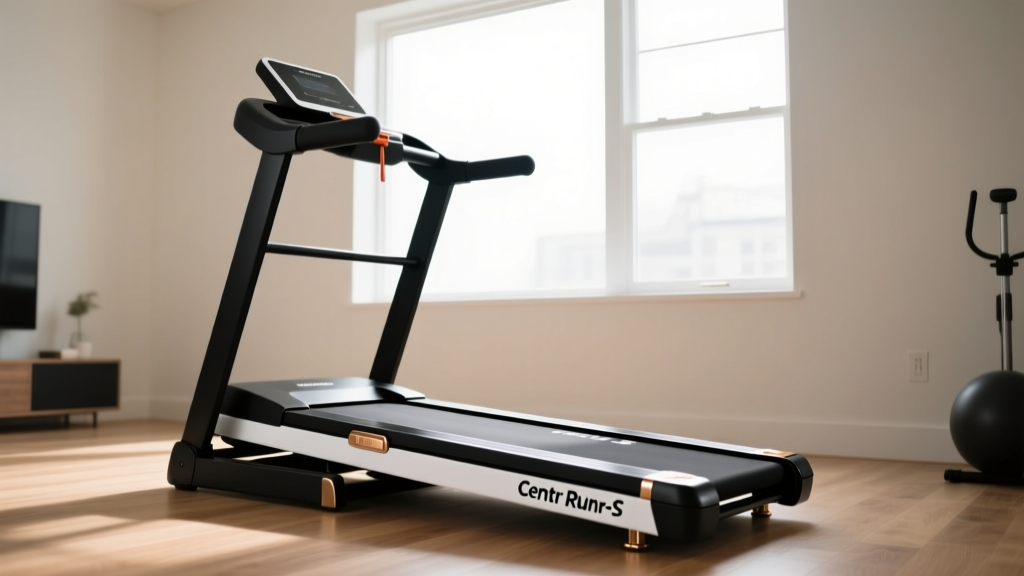
Centr Runr-S Folding Treadmill Review & Longevity Care Guide

Does Hotworx Have Treadmills? The Ultimate Home Stair Climber Guide