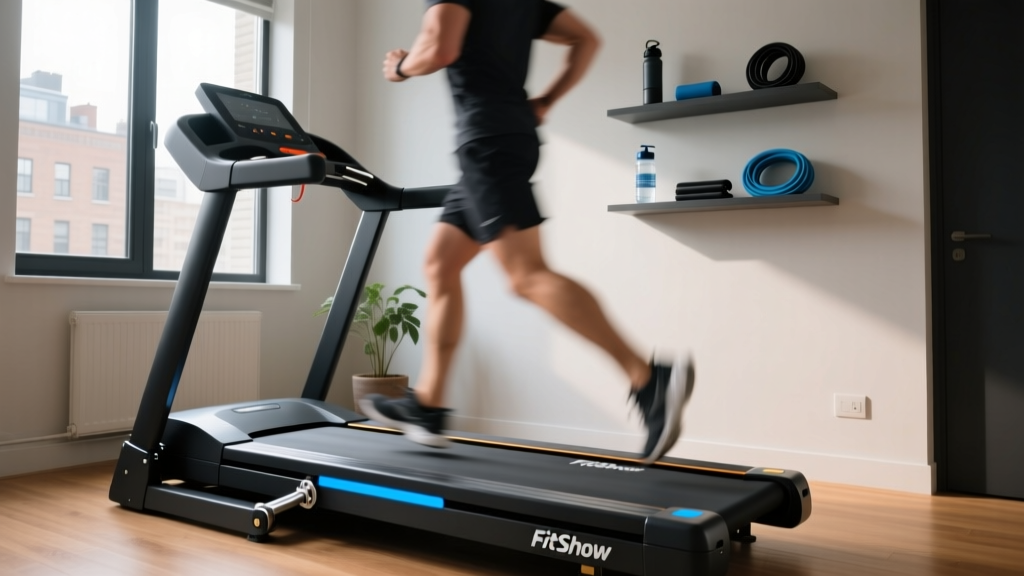
ProForm 995 SEL Treadmill Review: Small Space Layout Guide
Discover if the ProForm 995 SEL treadmill fits your apartment. We analyze its folded footprint, clearance needs, and small-space layout strategies.

The Spatial Reality of Home Cardio in 2026
As urban living spaces continue to shrink and multi-use rooms become the standard in modern home design, the demand for high-performance, space-efficient fitness equipment has never been higher. Finding a reliable folding treadmill for small spaces often forces buyers to choose between a robust running surface and a manageable footprint. The ProForm 995 SEL treadmill attempts to bridge this gap, offering a compelling mix of biomechanical support and stowaway convenience. But how does it actually perform when integrated into a tight floorplan?
In this comprehensive spatial review, we move beyond basic spec sheets. We will deconstruct the exact geometry of the ProForm 995 SEL treadmill, analyze its hydraulic folding mechanism against real-world architectural obstacles, and provide actionable layout frameworks to ensure your micro-gym is both safe and acoustically optimized.
Quick Spatial Specs: ProForm 995 SEL
- Motor: 2.5 CHP Mach Z (Compact-optimized, lower heat output)
- Tread Belt: 18" x 55" (Ideal for walking/jogging; tight for tall sprinters)
- Weight Capacity: 300 lbs
- Assembled Footprint: 68" L x 29" W x 58" H
- Folded Footprint: 42" L x 29" W x 65" H
- Unit Weight: 145 lbs
Deconstructing the Footprint: Active vs. Stored Geometry
When planning a small-space cardio zone, the "folded" dimension is only half the equation. You must account for the operational envelope and the transition space required to deploy the machine safely. Below is a detailed matrix of the spatial requirements for the ProForm 995 SEL treadmill.
| Measurement Type | Dimensions (L x W x H) | Square Footage Impact | Layout Considerations |
|---|---|---|---|
| Active Running Zone | 68" x 29" (Base) | 13.7 sq ft | Requires additional side/rear clearance for safety. |
| Stored (Folded) Profile | 42" x 29" x 65" | 8.5 sq ft | Vertical clearance must exceed 65" (watch for ceiling fans). |
| Deployment Transition Zone | 75" x 29" | 15.1 sq ft | Clear path needed for the hydraulic deck to lower safely. |
| Mandatory Safety Perimeter | 128" x 69" | 61.3 sq ft | Includes CPSC-mandated rear and lateral escape routes. |
The SpaceSaver® Mechanism in Practice
ProForm utilizes its proprietary SpaceSaver® design with an EasyLift™ hydraulic assist. In a vacuum, this system works flawlessly: you pull the release latch, and the 145-pound deck lowers at a controlled, deliberate pace. However, in small spaces, architectural anomalies frequently interfere with mechanical operations.
Edge Case: The Baseboard Heater Conflict
One of the most common failure modes we observe in apartment treadmill layouts involves baseboard heating and thick wall skirting. When the ProForm 995 SEL is pushed flush against a wall in its folded position, the rear transport wheels and the base of the upright mast sit approximately 4 inches from the wall. If your room features protruding baseboard heaters or ornate 6-inch skirting, the hydraulic arm may strike the molding before the deck fully locks into the vertical position. Solution: Always anchor your treadmill mat 6 to 8 inches away from the base wall to allow the folded deck to clear architectural protrusions.
Navigating the 30-Inch Rear Clearance Rule
Space optimization must never compromise safety. According to the U.S. Consumer Product Safety Commission (CPSC), every treadmill requires a minimum of 30 inches (76 cm) of clear space directly behind the machine. This is not a suggestion; it is a critical ejection zone. If a user falls while the belt is moving at 10 MPH, the 30-inch buffer prevents them from being pinned against a wall or furniture, which can lead to severe friction burns or blunt force trauma. When measuring your room for the ProForm 995 SEL, measure 68 inches for the machine, plus 30 inches behind it, totaling 98 inches of linear depth minimum.
Designing the Micro-Gym: Layout Frameworks
Integrating a cardio machine into a small home requires intentional interior design. Here are two proven layout frameworks for the ProForm 995 SEL treadmill, tailored to different spatial constraints.
Framework 1: The Alcove Tuck (Bedroom or Office)
If you have a deep closet alcove or a recessed architectural nook (minimum 36 inches wide), the 29-inch width of the 995 SEL fits perfectly. Execution: Position the machine facing outward. Use the 30-inch rear clearance as your primary walkway. When folded, the 42-inch depth leaves the alcove partially open, preventing the room from feeling claustrophobic. Ensure the alcove has an overhead clearance of at least 70 inches to accommodate the user's height plus the 10% incline elevation.
Framework 2: The Multi-Use Living Room Integration
In open-concept studios, the treadmill must coexist with living furniture. Execution: Place the treadmill parallel to a window wall, facing the room's interior. This provides natural light and prevents the user from staring at a blank wall. Use a low-profile console table (under 30 inches high) placed 30 inches behind the treadmill to satisfy the CPSC safety buffer while maintaining visual continuity. When folded, the 995 SEL's sleek black and silver profile acts as a minimal vertical accent rather than a bulky eyesore.
Expert Layout Tip: Never place a folding treadmill in the swing path of a standard interior door. Standard doors are 32 to 36 inches wide. If the door swings into the room and hits the folded treadmill deck, it can damage the drywall, the door hinges, or the treadmill's console screen.
Acoustic and Vibration Management
Small spaces inherently amplify sound. Parallel walls create standing acoustic waves, and the low-frequency thud of footfalls on a treadmill deck transfers directly through floor joists, often disturbing neighbors below. The ProForm 995 SEL features ProShox™ cushioning, which reduces impact noise by up to 30% compared to outdoor running, but structural decoupling is still mandatory.
As noted in American Council on Exercise (ACE) guidelines for home fitness environments, proper flooring is essential for both joint health and noise mitigation. For the 995 SEL, we recommend a 3/8-inch thick, high-density EVA foam interlocking mat. Avoid cheap, thin PVC mats; they compress entirely under the 145-pound machine plus the user's weight, offering zero acoustic isolation. Place the mat at least 2 inches wider than the treadmill's base on all sides to catch sweat and provide a visual boundary.
Durability and Maintenance in Confined Zones
Treadmills placed in small, multi-use rooms (like living rooms or bedrooms) face a unique environmental threat: fabric dust. Unlike a garage or dedicated gym with hard surfaces, small living spaces are filled with upholstery, bedding, and curtains. This generates microscopic lint that is easily sucked into the treadmill's motor hood and belt deck.
Maintenance Protocol for Small Spaces:
- Monthly: Vacuum the motor hood vents and the area beneath the belt using a hose attachment.
- Quarterly: Check the silicone belt lubrication. Dust accelerates belt friction, forcing the 2.5 CHP motor to draw more amps, which increases heat and shortens the motor's lifespan.
- Annually: Inspect the hydraulic lift cylinder for dust accumulation on the piston rod, which can degrade the seals and cause the deck to drop too quickly.
Final Spatial Verdict
Is the ProForm 995 SEL treadmill the right choice for your small-space layout? If your primary goal is daily walking, light jogging, and maintaining a low visual profile in a shared living area, it is an exceptional performer. Its compact 18" x 55" belt is a necessary compromise for the reduced footprint, meaning it is best suited for users under 6'1" who prioritize space efficiency over marathon training.
Pros for Small Spaces
- Highly effective EasyLift™ hydraulic folding mechanism.
- Narrow 29-inch base width fits through standard 32-inch doorways for easy room-to-room relocation.
- Low-heat 2.5 CHP motor is safe for enclosed, poorly ventilated alcoves.
Cons to Consider
- Requires strict adherence to the 30-inch rear safety buffer, which can dominate a small room's floor plan.
- 18-inch belt width requires focused attention during runs; not ideal for users with a wide, lateral gait.
- Folded height of 65" may conflict with low-hanging ceiling fans or sloped attic ceilings.
By respecting the geometric realities of the machine and adhering to safety clearances, the ProForm 995 SEL can seamlessly transform a neglected corner of your home into a highly functional, space-optimized cardiovascular hub.
More gear to consider
All reviews
Stationary Bike Types vs. NordicTrack T 6.5 S Treadmill-NTL17915: 2026 Trends

Curved vs Motorized Treadmills: Hitting a Duke Treadmill Score of 9

Curved vs Motorized: Best Treadmill Workout Apps Guide

Actin Treadmilling vs Mechanical Wear: Belt Maintenance Budget

What Are Good Treadmill Brands? Stationary Bike Types & Value