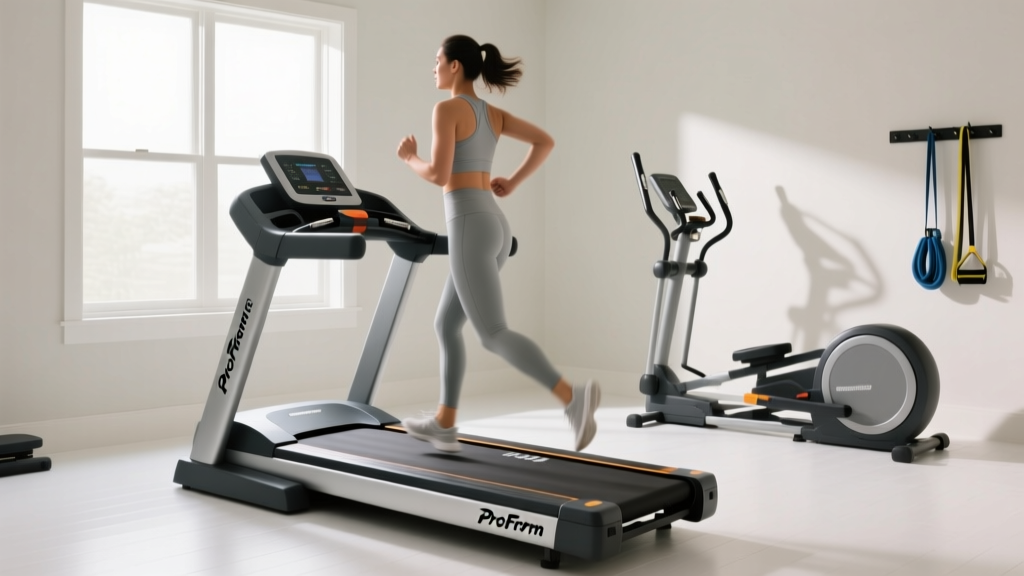
ProForm 400 Treadmill Noise Level Comparison: A Beginner's Guide
Compare the ProForm 400 treadmill noise level against other cardio machines. Follow our step-by-step guide to measure, reduce, and optimize home gym acoustics.

Introduction: The Hidden Challenge of Home Gym Acoustics
Setting up a home gym is one of the best investments you can make for your health, but for beginners, the acoustic impact of cardio equipment is often an afterthought. If you live in an apartment, a multi-story home, or share walls with neighbors, the noise generated by your workouts can quickly become a point of contention. The ProForm 400 treadmill is a popular, budget-friendly entry-level machine, but like all treadmills, it presents unique acoustic challenges. In this step-by-step guide, we will break down the ProForm 400 treadmill noise level, compare it against other popular cardio machines, and teach you exactly how to measure, mitigate, and optimize your home gym acoustics.
Step 1: Understanding Airborne vs. Structure-Borne Noise
Before we dive into the specific decibel (dB) output of the ProForm 400, beginners must understand that cardio machine noise falls into two distinct categories. Failing to distinguish between these two is the most common mistake new home gym owners make.
💡 The Two Types of Fitness Noise
- Airborne Noise: This is the sound traveling through the air in your room. It includes the hum of the motor, the whir of the cooling fan, and the slapping of the treadmill belt. You hear this directly.
- Structure-Borne (Impact) Noise: This is the low-frequency vibration caused by your footstrikes hitting the treadmill deck. This energy transfers through the machine's feet, into your floor joists, and radiates into the rooms below or adjacent. Your downstairs neighbor hears this.
According to the American Speech-Language-Hearing Association (ASHA), prolonged exposure to airborne noise above 85 dB can cause hearing damage, while structure-borne noise, though often lower in actual decibels, is highly disruptive due to its low-frequency, thumping nature which easily penetrates drywall and flooring.
Step 2: The ProForm 400 Treadmill Noise Profile
The ProForm 400 series (including variations like the 400 LE) is engineered for walking and light jogging. It typically features a 2.0 HP continuous duty motor and a compact 50-inch by 18-inch running belt. Here is a detailed breakdown of its acoustic footprint:
Motor and Belt Noise (Airborne)
At a walking speed of 3.0 mph, the 2.0 HP motor operates relatively quietly, producing roughly 60 to 65 dB of airborne noise—comparable to a normal conversation. However, as you increase the speed to 8.0 mph or higher, the motor works harder, and the friction between the belt and the deck increases, pushing the airborne noise level to 70 to 75 dB.
Footfall Impact (Structure-Borne)
This is where the ProForm 400 treadmill noise level becomes problematic for apartment dwellers. Because entry-level treadmills have lighter frames (usually around 110 to 130 lbs) and less mass to absorb kinetic energy, the impact of a 180 lb runner striking the deck can generate transient structure-borne spikes of 85 to 95 dB in the room directly below the machine.
"When evaluating treadmills for multi-family dwellings, the weight of the machine and the density of the deck cushioning are just as critical as the motor's acoustic rating for preventing neighbor complaints." — Consumer Reports Treadmill Buying Guide
Step 3: Cardio Machine Noise Comparison Matrix
How does the ProForm 400 treadmill stack up against other cardio machines? If you are highly sensitive to noise or have strict landlord restrictions, you need to know your options. Below is a comparative matrix of average noise outputs for popular home cardio equipment in 2026.
| Machine Type | Specific Model Example | Airborne Noise (dB) | Impact Noise Risk |
|---|---|---|---|
| Entry-Level Treadmill | ProForm 400 Treadmill | 65 - 75 dB | High |
| Commercial Treadmill | NordicTrack 1750 | 70 - 80 dB | Medium-High |
| Front-Drive Elliptical | Sole E35 Elliptical | 50 - 60 dB | Low |
| Magnetic Spin Bike | Schwinn IC4 | 35 - 45 dB | Very Low |
| Magnetic Rower | Hydrow Rower | 45 - 55 dB | Low |
As the data shows, while the National Institute on Deafness and Other Communication Disorders (NIDCD) notes that the airborne noise of a treadmill is well within safe hearing limits, the mechanical impact noise makes treadmills the least neighbor-friendly option compared to ellipticals or magnetic bikes.
Step 4: Step-by-Step Noise Reduction for Your ProForm 400
If you already own the ProForm 400 treadmill and need to keep the peace, follow this exact protocol to reduce both airborne and structure-borne noise by up to 40%.
1. Install a High-Density Equipment Mat
Do not place your treadmill directly on hardwood, laminate, or thin carpet. Purchase a 3/8-inch thick, high-density EVA foam or recycled rubber treadmill mat (typically costing between $45 and $75 in 2026). Ensure the mat is at least 36 x 72 inches to cover the entire footprint and catch vibrations before they enter the subfloor.
2. Lubricate the Running Belt
Friction between a dry belt and the wooden deck forces the 2.0 HP motor to work harder, increasing both heat and airborne whining. The Fix: Lift the center of the belt and apply exactly 0.5 ounces of 100% silicone treadmill lubricant (never use WD-40 or petroleum-based products). Run the ProForm 400 at 3.0 mph for three minutes to distribute the silicone. Repeat this every 130 miles or every 3 months.
3. Check and Adjust Belt Tension
A loose belt will slap against the deck with every footstrike, creating a loud, rhythmic thwacking sound. The Fix: Stand on the side rails. Using the provided Allen wrench, turn both rear roller adjustment bolts clockwise by exactly one-quarter turn. Test the belt. It should not slip when you walk, but you should be able to lift the center of the belt about 2 to 3 inches off the deck.
4. Isolate the Feet with Anti-Vibration Pads
For severe structure-borne noise in apartments, a mat is not enough. Place heavy-duty rubber anti-vibration isolation pads (like those used for washing machines) directly under the four adjustable feet of the ProForm 400. This creates a secondary decoupling layer that absorbs low-frequency impact thuds.
Step 5: When to Consider Ultra-Quiet Alternatives
The ProForm 400 is an excellent machine for dedicated spaces, garages, or single-story homes. However, if you live in a second-floor apartment with thin flooring, or if you prefer to work out at 5:00 AM while your family sleeps in the next room, a treadmill may simply be the wrong tool for the job.
If acoustic mitigation fails, consider pivoting to a magnetic resistance indoor bike or a front-drive elliptical. Because these machines eliminate the heavy, repetitive foot-strike impact associated with running, they reduce structure-borne noise to near zero. An elliptical like the Sole E35 provides a similar weight-bearing cardiovascular workout to the ProForm 400 but operates at a whisper-quiet 55 dB, making it the ultimate stealth cardio machine for shared living spaces.
Frequently Asked Questions (FAQ)
Can I use the ProForm 400 treadmill on the second floor of my house?
Yes, but with caution. You must use a 3/8-inch rubber mat and anti-vibration pads under the feet. Avoid sprinting or heavy running; stick to brisk walking or light jogging to minimize the kinetic energy transferred through the floor joists to the rooms below.
Why does my ProForm 400 squeak when I first start walking?
Squeaking upon startup is usually caused by dry roller bearings or a lack of silicone lubrication on the deck. Apply 100% silicone lubricant under the belt. If the squeak persists, check the bolts securing the front motor hood and the rear roller caps, as vibration can loosen them over time.
Is the ProForm 400 motor loud enough to damage my hearing?
No. The motor produces between 60 and 75 dB of airborne noise, which is equivalent to a normal conversation or a running dishwasher. According to audiologists, hearing damage risk only begins with prolonged exposure to noise levels exceeding 85 dB.
How often should I vacuum under my treadmill?
Dust and pet hair get sucked into the motor compartment by the cooling fan, causing the motor to overheat and run louder. Vacuum the area around and beneath your ProForm 400 treadmill weekly, and use compressed air to blow out the motor hood vents every six months.
More gear to consider
All reviews
Spin, Upright & Recumbent Bikes + True Treadmill Lubricant Guide
Treadmill Manual: Budgeting for Manual Treadmill Belt Care
Curved vs Motorized Treadmills & NordicTrack Treadmill Maintenance

Farmers Walk on Treadmill & Stationary Bike Types: 2026 Review

BXT8J Treadmill Noise Guide: Step-by-Step Cardio Machine Comparison
