Stair Climber vs NordicTrack T6.7i Treadmill: Home Use Guide
Compare the NordicTrack T6.7i treadmill with top home stair climbers. Discover which cardio machine fits your space, budget, and fitness goals in 2026.

The Modality Debate: Horizontal vs. Vertical Cardio
When outfitting a home gym in 2026, buyers are frequently torn between two distinct cardiovascular modalities: the traditional horizontal locomotion of a treadmill and the vertical ascent of a stair climber. Both elevate the heart rate and improve cardiovascular endurance, but their biomechanical impacts, spatial requirements, and long-term maintenance profiles differ drastically.
In this head-to-head guide, we are benchmarking the entry-level but highly capable NordicTrack T6.7i Treadmill against the leading compact vertical stair climber for home use, the MaxiClimber XL-2. By analyzing exact specifications, joint loading metrics, and real-world failure modes, this guide will help you determine which machine genuinely belongs in your home.
Quick Verdict Summary
- Choose the NordicTrack T6.7i Treadmill if: You prioritize walking/jogging, require a folding design to hide the machine, and want integrated interactive programming (iFIT) for guided global routes.
- Choose a Home Stair Climber (MaxiClimber XL-2) if: You have severe spatial constraints, want maximum upper-body integration, and prefer low-impact vertical movements that spare the ankles and shins from repetitive striking forces.
Contender Profiles and Core Specifications
Before analyzing biomechanics, we must establish the physical boundaries and mechanical outputs of both machines.
| Feature | NordicTrack T6.7i Treadmill | MaxiClimber XL-2 (Stair Climber) |
|---|---|---|
| Primary Motor/Drive | 2.6 Continuous Horsepower (CHP) | User-powered with magnetic resistance |
| Incline / Resistance | 0% to 10% Motorized Incline | 12 Levels of Adjustable Resistance |
| Running Surface | 20" x 55" Tread Belt | Vertical Step Range (Adjustable) |
| Max User Weight | 300 lbs | 300 lbs |
| Retail Price (2026) | $599 - $699 | $499 - $599 |
Footprint and Home Gym Integration
Space is the ultimate bottleneck for home cardio equipment. The NordicTrack T6.7i treadmill measures approximately 73 inches long by 29 inches wide when in use. While it features a hydraulic folding mechanism that reduces its length to roughly 42 inches, the folded unit still protrudes into the room and requires a ceiling height clearance of at least 8 feet to fold safely.
Conversely, the MaxiClimber XL-2 operates on a footprint of just 36 by 28 inches. Because vertical climbers rely on a narrow, upright chassis, they can be tucked into a corner or closet with minimal friction. However, stair climbers demand significant vertical clearance; users over 6 feet tall must ensure their ceiling height exceeds 8.5 feet to avoid striking overhead fixtures during peak extension.
Biomechanics: Joint Loading and Impact Forces
The most critical differentiator between these two machines is how they load the human skeletal system.
Treadmill Ground Reaction Forces (GRF)
Walking or jogging on the NordicTrack T6.7i involves repetitive eccentric loading. Even with NordicTrack's proprietary FlexSelect cushioning, which reduces impact by up to 30% compared to outdoor asphalt, the ground reaction force during a jogging gait still registers at 2.0 to 2.5 times the user's body weight. This impact travels through the calcaneus (heel), tibia, and femur, which can exacerbate plantar fasciitis or shin splints in susceptible individuals.
Stair Climber Patellofemoral Stress
Stair climbers eliminate the striking phase entirely, making them exceptionally safe for the ankles and lower back. However, they shift the biomechanical burden to the knees and hips. According to biomechanical analyses of vertical stepping, the patellofemoral joint (where the kneecap meets the thigh bone) experiences compressive forces equal to 3.0 to 4.0 times body weight during deep vertical flexion. Users with pre-existing patellar tendinopathy or severe osteoarthritis should approach heavy resistance stair climbing with caution.
"When prescribing home cardio equipment, we look at the patient's injury history. Treadmills are generally superior for maintaining bone mineral density due to the impact loading, while vertical climbers are the gold standard for patients recovering from lower-leg impact injuries, provided their knees can tolerate the flexion load."
— Sports Biomechanics & Rehabilitation Guidelines
Metabolic Demand and Caloric Expenditure
Which machine burns more fat? The answer depends entirely on the user's capacity to sustain the movement. According to the metabolic equivalent (MET) charts published by Harvard Health Publishing, vigorous stair climbing yields a MET value of 9.0 to 12.0, whereas moderate treadmill walking (3.5 mph) sits at roughly 4.3 METs.
However, the caveat is sustainability. Most home users can sustain a 3.5 mph walk on the T6.7i treadmill for 45 to 60 minutes while watching television. The same user will typically experience rapid localized muscle fatigue (specifically in the quadriceps and gluteus maximus) on a stair climber, forcing them to stop after 15 to 20 minutes. Therefore, while the stair climber offers a higher caloric burn per minute, the treadmill often results in a higher total caloric expenditure per session due to longer adherence times.
Tech Ecosystem and Subscription Economics
In 2026, hardware is only half the purchase; the software ecosystem dictates long-term value.
- NordicTrack T6.7i: Features a 5-inch LCD screen and is deeply integrated with the iFIT platform. While the machine functions manually without a subscription, unlocking automatic incline adjustments, global route mapping, and trainer-led workouts requires an iFIT membership (currently $15/month for individuals or $39/month for families). This adds $180 to $468 to your annual fitness overhead.
- MaxiClimber XL-2: Operates entirely offline. The resistance is adjusted manually via a dial on the chassis. While they offer a companion app for basic workout tracking, there are no mandatory monthly subscription fees, making the total cost of ownership significantly lower over a 5-year period.
Maintenance Profiles and Common Failure Modes
Every piece of cardio equipment has an Achilles' heel. Understanding these failure modes is crucial for home buyers.
Treadmill: Friction and Motor Controllers
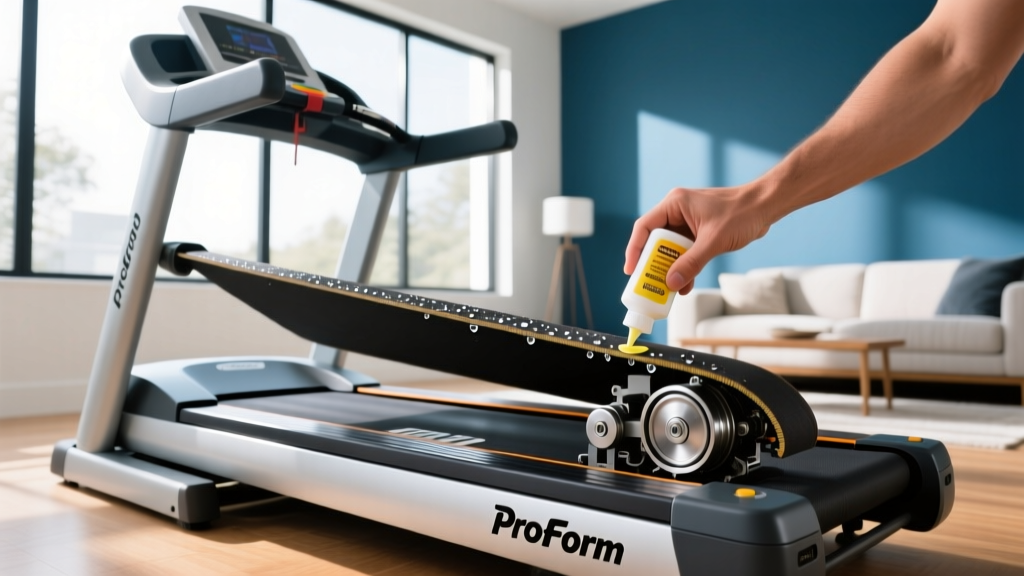
The primary enemy of the NordicTrack T6.7i is belt friction. If the user fails to apply 100% silicone lubricant to the deck every 3 months (or 130 miles), the friction coefficient increases. This forces the 2.6 CHP motor to draw excess amperage, eventually leading to motor controller board burnout—a repair that typically costs between $150 and $250 out of warranty. Furthermore, users exceeding 220 lbs who attempt sustained running (above 7 mph) on the 55-inch belt may experience premature belt stretching and seam separation.
Stair Climber: Hydraulics and Cable Fraying
Vertical climbers rely on a system of pulleys, cables, and sometimes hydraulic cylinders to manage the descent phase. The most common failure mode in budget-to-mid-tier home stair climbers is the fraying of the internal steel braided cables at the pulley contact points, or the slow leaking of hydraulic fluid from the step cylinders after 1,000+ hours of use. Unlike a treadmill belt, replacing internal climber cables requires significant mechanical disassembly.
Aligning with Public Health Guidelines
Both machines are highly effective tools for meeting the baseline cardiovascular requirements set by major health organizations. The American Heart Association recommends at least 150 minutes of moderate-intensity or 75 minutes of vigorous-intensity aerobic activity per week. Additionally, the Centers for Disease Control and Prevention (CDC) emphasizes the importance of muscle-strengthening activities. The stair climber inherently bridges this gap by providing resistance training for the lower body during the cardio session, whereas the T6.7i treadmill (even at a 10% incline) remains primarily an aerobic stimulus.
Final Decision Matrix: Which Should You Buy?
To finalize your purchasing decision, map your specific household constraints to the frameworks below:
- The Endurance Runner / Walker: Buy the NordicTrack T6.7i Treadmill. If your goal is to train for a 5K, improve your walking pace, or you simply prefer the natural biomechanics of a horizontal stride, the treadmill is irreplaceable. The 10% incline is sufficient for glute activation without requiring a separate machine.
- The Apartment Dweller / Time-Crushed Professional: Buy the Home Stair Climber. If you have less than 10 square feet of dedicated floor space, need to avoid the noise of a treadmill motor and footfalls disturbing downstairs neighbors, and want to maximize caloric burn in 20-minute micro-sessions, the vertical climber is the superior choice.
- The Budget-Conscious Buyer: Factor in the 5-year cost. The T6.7i's lower upfront cost is quickly eclipsed by mandatory iFIT subscriptions if you want the smart features. The stair climber requires zero monthly fees, making it the undisputed winner for long-term financial efficiency.
More gear to consider
All reviews
ProForm Treadmill Issues? Upright, Recumbent & Spin Bike Care
ProForm 12 Treadmill vs Stationary Bike Types: Maintenance Guide
Treadmill Interval Workout Noise: Troubleshooting & Cardio Comparison

Curved vs Motorized Treadmill Setup: The Treadmill Red String Guide
Stair Climber Installation: Replacing True Treadmill Older Models