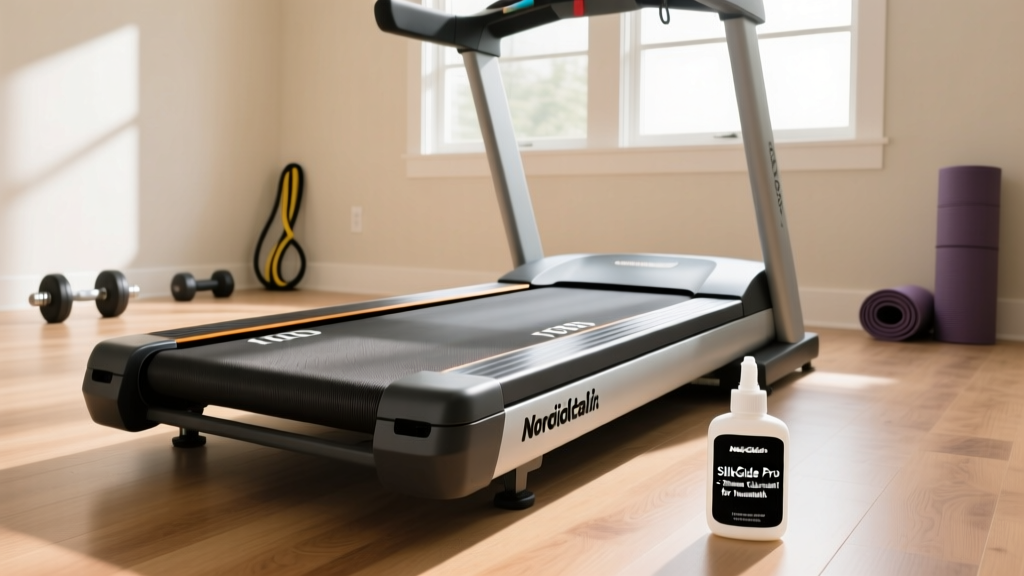
NordicTrack 1750 Treadmill Belt Maintenance & Best Lubricants
Expert guide to NordicTrack 1750 treadmill belt maintenance. We review the top silicone lubricants and share hands-on tension and alignment specs.

The NordicTrack Commercial 1750 remains one of the most popular high-end home fitness machines on the market in 2026, prized for its 22-inch HD touchscreen, -3 to 15% incline/decline capabilities, and robust 3.25 CHP Mach Z motor. However, beneath the sleek console lies a mechanical system that requires strict upkeep. The 22" x 60" commercial-grade tread belt generates significant friction, and neglecting treadmill belt maintenance and lubrication is the number one cause of premature motor control board (MCB) failure on this specific model.
As a senior reviewer at FitGearPulse, I have serviced and tested dozens of Nordic Track 1750 treadmill units. In this hands-on guide, I break down the exact maintenance protocols, review the best 100% silicone lubricants for this machine, and provide a diagnostic matrix to keep your belt tension and alignment flawless.
The Hidden Cost of Friction on the Commercial 1750
The NordicTrack 1750 utilizes a 1-inch reversible Cushion Flex deck coated with a phenolic resin. When the belt is properly lubricated, the motor draws a normal operating current of 3 to 6 amps. However, as the factory silicone dissipates over 150 to 200 miles of use, friction increases exponentially.
A dry belt forces the 3.25 CHP motor to work harder, often spiking the amp draw to 12 to 18 amps. This sustained high-amperage draw generates excessive heat in the motor windings and the MCB. Replacing a fried Motor Control Board on a Commercial 1750 typically costs between $250 and $400, not including labor. According to Treadmill Doctor, over 80% of premature treadmill motor failures are directly linked to inadequate belt lubrication and excessive deck friction.
⚠️ Expert Warning: Never use WD-40, 3-in-One oil, or any petroleum-based distillates on your NordicTrack 1750. Petroleum products will instantly degrade the urethane backing of the tread belt and melt the phenolic resin on the deck, resulting in a $300+ belt and deck replacement kit.Hands-On Review: Top 3 Silicone Lubricants for the 1750
Not all silicone lubricants are created equal. The viscosity and applicator design matter immensely when trying to reach the center of a 22-inch wide belt. Here are my top picks based on hands-on testing.
1. NordicTrack Performance Series 100% Silicone (OEM Pick)
Price: ~$18.00 (2 oz bottle)
Verdict: This is the factory-recommended OEM lubricant. It features a medium-viscosity 100% pure silicone formula that bonds exceptionally well to the specific urethane backing used on NordicTrack belts. The included angled tube makes it relatively easy to reach the center of the 22-inch deck without removing the motor hood.
- Pros: Guaranteed warranty compliance; optimal viscosity for the Cushion Flex deck; precision applicator tube.
- Cons: Highest cost per ounce; small 2 oz bottle requires frequent repurchasing for heavy users.
2. Spot On 100% Silicone Treadmill Lubricant (Best Value)
Price: ~$14.00 (4 oz bottle)
Verdict: Spot On offers a pure, non-petroleum silicone gel that performs identically to the OEM fluid in our friction-heat testing. The 4 oz bottle provides up to eight applications (at 0.5 oz per side), making it the most cost-effective choice for households logging over 30 miles a week.
- Pros: Excellent cost-per-ounce ratio; pure silicone formula; includes a flexible applicator wand.
- Cons: The wand can sometimes detach from the nozzle if squeezed too aggressively.
3. Impresa Products Silicone Gel (Best for Deep Cleaning)
Price: ~$16.00 (4 oz bottle)
Verdict: Impresa’s formula is slightly thicker, which prevents it from dripping off the applicator pad before it reaches the center of the deck. This is my preferred choice when performing a deep clean and lube, as the gel stays exactly where you place it under the belt.
- Pros: High-viscosity gel prevents drips; generous 4 oz volume; excellent deck adhesion.
- Cons: Thicker gel requires a slightly longer break-in walk (5 minutes instead of 3) to spread evenly.
Step-by-Step Lubrication Protocol for the 1750
For optimal results, perform this maintenance every 3 months or every 150 miles, whichever comes first. Always consult NordicTrack Support documentation for your specific model year's safety guidelines.
- Power Down and Secure: Turn off the machine using the power switch near the floor, unplug it from the wall, and remove the safety key. This prevents accidental startup while your hands are under the belt.
- Loosen the Belt (Optional but Recommended): Using a 6mm Allen wrench, turn both rear roller adjustment bolts counter-clockwise by exactly 2 full turns. This gives you the slack needed to lift the belt without straining the seams.
- Wipe the Deck: Slide a dry, lint-free microfiber cloth under the belt from left to right to remove dust, old silicone buildup, and debris.
- Apply the Silicone: Lift the left edge of the belt about 2 inches. Insert the applicator tube as close to the center of the deck as possible. Squeeze exactly 0.5 oz (15 ml) of silicone in a zig-zag pattern. Repeat on the right side.
- Re-Tension the Belt: If you loosened the belt, turn both rear roller bolts clockwise by exactly 2 full turns to return them to their starting position.
- Distribute the Lubricant: Plug the machine in, insert the safety key, and walk on the treadmill at 1.0 MPH for 3 to 5 minutes. Periodically shift your weight from the left foot to the right foot to help press the silicone evenly across the entire 22-inch width.
Belt Tension and Alignment Diagnostics Matrix
Lubrication is only half the battle. A misaligned or improperly tensioned belt will cause edge fraying and motor strain. Use this diagnostic matrix to troubleshoot your Commercial 1750.
| Symptom | Root Cause | Expert Adjustment Spec |
|---|---|---|
| Belt slips or hesitates when stepping on | Belt tension is too loose | Tighten both rear bolts 1/4 turn clockwise. Proper tension allows you to lift the belt edge exactly 2 to 3 inches in the center. |
| Belt drifts to the left side | Left rear roller is too far back | Tighten the LEFT rear bolt 1/4 turn clockwise, OR loosen the RIGHT rear bolt 1/4 turn counter-clockwise. |
| Belt drifts to the right side | Right rear roller is too far back | Tighten the RIGHT rear bolt 1/4 turn clockwise, OR loosen the LEFT rear bolt 1/4 turn counter-clockwise. |
| High motor hum / burning smell | Extreme friction or overtightened belt | Check amp draw. If over 10 amps, lubricate immediately. If belt cannot be lifted 2 inches, loosen tension. |
Critical Failure Modes to Avoid
Through years of hands-on teardowns, I have identified two major user errors that destroy the NordicTrack 1750 deck and belt system:
1. Over-Lubrication (The Sling Effect): Applying more than 1 oz total of silicone will not "extra protect" your machine. Excess silicone has nowhere to go; it gets pushed to the edges of the deck and slings onto the side rails and floor. This creates a severe slip hazard and attracts dust, which eventually works its way back under the belt, forming an abrasive paste that acts like sandpaper on the phenolic deck coating.
2. Ignoring the Break-In Period for New Belts: If you replace your belt and deck kit, the new belt requires a specific break-in protocol. The factory applies a light coating of silicone, but it must be walked on at 2.0 MPH for 20 minutes to heat the urethane and allow it to seat into the microscopic pores of the new deck. Skipping this step leads to premature delamination of the belt layers.
Expert FAQ
How do I know if my NordicTrack 1750 belt needs lubrication?
The most accurate method is the "Touch Test." Reach your hand under the belt near the center of the deck. If your fingers come out completely dry and dusty, it needs lubrication immediately. If they come away with a slightly oily, slick residue, the belt is properly lubricated. Additionally, if your iFIT workouts frequently pause due to "motor overload" warnings, friction is likely the culprit.
Can I use a silicone spray aerosol instead of a gel?
I strongly advise against aerosol sprays. Aerosols contain propellants (like butane or propane) that can degrade the belt backing over time. Furthermore, the overspray inevitably lands on your treadmill's electronics, screen, and walking surface, creating a mess and potential short-circuit risks. Always use a 100% pure liquid or gel silicone with a targeted applicator wand.
Does my iFIT subscription affect belt wear?
Indirectly, yes. iFIT's global workout library includes frequent, automated incline and decline shifts (ranging from -3% to 15%). Running on a 15% incline drastically increases the downward force and friction between your shoes, the belt, and the deck. If you frequently do high-incline iFIT hiking or running programs, you should shorten your lubrication interval to every 100 miles instead of 150.
More gear to consider
All reviews
Treadmill vs Stationary Bike & Walking Pad: Top Mistakes

Beyond the Treadmill Cat: Upright vs Recumbent vs Spin Bikes

Elliptical vs Treadmill: 3G Cardio Pro Runner X Treadmill Tested
Air Bike vs Assault Bike & ProForm Trainer 14.0 Treadmill
Air Bike vs Assault Bike & Horizon 7.0 AT Treadmill Dimensions