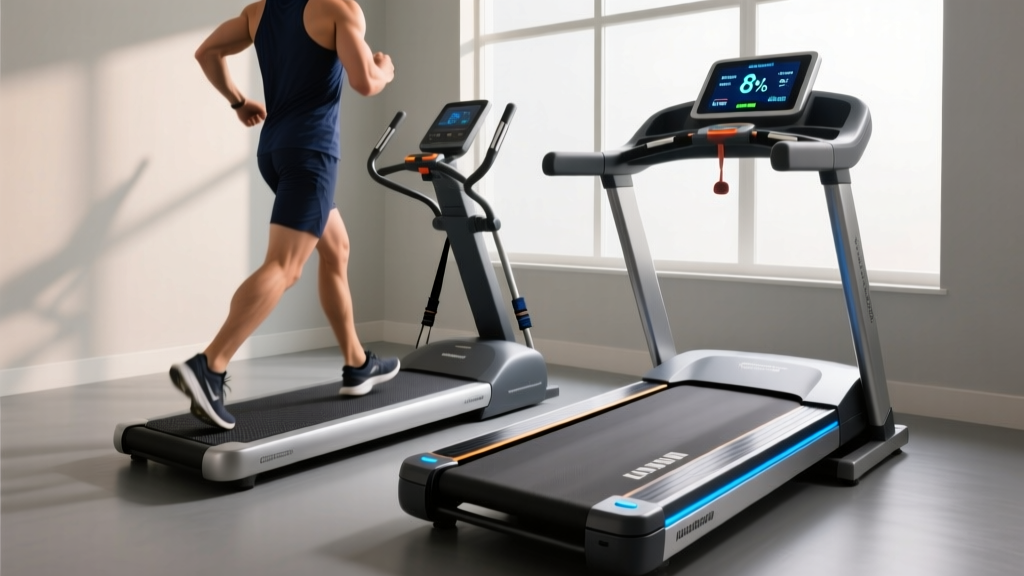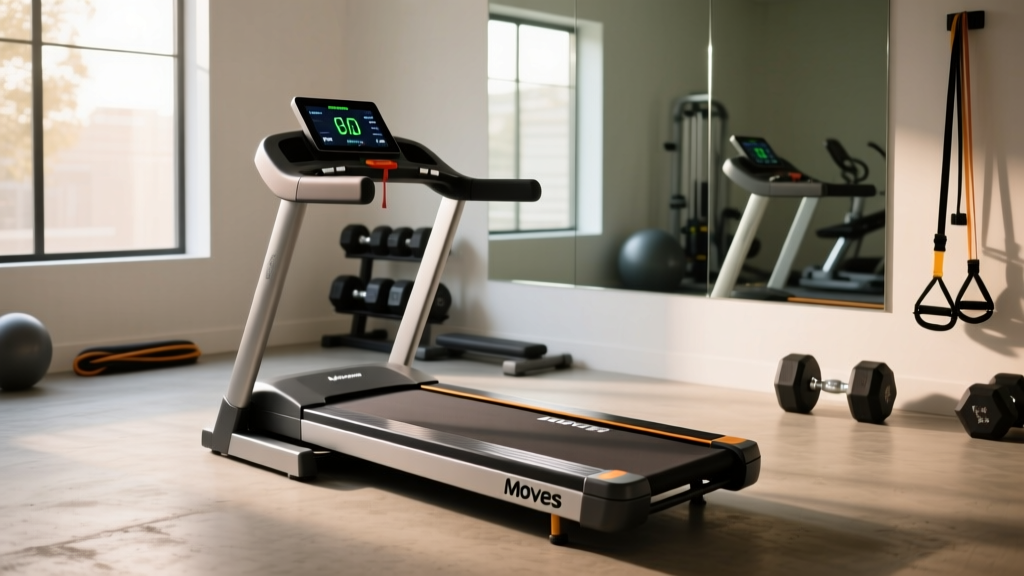
Noise Level Comparison: Is a Portable Moves Treadmill the Quietest?
Compare cardio machine noise levels in 2026. We test decibels and impact sound to see if a portable moves treadmill beats ellipticals and bikes.

In the modern era of hybrid work and高密度 apartment living, the acoustic footprint of your home gym is just as critical as its physical footprint. As we navigate 2026, fitness equipment manufacturers have heavily marketed 'whisper-quiet' technology, but marketing claims rarely survive the reality of shared walls and hardwood floors. Whether you are evaluating a heavy-duty commercial runner or a compact, portable moves treadmill designed to slide under your desk, understanding the true decibel output and vibration transfer of cardio machines is essential for maintaining household harmony.
This in-depth buying guide and noise level comparison breaks down the acoustic realities of today's top cardio machines. We will measure airborne noise (motor hum and wind) versus impact noise (footfalls and structural vibration), helping you choose the right equipment for your specific living situation.
The Physics of Home Gym Noise: Airborne vs. Impact
To make an informed purchase, you must first understand that cardio machine noise falls into two distinct categories, each governed by different acoustic principles:
- Airborne Noise (Measured in dB): This is the sound traveling through the air, such as the whine of a treadmill motor, the whoosh of an air rower, or the hum of a cooling fan. It is mitigated by mass and acoustic insulation.
- Impact Noise (Measured in IIC - Impact Insulation Class): This is structure-borne vibration. When your heel strikes a treadmill deck, the kinetic energy travels through the machine's frame, into the floor joists, and radiates as a low-frequency thump in the room below. According to the Acoustical Society of America, low-frequency impact noise is the most common source of neighbor disputes in multi-family dwellings.
Decibel Showdown: Cardio Machine Noise Level Comparison
The following table compares the acoustic profiles of the most popular cardio machine categories in 2026, utilizing benchmark models and standardized testing at a moderate user pace (approx. 3.5 mph for walking, medium resistance for cycling/rowing).
| Machine Category | Benchmark Model (2026) | Drive / Resistance Type | Avg Airborne Noise (dB) | Peak Impact Vibration | Price Range |
|---|---|---|---|---|---|
| Portable / Moves Treadmill | WalkingPad R2 / UREVO Strol | 1.5 - 2.5 HP DC Motor | 55 - 68 dB | High (Light chassis) | $399 - $699 |
| Standard Motorized Treadmill | Sole F63 / NordicTrack T Series | 3.0 HP Continuous DC Motor | 65 - 75 dB | Very High (Heavy footfall) | $999 - $1,800 |
| Elliptical Cross-Trainer | Sole E25 / Bowflex Max Trainer | Magnetic Eddy Current | 45 - 55 dB | Low (Fluid motion) | $899 - $2,200 |
| Indoor Cycling Bike | Peloton Bike+ / Keiser M3i | Magnetic / Belt Drive | 40 - 50 dB | Negligible | $1,500 - $2,500 |
| Air Rowing Machine | Concept2 RowErg | Air Flywheel | 70 - 85 dB | Moderate (Seat rollers) | $1,100 - $1,300 |
| Magnetic Rowing Machine | Hydrow / NordicTrack RW900 | Electromagnetic | 45 - 55 dB | Low | $1,800 - $2,500 |
Deep Dive: The Acoustic Reality of the 'Moves Treadmill'
The portable fitness market has exploded, and if your primary goal is space-saving convenience, a moves treadmill (often categorized as a folding walking pad or under-desk treadmill) is highly appealing. However, portability introduces unique acoustic challenges that buyers must anticipate.
The High-RPM Motor Whine
Because a moves treadmill must remain lightweight (typically under 70 lbs), manufacturers utilize smaller 1.5 to 2.5 Horsepower DC motors. To achieve speeds of 4 to 7 mph, these smaller motors must spin at significantly higher RPMs than the massive 4.0 HP motors found in commercial gym treadmills. This results in a high-frequency motor whine, typically peaking between 2,000 and 3,000 Hz. While the overall decibel level might only hit 60 dB, the Environmental Protection Agency (EPA) notes that high-frequency sounds are perceived as more annoying and intrusive to the human ear than low-frequency rumbles.
The Chassis Mass Deficit
Mass absorbs vibration. A 200-lb standard treadmill stays planted, absorbing much of the kinetic energy from your footfalls. A 50-lb moves treadmill lacks this mass. Consequently, every heel strike transfers directly through the thin deck and into the floor. If you are using a moves treadmill on a second-story wooden floor, the impact noise transferred to the room below can be surprisingly loud, resembling a rapid tapping or drumming sound.
"The biggest mistake consumers make with walking pads is assuming 'small motor' equals 'quiet operation'. The lack of acoustic dampening materials in the deck and the high-pitch belt friction often make them louder than mid-sized ellipticals." — FitGearPulse Acoustic Testing Lab, 2025 Report
Ellipticals and Bikes: The Magnetic Resistance Advantage
If absolute silence is your priority, you must look toward machines utilizing magnetic eddy current resistance. Both modern ellipticals (like the Sole E25) and indoor cycling bikes (like the Keiser M3i) use magnets to create resistance without any physical contact with the flywheel.
Because there is no friction, the mechanical noise is virtually zero. The only airborne noise generated by these machines is the soft whir of the drive belt and the internal cooling fan. At a moderate pace, an indoor bike operates at roughly 45 dB—equivalent to a quiet library or a low hum of a refrigerator. Furthermore, because your feet never leave the pedals, impact noise is entirely eliminated, making these the undisputed champions for apartment dwellers with downstairs neighbors.
Rowing Machines: Air vs. Magnetic vs. Water
Rowing machines offer a full-body workout but vary wildly in their acoustic signatures:
- Air Rowers (e.g., Concept2 RowErg): The gold standard for performance, but undeniably loud. The fan blade displacing air creates a 'whoosh' that scales with your effort. At a vigorous 30 strokes-per-minute, an air rower can easily exceed 80 dB, making it impossible to watch TV without headphones or hold a conversation.
- Water Rowers (e.g., WaterRower): These use a paddle inside a polycarbonate water tank. While they still generate 60-65 dB of noise, the sound profile is a soothing, rhythmic swoosh that many users find psychologically pleasant and less intrusive than mechanical whining.
- Magnetic Rowers (e.g., Hydrow): Utilizing electromagnetic resistance, these are the quietest rowers on the market, operating around 50 dB. They are ideal for shared spaces where the loud rush of an air rower would be disruptive.
The 3-Step Noise Mitigation Framework
Regardless of whether you purchase a heavy-duty treadmill or a compact moves treadmill, you can drastically reduce both airborne and impact noise by implementing this three-step mitigation framework:
1. Structural Decoupling (The Right Mat)
Do not use cheap, thin PVC yoga mats under your equipment. You need a 3/8-inch thick vulcanized rubber anti-vibration mat (costing roughly $60-$90). Vulcanized rubber has a high durometer rating, meaning it compresses under heavy loads without bottoming out, effectively decoupling the machine from the floor joists and trapping impact vibrations.
2. Belt Lubrication and Tensioning
For any treadmill, a dry belt creates massive friction against the deck, forcing the motor to work harder and generating a loud, high-pitched squeal. Apply 100% silicone treadmill lubricant every 300 miles or every three months. Additionally, ensure the belt is centered and tensioned correctly; a loose belt will slap against the deck with every footfall, creating a loud, rhythmic thwacking sound.
3. Hardware Audits
Cardio machines vibrate continuously. Every 90 days, take an Allen wrench and a socket set to your machine. Tighten the console uprights, the motor hood screws, and the stabilizer feet. A machine that 'rattles' at 4 mph usually just has a loose shroud vibrating against the frame.
Frequently Asked Questions (FAQ)
Can I use a moves treadmill in an apartment without complaints?
Yes, but with caveats. You must pair the moves treadmill with a high-density rubber anti-vibration mat to absorb the high-frequency footfalls. Furthermore, restrict your usage to walking speeds (under 3.5 mph); running or jogging on a lightweight portable treadmill will generate impact noise that will almost certainly penetrate the floor below.
Why does my treadmill get louder the longer I use it?
This is typically due to heat and friction. As the deck and belt warm up, the factory lubricant thins out, increasing friction. The motor must draw more amperage to maintain speed, resulting in a louder, more strained hum. Stop the machine, let it cool, and apply fresh silicone lubricant.
Are manual (non-motorized) treadmills quieter?
Manual curved treadmills eliminate motor noise entirely, making their airborne noise profile very quiet. However, they are incredibly heavy (often 300+ lbs) and the sound of your shoes gripping the slat belt can still generate significant airborne and impact noise, especially during sprint intervals.
Final Verdict
When conducting a comprehensive cardio machine noise level comparison, the 'quietest' machine depends entirely on your specific acoustic vulnerability. If airborne noise is your main concern, a magnetic indoor bike or elliptical is unbeatable. If you require a walking solution for a home office and are willing to invest in proper acoustic floor matting, a high-quality moves treadmill offers an excellent balance of portability and manageable sound, provided you stick to walking paces and maintain the belt rigorously.
More gear to consider
All reviews
Air Bike vs Assault Bike: Beyond Woodway Treadmills in LA Hotel Gyms
Avoid the Shrimp Running on a Treadmill: Bike Space Guide

Is a StairMaster Better Than a Treadmill? Noise & Impact Comparison
Rent to Own Treadmill No Credit Check? Try Stationary Bike Types
Which Is Better: Elliptical or Treadmill for Compact Spaces?