Cardio Machine Noise Comparison: Glute Workout on Treadmill Fixes
Compare cardio machine noise levels and troubleshoot loud squeaks during your glute workout on treadmill with our expert maintenance and form guide.

The Decibel Breakdown: Cardio Machine Noise Level Comparison
Building a home gym in 2026 means balancing high-performance equipment with domestic peace. Noise pollution is one of the most common complaints among home fitness enthusiasts, particularly when executing high-intensity or high-load routines. Before diving into specific troubleshooting, it is crucial to understand the baseline acoustic footprint of the major cardio machines on the market. Not all cardio equipment is created equal when it comes to sound output, and understanding these differences helps set realistic expectations for your training space.
| Machine Type | Popular 2026 Model | Idle / Low dB | Peak dB (Heavy Load) | Primary Noise Source |
|---|---|---|---|---|
| Incline Treadmill | NordicTrack X22i | 55 dB | 82 dB | Motor whine & foot impact |
| Flat Treadmill | Sole F80 | 50 dB | 76 dB | Belt friction & deck impact |
| Elliptical | Sole E35 | 42 dB | 54 dB | Flywheel bearing & fan |
| Rowing Machine | Concept2 RowErg | 45 dB | 72 dB | Air baffle fan drag |
| Air Bike | Rogue Echo Bike | 50 dB | 85 dB | Wind fan & belt drive |
As the data illustrates, treadmills inherently generate the most structural and mechanical noise due to the repetitive impact of foot strikes combined with the continuous draw of the drive motor. This is exponentially magnified when you alter the biomechanics of your stride, which brings us to a very specific and popular training modality.
Why Your Glute Workout on Treadmill Causes Excessive Noise
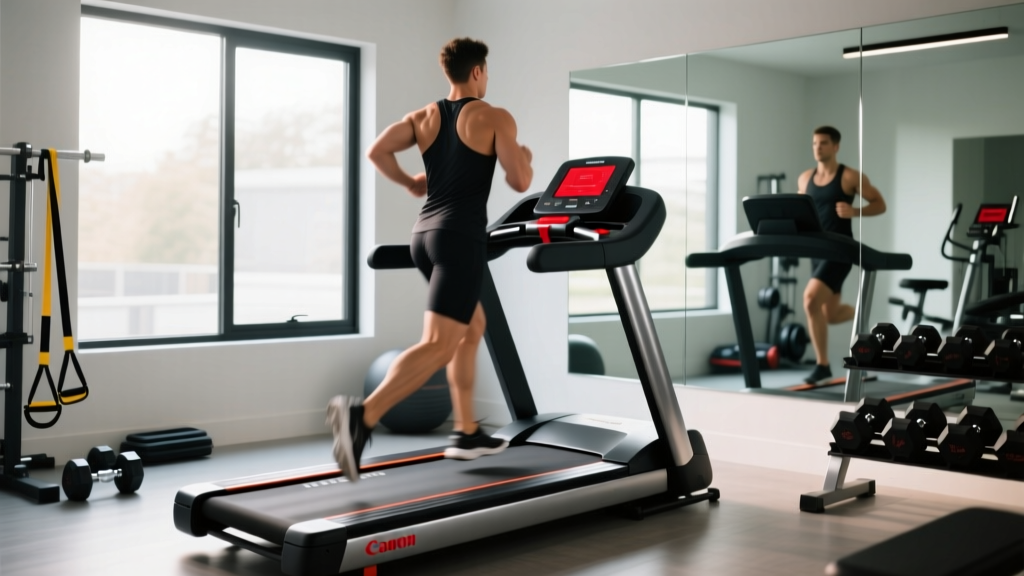
The viral popularity of incline walking routines (like the famous 12-3-30 method) has transformed the treadmill from a flat-surface running tool into a dedicated lower-body resistance machine. However, performing a targeted glute workout on treadmill equipment introduces unique mechanical stresses that often result in loud thuds, squeaks, and motor whines.
Mistake 1: The 'Heel Stomp' Biomechanical Error
When users crank the incline to 12-15% (or up to 40% on specialized incline trainers), the body's center of mass shifts forward. According to biomechanical principles emphasized by the National Academy of Sports Medicine (NASM), many users compensate for this steep grade by over-striding and driving their heels forcefully into the deck. This 'heel stomp' not only reduces glute activation but also sends high-impact shockwaves through the treadmill's phenolic deck and steel frame, creating a loud, rhythmic thudding that echoes through floor joists.
Mistake 2: Ignoring Belt Tension Under Heavy Load
Walking at a steep incline requires the drive motor to work significantly harder to pull the belt upward against gravity and your body weight. If your walking belt is even slightly loose, the motor's torque will cause the belt to slip on the front roller. This slippage manifests as a loud, rhythmic 'thwack' or a high-pitched squeal. Many users mistakenly blame the motor when the issue is simply a lack of tension on the rear roller bolts.
Mistake 3: The WD-40 Blunder
When a treadmill starts squeaking during a heavy incline session, the most common amateur mistake is reaching for standard WD-40 or petroleum-based lubricants. Never do this. Petroleum distillates will instantly degrade the rubber backing of your walking belt and destroy the wax or phenolic coating on the wooden deck, leading to catastrophic friction, overheating, and a permanent grinding noise.
⚠️ WARNING: Lubricant SelectionOnly use 100% silicone-based treadmill lubricant (such as SpotOn or Godora brands). Silicone is chemically inert to the rubber and deck coatings, reducing the coefficient of friction and quieting the machine without causing material degradation.
Step-by-Step Troubleshooting Guide for Treadmill Noise
If your machine is sounding like a construction site during your lower-body sessions, follow this systematic diagnostic protocol to isolate and eliminate the noise.
Step 1: The Belt Lift and Tension Test
- Power Down: Unplug the treadmill from the wall to prevent accidental engagement.
- Measure Slack: Reach under the center of the walking belt and lift it. You should achieve exactly 2 to 3 inches of lift. If it lifts higher than 3 inches, the belt is too loose; if less than 2 inches, it is over-tensioned (which strains the motor bearings and causes a high-pitched whine).
- Adjust: Locate the two rear roller adjustment bolts at the back of the machine. Using the correct Allen wrench (typically 5mm or 7/16-inch), turn both bolts clockwise by exactly one-quarter turn. Test the tension again.
Step 2: Deck Friction and Lubrication Check
Slide your hand under the belt and feel the surface of the deck. It should feel slick and slightly oily. If it feels dry, gritty, or you notice white streaks on the deck edges, the phenolic coating is wearing thin due to friction. Apply exactly 15ml of 100% silicone lubricant in a zig-zag pattern under the belt on each side. Run the treadmill at 2.0 mph for 5 minutes to distribute the oil evenly.
Step 3: Motor Hood and Fan Cleaning
A loud, strained whining noise from the front of the treadmill often indicates that the motor's cooling fan is clogged with dust and pet hair, causing the motor to overheat and draw excess amperage. Remove the motor hood (usually 4 to 6 Phillips-head screws) and use a vacuum with a brush attachment to clean the fan blades and the interior vents. Note: If your treadmill has a 3.0 CHP motor and you weigh over 200 lbs, doing a 15% incline glute workout on treadmill settings will naturally push the motor to its thermal limits. Upgrading to a machine with a 4.0+ CHP continuous duty motor is the only permanent fix for motor whine under these specific loads.
Form Corrections for a Quieter, More Effective Glute Workout
Mechanical fixes only solve half the problem. To truly minimize noise and maximize muscle recruitment, you must correct your physical form. The American Council on Exercise (ACE) frequently highlights that proper joint alignment and muscle engagement dictate impact forces.
- Adopt a Midfoot Strike: Instead of reaching forward and striking with your heel, shorten your stride. Land with a flat, midfoot strike directly beneath your center of gravity. This acts as a natural shock absorber, drastically reducing the decibel level of your footfalls.
- Drive Through the Heel (Without Stomping): Once your midfoot is planted, actively push through your heel to engage the gluteus maximus. The push-off should be a smooth, powerful extension, not a jarring impact.
- Release the Handrails: Gripping the console or handrails leans your torso backward, negating the incline angle and forcing a heavy, noisy heel strike. Keep your core braced and pump your arms naturally.
Acoustic Matting and Vibration Isolation
Even a perfectly maintained treadmill will transmit low-frequency impact vibrations through the floor. To protect your joints, your equipment, and your downstairs neighbors, structural isolation is mandatory.
According to the CDC's NIOSH guidelines on noise and hearing, managing environmental noise isn't just about comfort; prolonged exposure to repetitive, jarring mechanical noise and low-frequency vibrations can contribute to central nervous system fatigue and workout burnout.
Do not use cheap, thin PVC mats. Invest in a 3/8-inch thick recycled rubber mat (such as the ProSource Fit or BalanceFrom puzzle mats, typically costing between $40 and $70). The high-density rubber absorbs the kinetic energy of the foot strike before it can transfer into the subfloor, effectively dampening the 'thud' of an incline walking session by up to 40%.
Summary: Maintaining the Silence
Achieving a powerful, muscle-building session doesn't require turning your home gym into an airport runway. By understanding the baseline noise levels of your cardio fleet, correcting the biomechanical errors inherent to steep incline walking, and adhering to a strict silicone-lubrication and belt-tensioning schedule, you can perform a highly effective glute workout on treadmill equipment in near silence. Respect the machine's mechanical limits, refine your foot strike, and enjoy the burn without the racket.
More gear to consider
All reviews
Benefits of Incline Walking on Treadmill: Best Folding Picks 2026

Home Stair Climber Guide: ProForm Smart Treadmill Alternative?
Assault Bike vs Air Bike: Layouts & Treadmill Stand Swaps
Stair Climber Setup & Fixes: Weslo Treadmill Won't Turn On

Stair Climbers vs Treadmill Running Classes: 2026 Home Guide
