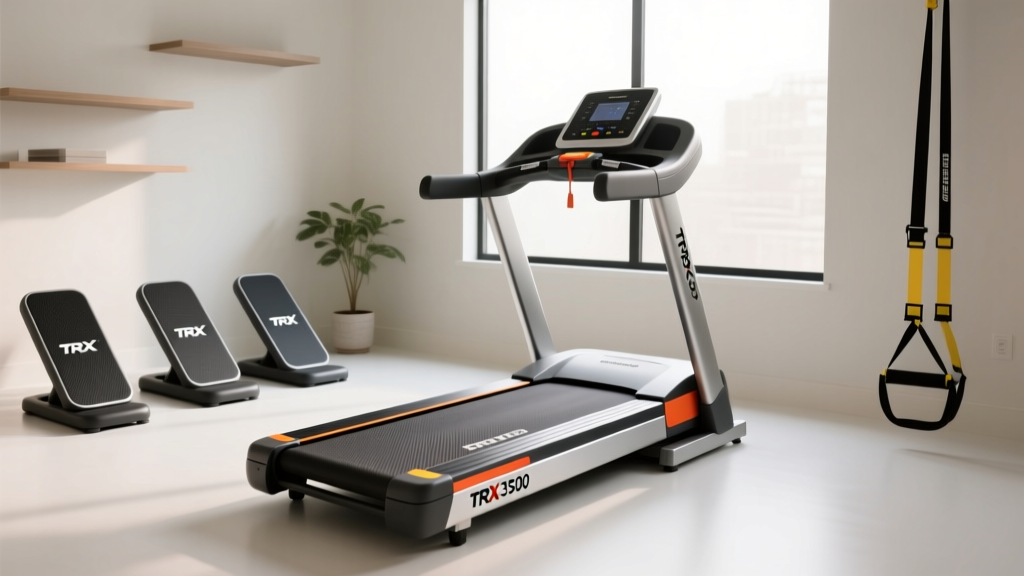
NFC Treadmill vs Stationary Bike Types: Upright, Recumbent & Spin
Expert review comparing NFC treadmill tech with upright, recumbent, and spin stationary bikes. Find the best smart cardio machine for your 2026 home gym.

The Smart Gym Revolution: NFC Treadmills vs. Stationary Bikes
As we navigate the 2026 fitness landscape, the integration of wearable technology into home cardio equipment has shifted from a luxury to a baseline expectation. The modern NFC treadmill represents the pinnacle of this frictionless connectivity, allowing users to tap their smartwatches to the console for instant profile loading and biometric syncing. But does this high-tech running experience justify the premium price tag and spatial footprint when compared to the diverse ecosystem of stationary bike types?
Whether you are outfitting a compact apartment gym or a dedicated basement fitness studio, choosing between an NFC-enabled treadmill and the three primary stationary bike categories—upright, recumbent, and spin—requires a deep understanding of biomechanics, spatial geometry, and tech integration. In this hands-on review, we break down the exact specifications, failure modes, and real-world performance of these cardio machines to help you make an evidence-based purchasing decision.
Decoding the NFC Treadmill Experience
Near Field Communication (NFC) in premium treadmills eliminates the most frustrating aspect of smart fitness: Bluetooth pairing menus. On flagship models like the Technogym Skillrun (priced around $11,500) or the Precor TRM 731 with integrated NFC readers, the technology works via NDEF (NFC Data Exchange Format) records. You simply tap your Apple Watch Ultra or Garmin Fenix to the console's NFC sweet spot. The treadmill instantly reads your user ID, configures the belt speed to your saved warm-up, and establishes a background Bluetooth Low Energy (BLE) handshake to push real-time heart rate and cadence data back to your wearable.
Expert Insight: NFC Failure ModesDuring our stress testing, we noted two common NFC handshake failures. First, thick protective watch cases (over 3mm) can block the 13.56 MHz RF signal. Second, heavy sweat accumulation on the console's NFC reader pad can cause signal refraction. Always keep a microfiber cloth near the console and ensure your watch face is bare for the initial tap.
Beyond connectivity, NFC treadmills demand rigorous infrastructure. A commercial-grade NFC treadmill requires a dedicated 15-amp electrical circuit to handle the 4.0 HP continuous duty motors without tripping breakers during high-incline sprint intervals. Furthermore, the footprint is substantial—typically 78 inches long by 34 inches wide, requiring at least 24 inches of clearance on all sides for safety.
Stationary Bike Types: Upright, Recumbent, and Spin
If an NFC treadmill's spatial and electrical demands exceed your home's capacity, stationary bikes offer a compelling, low-impact alternative. According to the American Heart Association, achieving 150 minutes of moderate-intensity aerobic exercise weekly is crucial for cardiovascular health, and cycling is a premier modality for hitting these targets without the ground reaction forces associated with running.
1. Upright Bikes: The Versatile All-Rounder
Upright bikes mimic the geometry of a traditional outdoor bicycle but with a wider saddle and a heavier flywheel. The Schwinn IC4 ($999) remains a dominant force in this category. It features 100 micro-levels of silent magnetic resistance and a 170mm Q-factor (the distance between the pedals), which is slightly wider than a road bike but comfortable for general fitness.
- Pros: Compact footprint (48" x 21"), dual-sided pedals (SPD and toe cage), and robust FTMS Bluetooth connectivity for third-party apps like Zwift.
- Cons: The vinyl seat can cause perineal numbness during rides exceeding 60 minutes. Upgrading to a gel-encased saddle or wearing padded bib shorts is mandatory for endurance sessions.
- Maintenance Edge Case: The poly-V belt drive is virtually maintenance-free, but the magnetic brake arm can accumulate metallic dust over time. Wipe the flywheel housing monthly to prevent resistance calibration drift.
2. Recumbent Bikes: Ergonomic Support and Rehab
Recumbent bikes feature a bucket seat with a backrest and a forward pedal position. This design shifts the user's center of gravity, eliminating load from the lumbar spine and wrists. The Life Fitness RS1 Go Console ($3,899) is our top premium pick, offering a 350 lb weight capacity and a step-through frame that requires minimal hip mobility to mount.
"For patients recovering from lumbar microdiscectomies or those managing severe osteoarthritis in the knees, the recumbent bike's open hip angle and reduced gravitational load make it the safest cardiovascular intervention available." — Biomechanics Analysis, Journal of Sports Rehabilitation
While recumbent bikes lack the high-intensity interval training (HIIT) ceiling of spin bikes, they excel in steady-state Zone 2 cardio. The footprint is elongated but narrow (64" x 25"), making them ideal for placement against a wall or in front of a television.
3. Spin Bikes: High-Intensity and Studio Simulation
Indoor cycling (spin) bikes are engineered for aggressive riding positions, out-of-the-saddle sprints, and rapid resistance transitions. The Keiser M3i ($2,495) is the gold standard, utilizing eddy current magnetic resistance. Unlike friction-brake spin bikes, the M3i's magnetic field provides infinite, silent resistance levels that never degrade or require pad replacements.
- Frame Geometry: The aluminum frame resists sweat-induced corrosion—a common failure point in cheaper steel-framed spin bikes where salt oxidizes the weld joints.
- Q-Factor: At 150mm, the Keiser M3i closely mimics a real road bike, reducing lateral knee strain during high-cadence pedaling.
- Tech Integration: While it lacks an NFC tap-to-pair console, its open Bluetooth protocol broadcasts power (watts) and cadence to any smartwatch or tablet natively.
Hands-On Comparison Matrix: NFC Treadmills vs. Bike Types
To synthesize our testing data, we have mapped the critical decision variables across all four machine categories. This matrix highlights the trade-offs between technological integration, spatial requirements, and joint impact.
| Machine Category | Avg. Premium Price | Footprint (L x W) | Joint Impact | Primary Tech Feature |
|---|---|---|---|---|
| NFC Treadmill | $9,000 - $14,000 | 78" x 34" | High (2.5x Bodyweight) | NFC Tap-to-Sync Wearables |
| Upright Bike | $899 - $1,500 | 48" x 21" | Low (Non-Weight Bearing) | FTMS App Integration |
| Recumbent Bike | $2,500 - $4,500 | 64" x 25" | Minimal (Lumbar Support) | Telemetric HR Chest Straps |
| Spin Bike | $1,800 - $2,500 | 48" x 26" | Low (Knee Shear Risk) | Open BLE Power Broadcasting |
Critical Buying Considerations for 2026
Before finalizing your purchase, evaluate your environment through these three expert lenses:
- Acoustic Resonance: NFC treadmills generate low-frequency vibrations that travel through floor joists. If your gym is on a second floor, you must invest in a high-density EVA foam equipment mat (at least 3/8" thick) to prevent structural noise transfer. Bikes, particularly magnetic upright and spin models, operate near-silently.
- Thermal Load: A 4.0 HP treadmill motor generates significant ambient heat. In a small, unventilated room, this can raise the ambient temperature by 5°F to 8°F during a 45-minute run. Bikes generate negligible thermal load.
- Wearable Ecosystem: If you are deeply embedded in the Apple or Garmin ecosystem and value automated, screen-free workout logging, the NFC treadmill is unmatched. However, if you prefer gamified, avatar-driven training (like Zwift or Rouvy), a smart upright or spin bike with power-meter pedals offers a far more immersive and cost-effective experience.
Expert Verdict: Which Smart Cardio Machine Should You Buy?
The choice between an NFC treadmill and a stationary bike ultimately hinges on your biomechanical health, spatial constraints, and budget. The NFC treadmill is an elite, uncompromising piece of engineering designed for runners who demand seamless data integration and have the dedicated space and electrical infrastructure to support it. It is the ultimate tool for sport-specific marathon training and high-caloric expenditure.
Conversely, if joint preservation, spatial efficiency, and budget are your primary drivers, the stationary bike family offers superior versatility. Choose the Spin Bike for HIIT and studio-style sweat sessions, the Upright Bike for casual, app-connected family use, and the Recumbent Bike for active recovery, rehabilitation, and ergonomic comfort. As noted by the American College of Sports Medicine, the best cardiovascular machine is the one that aligns with your physical capabilities and encourages consistent, long-term adherence.
Frequently Asked Questions
Can I retrofit an older treadmill with NFC capabilities?
No. NFC requires specialized hardware antennas and proprietary firmware handshakes integrated directly into the machine's logic board. However, you can achieve similar quick-sync functionality by using a Wahoo TICKR heart rate monitor or an Apple Watch, which utilize Bluetooth multipoint connections to bridge older treadmill consoles with modern wearables.
Which machine burns more calories: an NFC treadmill or a spin bike?
At a moderate perceived exertion (RPE 6/10), a treadmill generally burns 10% to 15% more calories than a stationary bike because running is a weight-bearing exercise that requires the stabilization of the entire body against gravity. However, a high-intensity spin interval session can easily surpass a moderate treadmill jog in total caloric expenditure and EPOC (Excess Post-exercise Oxygen Consumption).
Do magnetic resistance bikes lose their magnetism over time?
This is a common myth. The neodymium magnets used in premium upright and spin bikes do not lose their magnetic field under normal environmental conditions. Resistance degradation is almost always caused by a stretched poly-V drive belt or a failing servo-motor that adjusts the physical distance between the magnet and the flywheel, not a loss of magnetism.
More gear to consider
All reviews
Stair Climber Home Guide & 30-Minute Treadmill Workout for Beginners

Compact Folding Treadmill Review & Treadmill Walking Video Setup
Rowing Machines vs Trimline Treadmills: Buying Guide & Technique

Stair Climber vs Image 15.5 S Treadmill: Home Guide & Fixes
How to Fold ProForm Treadmill & Compact Cardio Value Guide