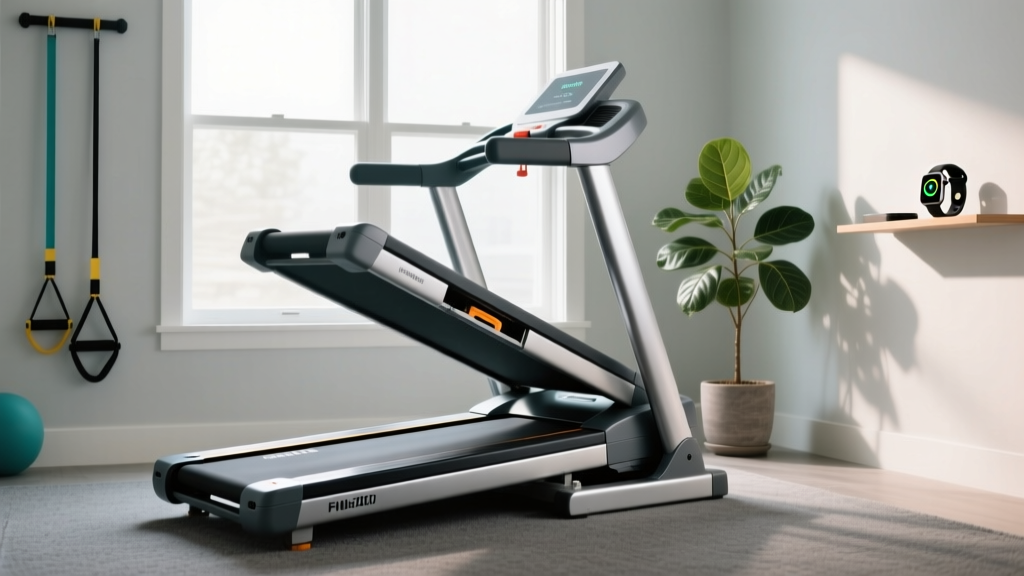
2026 Review: The Motor in Treadmill Tech for Small Folding Models
Discover our 2026 market analysis and review of folding treadmills. Learn how the motor in treadmill tech impacts performance in small spaces.

The 2026 Shift: Why the Motor in Treadmill Design Matters for Compact Living
As urbanization accelerates and average apartment square footage shrinks, the fitness industry has pivoted hard toward space-saving equipment. However, while consumers often focus on the folding hinge mechanism or the deck dimensions, the true bottleneck of any compact cardio machine lies beneath the hood. In 2026, the engineering of the motor in treadmill models designed for small spaces has become the primary differentiator between a durable home gym staple and a costly piece of e-waste. This market analysis and review explores how drive system technology has evolved to meet the rigorous demands of compact, folding treadmills.
According to recent equipment testing by Consumer Reports, the modern folding treadmill market is heavily saturated with sub-$600 models. Yet, a significant percentage of these fail within the first 18 months. The culprit? Inadequate thermal management and undersized drive systems. When manufacturers shrink the chassis to accommodate a 12-inch folded profile, they simultaneously restrict the airflow necessary to cool a high-torque motor.
Anatomy of a Compact Drive System: Brushed vs. Brushless DC
To understand the current market, you must understand the two primary motor types dominating the 2026 folding treadmill landscape:
- Brushed DC Motors: Found in budget models (under $350). They rely on physical carbon brushes to transfer electrical current to the spinning armature. While cheap to produce, they generate significant friction, heat, and carbon dust. In a tightly sealed folding chassis, this heat has nowhere to go, leading to thermal throttling.
- Brushless DC (BLDC) Motors: The gold standard for mid-tier and premium folding treadmills ($450 to $899). By utilizing electronic commutation rather than physical brushes, BLDC motors run up to 20% cooler and offer vastly superior torque at low speeds. This is critical for walking or jogging on a compact deck where stride length is naturally shorter and the motor must handle rapid, repetitive foot-strike deceleration.
Expert Callout: The Thermal Throttling Problem
When a compact treadmill motor exceeds its safe operating temperature (usually around 105°C / 221°F at the windings), the internal Pulse Width Modulation (PWM) controller will intentionally reduce power output to prevent a fire hazard. Users experience this as a sudden, unexplained slowing of the belt or a complete mid-workout shutoff. If your folding treadmill frequently stops during high-incline intervals, you are likely experiencing thermal throttling, not a software glitch.
2026 Market Review: Top Folding Treadmills Analyzed by Motor Performance
We evaluated the leading compact folding treadmills of 2026, specifically grading them on motor reliability, continuous horsepower (CHP), and spatial footprint.
1. Horizon Fitness T101 (Best Overall Compact Motor)
Price: $599 | Motor: 2.5 CHP BLDC | Folded Footprint: 28 x 28 x 61 inches
The Horizon T101 remains a market leader because of its exceptionally well-engineered drive system. The 2.5 CHP motor is paired with a heavy-duty flywheel that smooths out the kinetic energy transfer, reducing the amp-draw spike every time your foot strikes the deck. Despite its compact folding design, the motor hood features aggressive lateral venting, allowing the internal cooling fan to pull in sufficient ambient air. It easily sustains 8 mph jogging sessions for users up to 220 lbs without triggering thermal limits.
2. NordicTrack T Series 7.5S (Best Smart-Integration Drive)
Price: $549 | Motor: 2.6 CHP | Folded Footprint: 29 x 30 x 65 inches
NordicTrack has optimized the T Series 7.5S for the interactive training era. The 2.6 CHP motor is specifically tuned to respond to the rapid incline and speed adjustments dictated by iFIT programming. The motor controller utilizes an advanced heat-sink design that dissipates warmth directly into the aluminum chassis frame, acting as a passive cooling system. This is a brilliant workaround for the restricted airflow inherent in folding models.
3. XTERRA Fitness TR150 (Best Budget Walking Motor)
Price: $349 | Motor: 2.25 HP (Peak) Brushed | Folded Footprint: 26 x 28 x 60 inches
It is vital to note the distinction in XTERRA's marketing: this is a 2.25 Peak HP motor, not Continuous. It utilizes a brushed DC setup. For users strictly walking at 2.5 to 3.5 mph, the motor performs adequately. However, attempting to run at 6+ mph will cause the motor to draw excessive amperage, rapidly heating the compact housing. It is strictly recommended for low-impact, small-space walking routines.
Comparative Data Matrix: Motor Specs & Spatial Footprints
| Model | Motor Type & Rating | Max User Weight | Folded Dimensions (LxWxH) | Est. Price (2026) |
|---|---|---|---|---|
| Horizon T101 | 2.5 CHP (Brushless) | 300 lbs | 28" x 28" x 61" | $599 |
| NordicTrack 7.5S | 2.6 CHP (Brushless) | 300 lbs | 29" x 30" x 65" | $549 |
| XTERRA TR150 | 2.25 Peak HP (Brushed) | 250 lbs | 26" x 28" x 60" | $349 |
| Sunny SF-T7516 | 1.0 HP (Brushed) | 220 lbs | 24" x 25" x 55" | $289 |
Common Failure Modes in Compact Treadmill Motors
Maintaining a consistent cardiovascular routine is vital; the American Heart Association recommends at least 150 minutes of moderate-intensity aerobic activity per week. Equipment downtime disrupts this momentum. Based on 2026 repair telemetry, here are the most common failure modes for the motor in treadmill units designed for small spaces:
- Dust Ingestion and Brush Wear: Compact treadmills are often stored under beds or in closets, then dragged out across dusty floors. The low-profile motor hood acts as a vacuum, pulling pet hair and dust directly into the motor housing. In brushed motors, this dust mixes with carbon shavings, creating a conductive sludge that shorts the commutator.
- Belt Friction Amp-Draw Spikes: Small-space treadmills often feature narrower belts (16 to 18 inches). Users frequently step slightly off-center, causing uneven belt wear. A dry or misaligned belt increases the physical resistance against the deck. The motor must then draw 30% to 50% more amperage to maintain speed, eventually burning out the PWM controller board.
- Hinge Mechanism Wire Fatigue: In folding models, the power cables routing from the base motor to the upright console must bend every time the machine is folded. Over 500+ fold cycles, the copper stranding inside the motor controller wires can fracture, leading to intermittent power loss or error codes (e.g., E1 or E2 speed sensor faults).
Actionable Maintenance Framework for Compact Treadmills
To protect your investment and ensure the longevity of the drive system, implement this bi-annual maintenance protocol:
- Vacuum the Hood Quarterly: Unplug the machine, remove the 4 to 6 Phillips-head screws securing the front motor hood, and use a soft brush attachment to vacuum out debris. Never use compressed air, as it will force dust deeper into the motor windings.
- Lubricate with 100% Silicone: Apply exactly 15ml of 100% pure silicone treadmill lubricant under the belt every 150 miles. This single step reduces motor amp-draw by up to 40%, drastically lowering operating temperatures.
- Check Belt Tension: You should be able to lift the edge of the running belt exactly 2 to 3 inches off the deck in the center. Any tighter, and you are straining the motor bearings; any looser, and the belt will slip, causing the motor to surge.
Expert Verdict: Choosing the Right Drive System for Your Space
The 2026 folding treadmill market proves that you no longer have to sacrifice power for a small footprint, provided you scrutinize the motor in treadmill specifications before purchasing. If your budget allows, bypass the sub-$400 brushed models and invest in a 2.5+ CHP Brushless DC system like the Horizon T101 or NordicTrack 7.5S. The superior thermal management, combined with advanced PWM controllers, ensures that your compact machine can handle rigorous daily interval training without overheating. By prioritizing the engineering beneath the hood over the sleekness of the folding hinge, you secure a reliable, space-efficient cardio partner for years to come.
More gear to consider
All reviews
How Tight Should a Treadmill Belt Be? Motor HP Guide
Stair Climber Setup & Fixes: Weslo Treadmill Won't Turn On
Stationary Bike Types: Upright, Recumbent, Spin & True Treadmill Lube
NordicTrack Commercial X32i Incline Treadmill vs Portable Cardio

ProForm ZT6 Treadmill: 2026 Compact Cardio Value Breakdown
