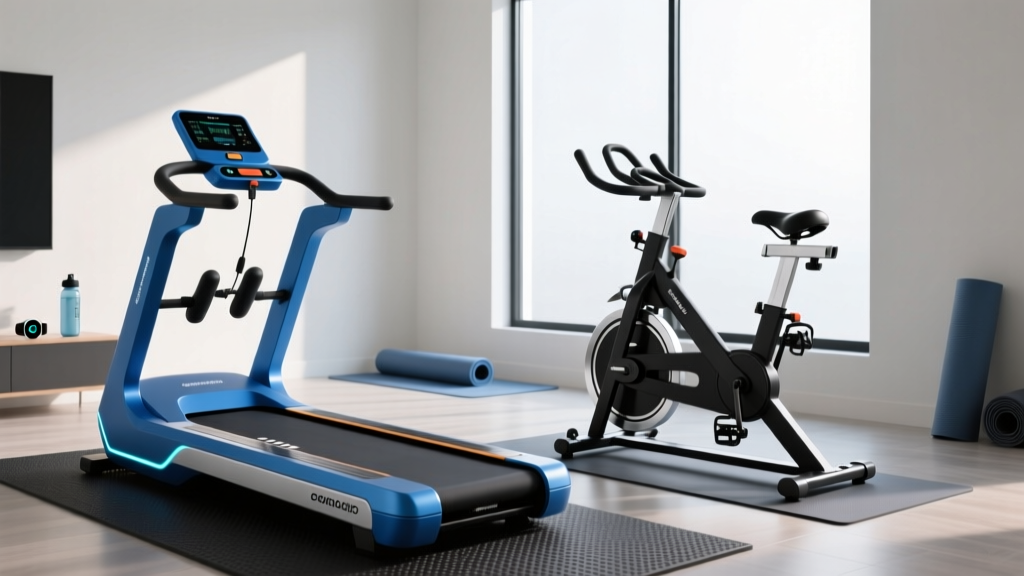
LifeSpan Treadmill TR1200 Review: 2026 Small Space Folding Trends
We review the legacy LifeSpan Treadmill TR1200 and analyze 2026 market trends for small space folding treadmills, comparing specs, pricing, and hinge tech.

The Micro-Gym Revolution: Why the LifeSpan TR1200 Still Matters
As urban density increases and the hybrid work model permanently reshapes residential real estate in 2026, the 'micro-gym' has transitioned from a niche necessity to a mainstream lifestyle standard. When analyzing the trajectory of compact fitness equipment, the LifeSpan Treadmill TR1200 (specifically the widely adopted TR1200i series) stands as a critical historical benchmark. It was one of the first sub-$1,000 folding treadmills to successfully balance a usable 20-inch running belt with a genuinely storable footprint. Today, we are conducting a dual-purpose analysis: a retrospective engineering review of the LifeSpan TR1200's folding mechanism and a comprehensive 2026 market trend report on small-space cardio equipment. Whether you are maintaining a legacy TR1200 or shopping for a modern ultra-compact successor, understanding the evolution of folding hinge technology, acoustic dampening, and motor efficiency is vital for optimizing tight floor plans.
2026 Market Insight: According to recent data published by Grand View Research, the global folding and portable fitness equipment segment has grown by 14.2% CAGR since 2022, driven primarily by apartment dwellers and ADU (Accessory Dwelling Unit) residents who require equipment that reclaims its square footage post-workout.Legacy Review: Engineering the LifeSpan Treadmill TR1200
To understand where the small-space treadmill market is in 2026, we must evaluate the blueprint established by the LifeSpan TR1200. Marketed heavily toward home users with limited square footage, the TR1200 series introduced a reliable, albeit utilitarian, folding architecture.
Core Specifications & Spatial Footprint
- Motor: 2.5 Continuous Horsepower (CHP) DC motor.
- Running Surface: 20 inches by 56 inches (adequate for walkers and light joggers, but restrictive for runners over 5'10").
- Unfolded Dimensions: 68" L x 28.5" W x 55" H.
- Folded Dimensions: 28.5" L x 28" W x 63" H.
- Weight Capacity: 300 lbs.
The TR1200's defining feature was its vertical fold capability, reducing its active floor footprint from roughly 13.5 square feet down to just 5.5 square feet. However, the manual lift-assist mechanism required significant physical exertion to engage the hydraulic shock, a pain point that modern 2026 models have largely engineered out via automated or feather-touch soft-drop systems.
Failure Modes and Edge Cases
After years of market observation, the TR1200 exhibits specific mechanical vulnerabilities when subjected to daily folding and unfolding. The primary failure mode is the gas cylinder degradation within the hydraulic lift assist. Over a 3-to-5-year lifecycle, the pressurized nitrogen seal can leak, resulting in a deck that slams down dangerously when released. Furthermore, the pivot pins at the deck's hinge experience lateral shearing stress if the treadmill is folded while the floor is uneven, eventually leading to a warped deck frame and belt mistracking.
2026 Market Analysis: The Evolution of Compact Treadmills
The compact cardio market in 2026 has bifurcated into two distinct categories: Heavy-Duty Folders (the direct descendants of the TR1200) and Ultra-Compact Walking Pads. Industry reports highlighted by IHRSA indicate that consumer preference is shifting heavily toward equipment that offers 'invisible storage'—machines that can slide under a sofa or stand flush against a baseboard without dominating a room's visual aesthetic.
Acoustic & Vibration Engineering
In small spaces, shared walls and floors make acoustic dampening a top priority. The legacy TR1200 operated at approximately 72-75 decibels at top speed, largely due to belt friction and traditional DC motor hum. Modern 2026 compact treadmills utilize Brushless Direct Current (BLDC) motors and multi-layer elastomer deck cushions, dropping operational noise to the 58-62 decibel range. This 15-decibel reduction is the difference between a disruptive machine and one that allows you to watch TV at normal volume in a studio apartment.
Comparative Matrix: TR1200 vs. 2026 Market Leaders
How does the legacy LifeSpan benchmark compare to the top-rated small-space treadmills available today? The following matrix breaks down the critical spatial and performance metrics.
| Model | Folded Footprint | Motor (CHP) | Belt Size | 2026 Price Range |
|---|---|---|---|---|
| LifeSpan TR1200i (Legacy) | 28.5" x 28" (Vertical) | 2.5 CHP | 20" x 56" | $899 (Used/Refurb) |
| Sole F63 (2026 Ed.) | 30" x 32" (Vertical) | 3.0 CHP | 20" x 60" | $1,199 |
| Horizon T101 | 29" x 30" (Vertical) | 2.5 CHP | 20" x 55" | $749 |
| WalkingPad X21 (Ultra-Compact) | 64" x 22" (Flat/Sliding) | 1.5 HP Peak | 17" x 47" | $599 |
Decision Framework: Choosing Your Small-Space Solution
Selecting the right folding treadmill requires a rigid assessment of your spatial constraints and biomechanical needs. Use this three-tier framework to guide your purchase in 2026.
Tier 1: The 'Closet Stuffer' (Under-Bed / Sofa Sliders)
Profile: Apartments under 600 sq. ft. with zero dedicated floor space.
Recommendation: Abandon traditional vertical folders like the TR1200. Opt for dual-fold walking pads (e.g., WalkingPad or UREVO models).
Trade-off: You sacrifice incline capabilities, handrails, and running speeds above 7.5 MPH. Routine maintenance requires flipping the ultra-thin deck monthly to apply 100% silicone lubricant to the belt.
Tier 2: The 'Corner Folder' (The TR1200 Successors)
Profile: Homes with a 3x3 foot corner to dedicate to vertical storage.
Recommendation: Modern heavy-duty folders like the Horizon T101 or Sole F63. These retain the 300+ lb weight capacity and 10% incline features of the TR1200 but upgrade the hydraulic hinge to a 'feather-light' pneumatic cylinder, allowing a single user to lower the deck with two fingers.
Pro-Tip: Always anchor vertical folders to a wall stud using a nylon safety strap. In small spaces, accidental tipping from a failed hydraulic pin is a severe hazard.
Tier 3: The 'Permanent Micro-Footprint'
Profile: Users who refuse to fold the machine daily but lack the space for a commercial deck.
Recommendation: Compact, non-folding but short-deck treadmills. Look for models with an overall length under 60 inches. The trade-off is a shorter stride accommodation, but it eliminates the mechanical wear-and-tear associated with folding hinges entirely.
The Verdict: Legacy vs. Innovation
The LifeSpan Treadmill TR1200 proved that consumers were willing to compromise on premium console features if it meant reclaiming their living room floor. It laid the groundwork for the multi-billion-dollar compact fitness sector we see today. However, from a 2026 perspective, the mechanical friction, acoustic output, and manual lift requirements of the TR1200 are relics of a bygone engineering era. For current buyers, the market offers vastly superior pneumatic folding mechanisms, whisper-quiet brushless motors, and ultra-compact dual-fold alternatives that the TR1200's original designers could only dream of. According to expert testing methodologies outlined by Consumer Reports, modern folding treadmills also feature vastly improved lateral belt tracking, solving the edge-fraying issues that plagued early 20-inch compact belts. If you are outfitting a small-space home gym today, honor the TR1200's legacy by demanding the modern spatial efficiencies and acoustic dampening that its successors now provide.
More gear to consider
All reviews
Walking Pad vs Treadmill: Best Gear for Treadmill Exercises (2026)
Treadmill Horsepower Guide: ProForm Premier 1300 Treadmill Explained
2026 Market Trends: Portable Cardio vs. Treadmill Advantages

How Long Do NordicTrack Treadmills Last? 2026 Bike Market Trends

How Fast is 7.5 on a Treadmill? 2026 Under-Desk Picks