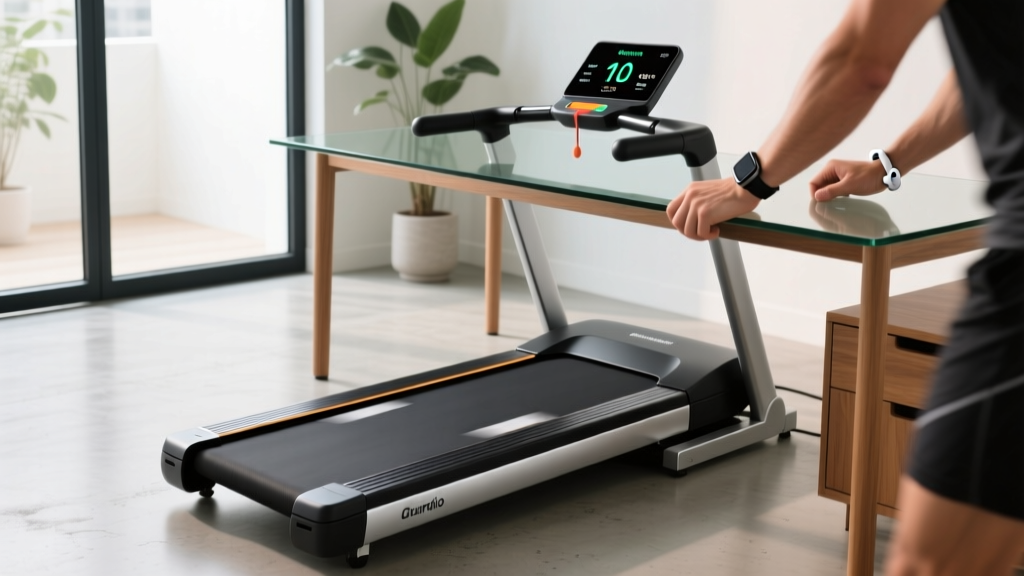
Motor Size Guide: Life Fitness 95T Treadmills & HP Explained
Learn how to choose the right treadmill motor size. We break down HP vs. CHP using Life Fitness 95T treadmills as the ultimate commercial benchmark.

The Beginner's Step-by-Step Guide to Treadmill Motors
Walking into the cardio equipment market in 2026 can feel like navigating a minefield of deceptive marketing. Nowhere is this more apparent than in treadmill motor specifications. Manufacturers frequently throw around terms like 'Peak Horsepower' to mask underpowered machines that will stall, overheat, and ultimately fail under the stress of daily use. To truly understand what makes a treadmill motor durable, we must look at the gold standard of commercial gym equipment: Life Fitness 95T treadmills.
This step-by-step guide will strip away the marketing jargon, teach you how to calculate your exact motor requirements, and use the legendary Life Fitness 95T as a benchmark to help you make an informed, long-term investment in your home gym.
Step 1: Decode the Horsepower Illusion
The first mistake beginners make is looking only at the highest number on the spec sheet. To evaluate a motor properly, you must understand the three distinct ways horsepower is measured and marketed.
| Measurement Type | Definition | Real-World Relevance |
|---|---|---|
| Peak HP | The absolute maximum power the motor can hit for a fraction of a second before failing. | Irrelevant. This is a marketing gimmick used on budget treadmills to inflate perceived value. |
| HP (Duty Cycle) | The power the motor can sustain for a short, specific duty cycle (e.g., 20 minutes on, 40 minutes off). | Misleading. It does not account for long-distance runners or multiple users in a single household. |
| CHP (Continuous) | The horsepower the motor can sustain continuously, 24/7, without overheating or losing torque. | The only metric that matters. Always base your purchasing decision on the CHP rating. |
Expert Insight
If a treadmill listing prominently features 'Peak HP' but buries the CHP rating in the fine print (or omits it entirely), walk away. Reputable brands are always transparent about their Continuous Horsepower.
Step 2: Understand AC vs. DC Motor Architecture
Horsepower is only half the equation; the type of current the motor uses dictates its lifespan and maintenance requirements. When analyzing high-end commercial units like the Life Fitness 95T, you will notice they utilize AC (Alternating Current) motors, whereas 90% of home treadmills use DC (Direct Current) motors.
Why Commercial Models Use AC Motors
AC motors do not rely on carbon brushes to transfer electrical current to the spinning armature. Because there is no physical friction from brushes, AC motors run significantly cooler, generate less dust, and boast a lifespan that is often three to four times longer than DC equivalents. An AC motor can easily handle the 12-to-16-hour daily abuse of a busy commercial gym.
The Reality of Home DC Motors
DC motors are cheaper to manufacture and operate well on standard 120V household circuits. However, they use carbon brushes that wear down over time. If you are a heavy runner or plan to use the treadmill for more than 10 hours a week, a high-quality DC motor (3.5 CHP or higher) is mandatory to prevent thermal shutdowns mid-run.
Step 3: Match Motor Size to Your Biomechanics
According to the Centers for Disease Control and Prevention (CDC), adults should aim for at least 150 minutes of moderate-intensity aerobic activity weekly. To achieve this safely on a treadmill, your motor must be sized not just for your speed, but for your body weight and the incline grade. A heavier user or a steep incline exponentially increases the amp draw on the motor.
Use this 2026 sizing matrix to find your minimum CHP requirement:
- Under 150 lbs: 2.5 CHP (Walking/Jogging) | 3.0 CHP (Running/Sprints)
- 150 to 200 lbs: 3.0 CHP (Walking/Jogging) | 3.5 CHP (Running/Sprints)
- 200 to 250 lbs: 3.5 CHP (Walking/Jogging) | 4.0 CHP (Running/Sprints)
- Over 250 lbs: 4.0 CHP (Walking/Jogging) | 4.5+ CHP (Running/Sprints)
'A motor that is constantly operating at 90% of its maximum capacity will degrade rapidly. Always buy a motor with at least 0.5 to 1.0 CHP more than your calculated baseline to ensure longevity.' - American Council on Exercise (ACE) Equipment Guidelines
Step 4: The Life Fitness 95T Treadmills Benchmark
To understand what a truly bulletproof motor system looks like, we must examine the Life Fitness 95T. As a staple in elite health clubs worldwide, the 95T sets the benchmark for commercial cardio engineering.
Under the Hood of the 95T
The Life Fitness 95T is powered by a 4.0 HP AC motor. Because it is an AC motor, it delivers relentless torque at low speeds (crucial for heavy walkers) and maintains cool temperatures during high-speed interval training. Furthermore, the 95T pairs this motor with the proprietary EverWax belt lubrication system.
Why does lubrication matter for motor size? Belt friction is the silent killer of treadmill motors. If a deck lacks lubrication, the motor must draw excess amperage to pull the belt. The EverWax system automatically applies wax to the deck, reducing friction coefficients and ensuring the 4.0 HP motor only works as hard as it needs to.
Pricing and Home Alternatives
As of 2026, a brand-new commercial Life Fitness 95T treadmill retails between $9,500 and $11,500, depending on the console package (Engage vs. Discover). For home users who want the Life Fitness pedigree without the commercial footprint and price tag, the Life Fitness Club Series+ is the premier alternative. It features a 3.0 HP DC motor and the same FlexDeck shock absorption system (which reduces joint stress by up to 30%), retailing for approximately $7,499.
Step 5: Identify Real-World Motor Failure Modes
When beginners buy underpowered treadmills to save $500 upfront, they inevitably face catastrophic hardware failures. Understanding these failure modes will help you spot a weak machine before you buy it.
- Thermal Demagnetization: When a weak DC motor is forced to pull a heavy user up a 15% incline, it draws excess amperage and generates immense heat. Over time, this heat permanently demagnetizes the internal neodymium magnets, resulting in a permanent loss of torque. The treadmill will feel 'sluggish' even when empty.
- Lower Board MOSFET Burnout: The motor draws power through the lower control board. If the motor constantly over-amps due to a weak HP rating or high belt friction, it will blow the MOSFET transistors on the board. This is a common failure point on budget treadmills, resulting in a $300 to $600 repair bill and weeks of downtime.
- Belt Stiction and Stalling: Budget treadmills require manual silicone lubrication every 3 to 6 months. If a user forgets, the belt drags against the wooden deck. A 2.5 CHP motor simply does not have the torque reserve to overcome this stiction, leading to mid-run belt stalling—a major safety hazard that can cause severe falls and injuries.
Safety Warning
Never ignore a 'jerking' or 'stuttering' sensation in your treadmill belt. This is the primary symptom of a failing motor or a dry deck. Stop use immediately, unplug the machine, and check the deck lubrication and motor amp draw.
Final Verdict: Investing in Durability
Choosing the right treadmill motor is not about finding the highest number; it is about matching continuous horsepower, motor architecture, and friction-reduction technology to your specific body mechanics. While Life Fitness 95T treadmills represent the pinnacle of 4.0 HP AC commercial engineering, the principles they rely on—high CHP ratings, robust cooling, and automated deck lubrication—should guide every home purchase. By prioritizing continuous horsepower and avoiding the 'Peak HP' trap, you will secure a cardio machine that safely supports your fitness journey for a decade or more.
More gear to consider
All reviews
Elliptical vs Treadmill: 2026 Trends & Sole Treadmill Review Data

Spin, Upright, Recumbent Bikes: How High is 12 Incline on Treadmill?

Which Is Better: Treadmill or Elliptical Machine for Home Maintenance?

Beyond Wahoo Treadmill Reviews: Curved vs Motorized Treadmills

Is It Better to Run on a Treadmill or Outside? Portable Cardio Costs