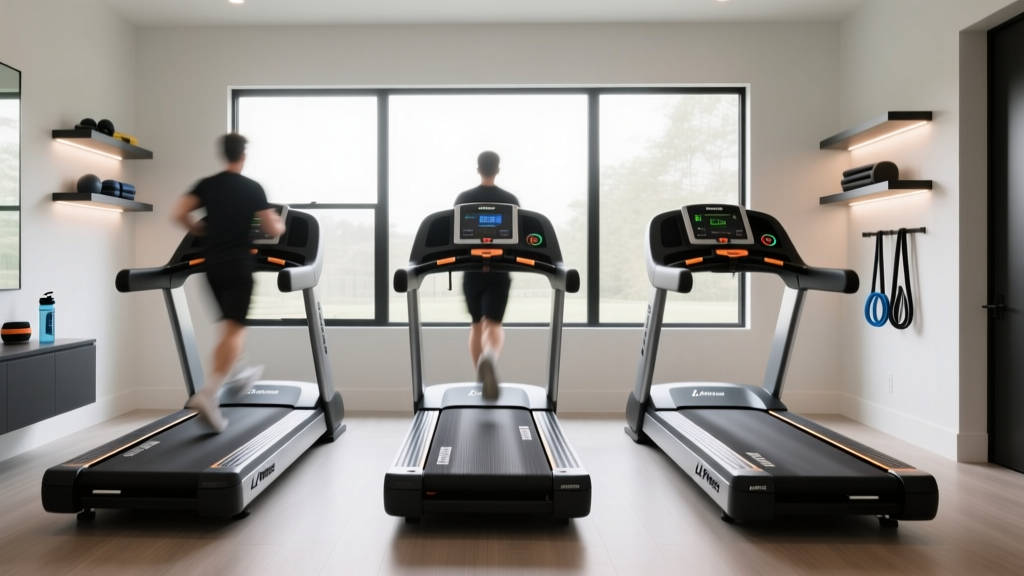
LA Fitness Treadmills: Home Setup & Noise Level Comparison
Master the setup of commercial LA Fitness treadmills at home. Explore our installation walkthrough and cardio machine noise level comparison guide.

When home gym enthusiasts search for LA Fitness treadmills, they are rarely looking for a proprietary brand. Instead, they are searching for the exact commercial-grade workhorses found in LA Fitness facilities across the country—most notably the Life Fitness Integrity Series CLST and the Matrix T7xe. These machines are legendary for their 22-inch by 60-inch running surfaces, 4.0 HP AC motors, and bombproof frames. However, bringing a 420-pound commercial treadmill into a residential space introduces severe logistical and acoustic challenges. As of 2026, the refurbished commercial equipment market is booming, but many buyers are caught off guard by the low-frequency impact noise and electrical requirements of these beasts.
This comprehensive guide provides a complete setup and installation walkthrough for commercial-grade treadmills, with a specialized deep dive into a cardio machine noise level comparison. We will cover subfloor preparation, electrical safety, structural vibration, and exactly how these commercial units compare acoustically to standard home cardio equipment.
The Commercial Treadmill Reality: Weight, Power, and Footprint
Before unboxing, you must understand the physical and electrical footprint of a commercial treadmill. Unlike residential models (like the NordicTrack Commercial 1750, which weighs around 310 lbs and uses a 3.5 HP DC motor), a genuine LA Fitness-style treadmill utilizes an Alternating Current (AC) motor designed for 12+ hours of daily use.
⚠️ Critical Electrical Requirement: Commercial treadmills require a dedicated 20-amp circuit with a NEMA 5-20R outlet. Plugging a 4.0 HP AC motor into a standard 15-amp shared bedroom circuit will cause voltage drops, trip breakers, and eventually fry the lower Motor Control Board (MCB). Always hire a licensed electrician to run a dedicated line before delivery day.Phase 1: Subfloor Preparation and Vibration Isolation
The most common complaint from homeowners who install commercial treadmills is not the machine itself, but the noise transfer to the rooms below. When a 200-pound runner strikes the deck at 8 mph, the impact generates low-frequency structural vibrations (typically between 2 Hz and 5 Hz). According to the EPA Noise Pollution Guidelines, low-frequency structure-borne noise is notoriously difficult to mitigate and easily penetrates standard residential floor joists.
Selecting the Right Acoustic Matting
Do not use cheap PVC foam puzzle mats. To properly isolate a 420-pound commercial treadmill, you need high-density vulcanized rubber.
- Material: Vulcanized recycled rubber (Shore A hardness of 60 or higher).
- Thickness: Minimum 3/8-inch (9.5mm); 1/2-inch (12.7mm) is preferred for second-floor installations.
- Dimensions: A standard 4x6 foot horse stall mat (often found at agricultural supply stores for $50-$70) provides the perfect footprint and density for commercial treadmill isolation.
Phase 2: Complete Installation Walkthrough
Installing a commercial treadmill is a multi-person job. The Life Fitness Integrity CLST ships on a pallet and weighs roughly 420 lbs. Here is the step-by-step installation protocol.
- Pallet Jacking and Placement: Use a pallet jack to move the unit to the target room. Do not attempt to tilt or drag the machine on its side; the internal electronics and heavy AC motor can shift and damage the frame welds. Use furniture sliders under the leveling feet once off the pallet.
- Leveling the Frame: Commercial floors are rarely perfectly flat. Use a 48-inch machinist level across the side rails. Adjust the four corner leveling feet using a 15mm wrench until the bubble is perfectly centered. An unlevel frame causes premature belt tracking issues and uneven roller wear.
- Electrical Connection: Plug the machine directly into the wall. Never use an extension cord or a standard power strip, as the initial startup amperage draw can exceed 15 amps, melting standard strip wiring.
- Belt Tension and Tracking Calibration: Commercial belts are thicker and require higher tension. Power the machine on at 2.0 mph. Observe the belt. If it drifts left, turn the left rear roller adjustment bolt clockwise by exactly one-quarter turn. Wait 30 seconds for the belt to settle before making further adjustments.
Cardio Machine Noise Level Comparison Matrix
Once installed, how does a commercial treadmill actually sound compared to other home cardio machines? To understand this, we must differentiate between airborne noise (the sound of the motor and belt measured in decibels) and structure-borne vibration (the physical impact transferred through the floor). The CDC NIOSH notes that prolonged exposure to noise above 70 dB(A) can begin to cause auditory fatigue, making machine acoustics a vital factor in home gym design.
| Cardio Machine Type | Airborne Noise (dB) | Structure-Borne Vibration | Acoustic Mitigation Strategy |
|---|---|---|---|
| Commercial Treadmill (Life Fitness CLST) | 72 - 85 dB | Extreme (High impact) | 1/2-inch vulcanized rubber mat; ground floor placement preferred. |
| Residential Treadmill (NordicTrack 1750) | 68 - 78 dB | High (Moderate impact) | 3/8-inch rubber mat; avoid second-floor wood joists. |
| Elliptical (Precor EFX 885) | 55 - 65 dB | Low (Zero impact) | Standard 1/4-inch PVC or thin rubber mat for scratch protection. |
| Air Bike (Rogue Echo) | 75 - 90 dB | Low (Air resistance) | None required for vibration; acoustic panels needed for airborne wind noise. |
| Rowing Machine (Concept2 Model D) | 65 - 80 dB | Moderate (Seat roller track) | Interlocking foam or thin rubber mat to dampen seat carriage rumble. |
Expert Insight: While an Air Bike generates the highest airborne noise (up to 90 dB at max RPM due to the fan), it produces almost zero structure-borne vibration. Conversely, a commercial LA Fitness treadmill generates less airborne motor noise than an air bike, but the rhythmic foot-strike impact creates severe low-frequency vibration that will rattle light fixtures in the room directly below it.
Phase 3: Post-Installation Acoustic Tuning
Even with proper matting, a newly installed commercial treadmill may produce unwanted squeaks or resonance. Perform this acoustic tuning checklist after the first 10 hours of use:
1. Motor Hood Resonance
Commercial treadmill motor hoods are made of thick ABS plastic. Over time, the vibration from the AC motor can loosen the hood screws, creating a plastic rattling sound. Use a Phillips-head screwdriver to tighten all motor hood fasteners. If the rattle persists, apply a small strip of automotive weatherstripping foam between the hood and the frame deck.
2. Belt Friction and Lubrication
A dry treadmill belt creates a high-pitched whining noise and forces the motor to draw excess amperage. Commercial decks require 100% pure silicone treadmill lubricant. Lift the center of the belt and apply exactly 1.0 oz of silicone in a zig-zag pattern across the deck. Run the machine at 3.0 mph for 5 minutes to distribute the lubricant evenly. This single step can reduce airborne friction noise by up to 4 dB.
3. Roller Bearing Inspection
If you hear a rhythmic 'thumping' or 'grinding' noise that correlates with belt speed, the front or rear roller bearings may be failing. This is common in refurbished LA Fitness treadmills that saw 5 years of heavy gym use. Replacing a commercial roller assembly costs between $150 and $250 and requires removing the drive belt and side caps.
Frequently Asked Questions
Can I put a commercial LA Fitness treadmill on the second floor of my house?
It is highly discouraged unless your floor joists are engineered for high live loads (e.g., 50 PSF or greater). The dynamic impact of a runner on a 420-lb machine can exceed 800 lbs of downward force per stride. If you must install it on a second floor, place it directly over a load-bearing wall and use a 1/2-inch thick vulcanized rubber mat to disperse the point loads.
Are the touchscreens on older LA Fitness treadmills obsolete?
Yes. Many refurbished Matrix and Life Fitness models from 2015-2020 feature outdated resistive touchscreens or proprietary console software that no longer connects to modern fitness apps. Many 2026 buyers opt for the 'base model' commercial frames and use a heavy-duty tablet mount to run Zwift or Peloton Digital via their own iPad.
How often should I recalibrate the speed on a commercial treadmill?
Commercial treadmills feature internal speed calibration modes accessible via the manufacturer's engineering menu. For home use, you should verify the speed calibration using a measured distance test (e.g., timing 10 belt revolutions) once every 12 months to ensure the AC motor controller is maintaining accurate RPMs under load.
For more detailed specifications on commercial-grade frames and AC motor longevity, refer to the engineering documentation provided by Life Fitness. Proper installation and acoustic planning will ensure your commercial cardio investment remains a powerful, neighborhood-friendly asset for decades.
More gear to consider
All reviews
Stationary Bike Types & Sunny Treadmill SF-T4400 Manual Guide

AnyLife Treadmill vs Stationary Bikes: 2026 Cardio Market Shift

NordicTrack 2450 Treadmill Review: 2026 Feature Comparison Guide

Walking Pad Review: Horizon Treadmill App Setup & Installation

Elliptical vs Treadmill: 30 Min HIIT Treadmill Workout Trends 2026
