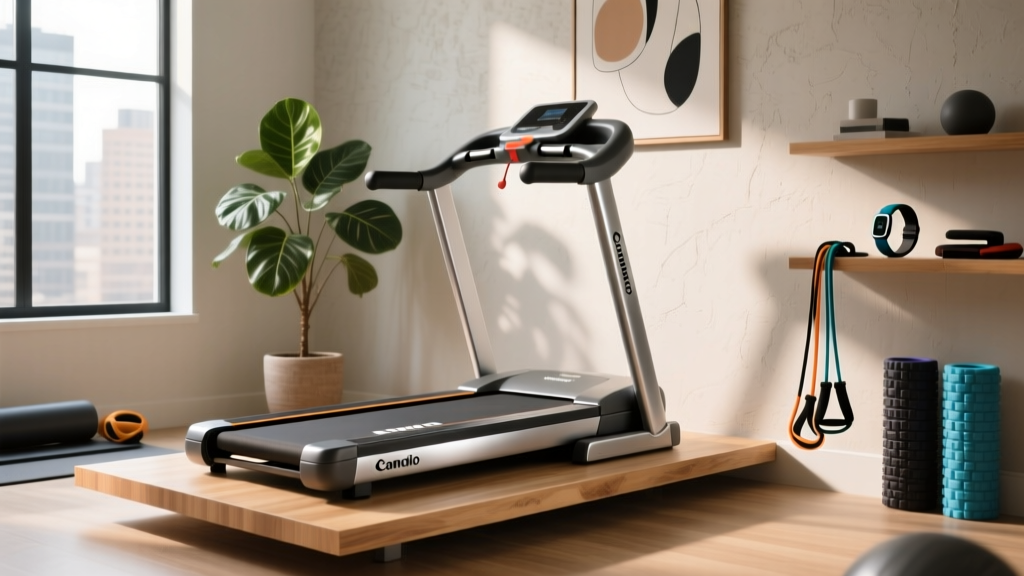
Is a Treadmill Easier Than Running Outside? Curved vs Motorized
Discover if a treadmill is easier than running outside. We compare curved manual vs motorized treadmills with 2026 buying data, biomechanics, and top models.

Is a Treadmill Easier Than Running Outside? The Biomechanical Truth
The debate over indoor versus outdoor running has persisted for decades, but the question most runners ask is highly specific: is a treadmill easier than running outside? The short answer is yes, a traditional motorized treadmill is generally easier. However, the complete answer requires a deep dive into biomechanics, specifically when comparing flat motorized treadmills against curved manual treadmills. As we evaluate the 2026 cardio equipment market, understanding the mechanical differences between these two machine types is critical for replicating outdoor race conditions, managing joint impact, and optimizing caloric expenditure.
When you run outdoors, your body must overcome air resistance, propel its mass forward over varied terrain, and actively engage the posterior chain to pull your stance leg through the gait cycle. According to experts at Runners Connect, the lack of wind resistance and the assistance of a moving belt on standard treadmills can reduce energy expenditure by up to 5-10% compared to overground running. But what happens when you remove the motor entirely?
Motorized Treadmills: The Assisted Stride
On a motorized treadmill, the belt moves beneath your feet. This fundamentally alters your running mechanics. The motor does a significant portion of the work by pulling your stance leg backward, which reduces the activation required from your hamstrings and glutes. Instead of actively pushing off the ground to propel yourself forward (as you do outdoors), you are essentially 'keeping up' with the belt and lifting your feet to land in the same spot.
This mechanical assistance makes motorized treadmills easier on the cardiovascular system at identical paces. Furthermore, the perfectly flat, heavily cushioned decks of machines like the Sole F80 or NordicTrack Commercial series absorb impact forces, reducing the eccentric muscle damage associated with outdoor road running. While this is excellent for rehabilitation and high-volume steady-state training, it fails to prepare your stabilizing muscles and posterior chain for the rigors of outdoor racing.
The 1% Incline Rule: Fact or Fiction?
In 1996, researchers Jones and Doust published a landmark study establishing that setting a motorized treadmill to a 1% incline accurately offsets the lack of air resistance for runners maintaining paces faster than 7:09 per mile. Crucial 2026 Insight: This rule only applies to flat, motorized treadmills. If you are using a curved manual treadmill, the 1% rule is entirely obsolete. The natural curve and self-propelled nature of manual decks inherently increase metabolic cost by 10-30% without any incline adjustment.
Curved Manual Treadmills: Replicating the Great Outdoors
Curved manual treadmills feature a non-motorized, concave slat belt. Because there is no motor, the belt only moves when you push it. To run on a curved treadmill, you must strike the ball of your foot on the downward slope of the curve, using your glutes and hamstrings to actively pull the belt backward and propel your body mass forward. This biomechanical action closely mirrors the concentric muscle contractions required for overground outdoor running.
Studies on self-powered curved treadmills show that they elicit significantly higher heart rates, greater oxygen consumption (VO2), and higher perceived exertion compared to motorized treadmills at the exact same speed. If you are asking if a treadmill is easier than running outside, a curved manual treadmill bridges that gap almost entirely, forcing your body to generate 100% of the forward propulsion.
Head-to-Head Comparison Matrix
When building your home gym, use this comparison table to align your equipment choice with your specific training goals.
| Feature | Motorized Treadmill | Curved Manual Treadmill | Outdoor Running |
|---|---|---|---|
| Pacing Control | Dictated by console motor | Dictated by stride & foot strike | Dictated by athlete effort |
| Posterior Chain Activation | Low (belt assists pull-back) | High (active pull required) | High (active push-off) |
| Caloric Expenditure | Baseline | +10% to +30% vs Baseline | +5% to +15% vs Baseline |
| Joint Impact | Lowest (heavy cushioning) | Moderate (rubber slats) | Highest (concrete/asphalt) |
| 2026 Avg Price Range | $800 - $3,500 | $2,500 - $6,000 | Free (plus shoe wear) |
Pacing Control and Cognitive Load
A frequently overlooked variable in the 'is a treadmill easier than running outside' debate is cognitive load. On a motorized treadmill, the machine dictates the pace. Your only cognitive task is to maintain your position on the belt. Outdoors, and on curved manual treadmills, you must constantly micro-adjust your stride length, cadence, and foot-strike placement to maintain speed. This self-regulation mimics the fatigue-management strategies required during a marathon or half-marathon, making curved treadmills vastly superior for race-specific mental conditioning.
2026 Buyer’s Guide: Top Models for Specific Goals
If you are ready to invest in a machine that accurately replicates outdoor effort, here are the top-tier options dominating the 2026 market.
Best for Outdoor Race Simulation: TrueForm Runner
The TrueForm Runner is the gold standard for elite athletes. Weighing in at a massive 370 lbs, its heavy-duty steel chassis eliminates the bouncing and shaking found in cheaper manual models. It features a 63-inch running surface constructed from vulcanized rubber slats, providing optimal shock absorption while demanding intense hamstring engagement. Priced around $4,999, it is a lifetime investment for serious marathoners who need to simulate outdoor propulsion mechanics without the joint destruction of asphalt.
Best for HIIT & Tech Integration: AssaultRunner Elite
For CrossFitters and interval runners, the AssaultRunner Elite ($3,299) is the undisputed champion. Weighing 280 lbs, it is slightly more forgiving on the joints than the TrueForm but offers a more aggressive curve for rapid acceleration. The standout feature for 2026 is its integrated Bluetooth FTMS (Fitness Machine Transmission Standard), allowing seamless, real-time data transmission to Zwift, TrainerRoad, and the Assault Fitness app. The 3-year comprehensive warranty provides peace of mind for high-impact interval abuse.
Best for Controlled Rehab & Steady State: Sole F80
If your primary goal is joint preservation, controlled rehabilitation, or low-cognitive-load steady-state cardio, a high-end motorized deck is superior. The Sole F80 ($1,199) features a 3.5 Continuous Horsepower (CHP) motor. Expert Note: Always look for CHP, not Peak HP, as CHP dictates the motor's ability to sustain heavy loads without overheating. The F80's 20-inch by 60-inch belt and 15% maximum incline allow for precise, programmable progression that manual treadmills simply cannot offer.
Maintenance & Failure Modes: What Dealerships Won't Tell You
Understanding the mechanical failure points of these machines is crucial for long-term ownership.
- Motorized Treadmills: The most common failure mode is the motor control board burning out due to excessive belt friction. If you do not lubricate the silicone deck every 150 miles, the increased drag forces the motor to draw excess amperage, eventually frying the lower control board. Replacing a control board costs between $150 and $300.
- Curved Manual Treadmills: Because there is no motor or electronic board, mechanical failures are rare. However, the slat belt bearings and the polyurethane guide wheels will eventually degrade. On heavily used machines, expect to replace the guide wheels every 3 to 5 years (a $100-$150 DIY fix). Furthermore, running exclusively on the extreme edges of a curved belt can cause uneven slat wear over time.
According to biomechanics researchers, the primary differentiator in energy expenditure between indoor and outdoor running is not just the lack of wind resistance, but the alteration in stride mechanics dictated by the moving belt. Curved treadmills successfully eliminate this variable by forcing the athlete to become the motor.
Final Verdict: Which Should You Buy?
So, is a treadmill easier than running outside? If you buy a traditional flat motorized treadmill, yes, it is mechanically and metabolically easier. It is the right choice for recovery days, beginners, and those prioritizing joint preservation. However, if you purchase a curved manual treadmill like the TrueForm Runner or AssaultRunner Elite, the machine is no longer 'easier.' In fact, due to the lack of momentum assistance and the demand for active posterior chain propulsion, a curved treadmill can feel significantly harder than running outside, providing a hyper-charged training stimulus that will make your next outdoor road race feel effortless by comparison.
More gear to consider
All reviews
Home Stair Climbers 2026: Matching a 9 Min Pace on Treadmill
ProForm 995 Treadmill Setup & Noise Level Comparison Guide

Beginner Treadmill Operator Guide: Walking Pads vs Standard (2026)

2026 Trends: Livestrong LS8 0 Treadmill vs Stationary Bike Types
Horizon T101 05 Treadmill Belt Maintenance & Lubrication Guide